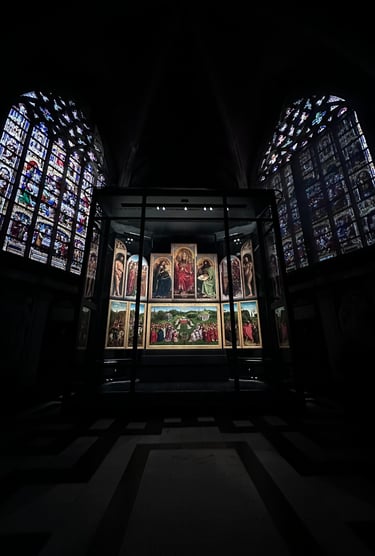
The Van Eyck's Polyptych
The Ghent Altarpiece
ARTICLES
By LS
12/30/2025
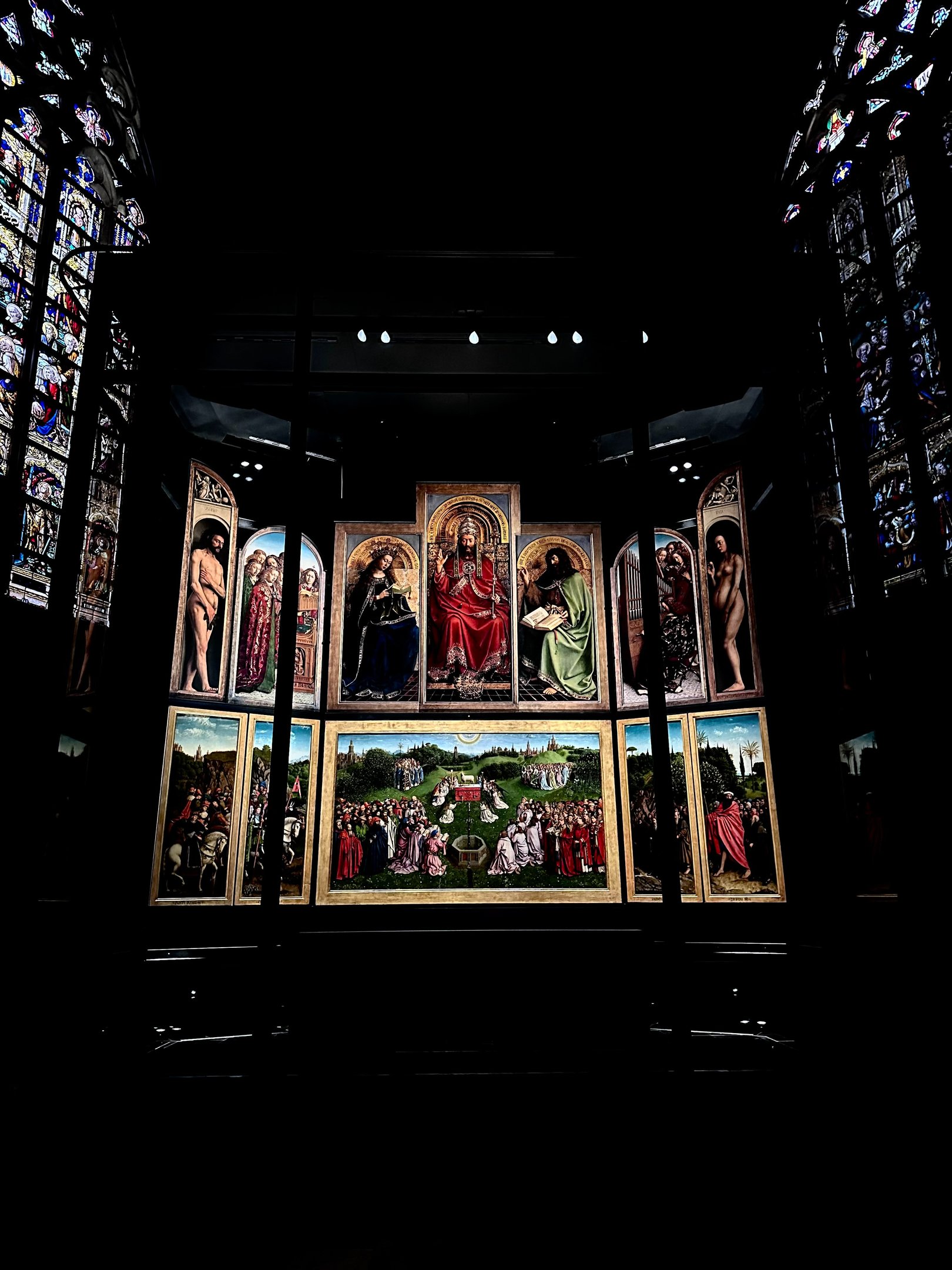
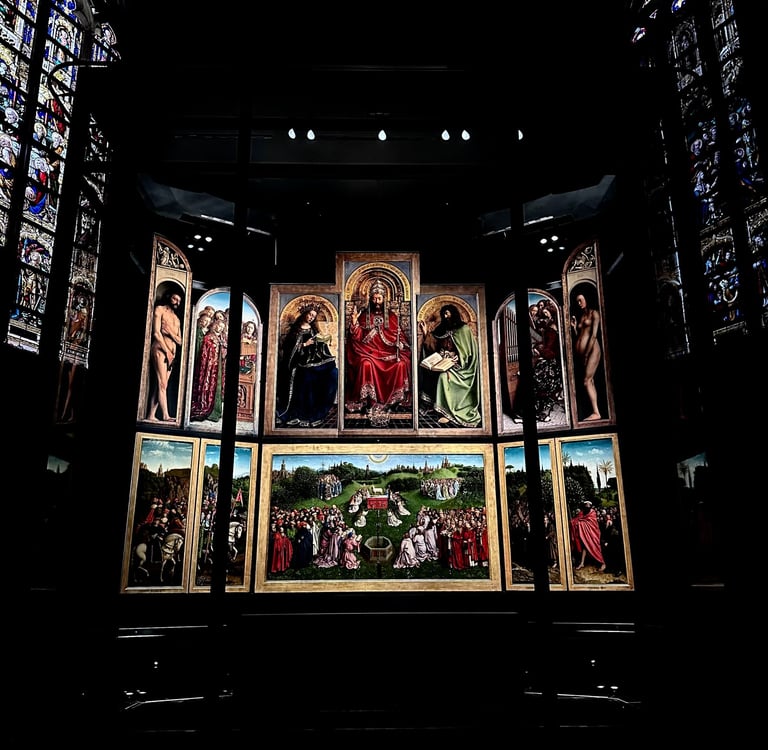
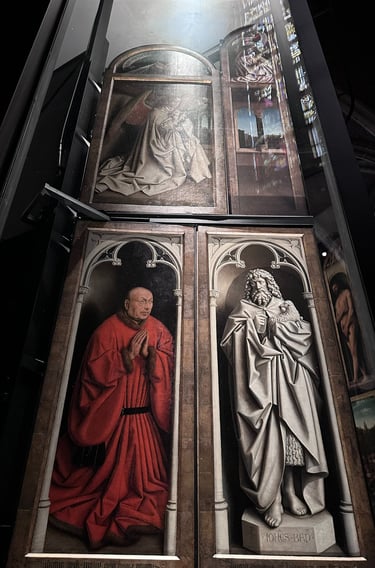
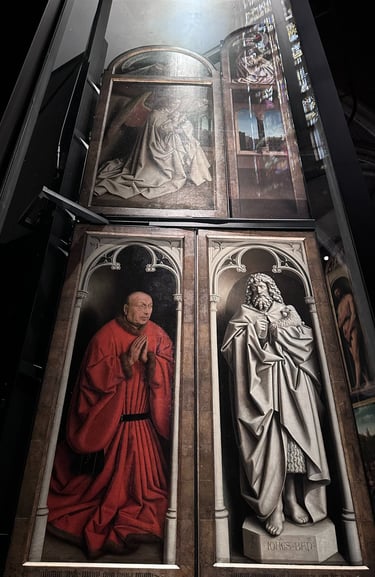
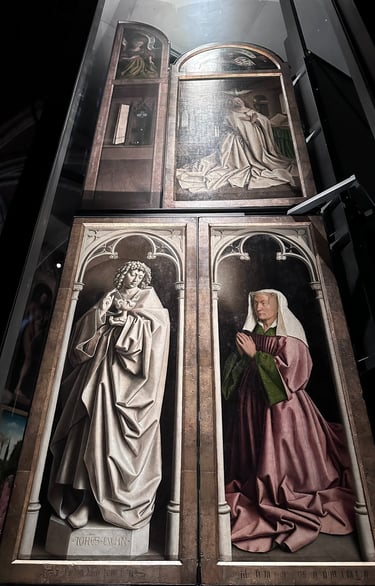
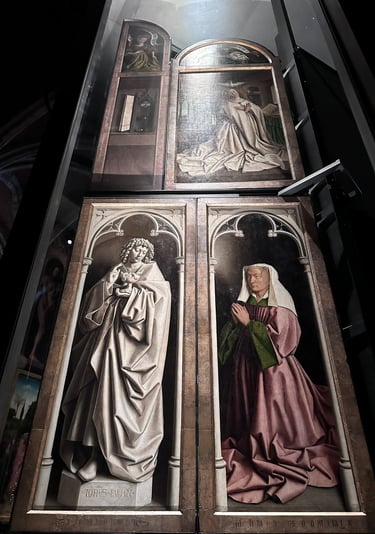
Since its completion in 1432, the Ghent Altarpiece has been regarded as a masterpiece by countless art historians and enthusiasts. From the early 1800s, hundreds of scholarly publications and art critiques have explored many aspects of this magnificent retable, including its attribution to the renowned artists and pioneers of oil painting, Hubert and Jan van Eyck. Their contributions to the painting demonstrate a remarkable synergy between technical skill and artistic vision. The intricacies of their painting techniques and materials are painstakingly documented and analysed, as is the presentation of each panel, which showcases the artists' expertise and innovative approaches to composition and colour.
The intriguing circumstances surrounding the creation of this monumental polyptych masterpiece, The Adoration of the Mystical Lamb, continue to be a topic of discussion. It was commissioned by a wealthy Ghent alderman, Joos Vijd from Hubert van Eyck, yet was largely executed by his brother Jan after Hubert's untimely death in 1426. Designed from the outset with its final location in mind, the altarpiece was placed in a chapel in the choir of St John the Baptist's Church (which became St Bavo's Cathedral in the 16th century) in 1432. This reflects the artistic ambition and spiritual aspirations of the time. The two windows in the chapel determine the shadows and reflections on the pictorial surface, creating a dynamic interplay of light and dark throughout the day that enhances the viewer's experience. Jan van Eyck's unparalleled realism lies not only in the precision of his details, but also in his innovative conception of the polyptych.
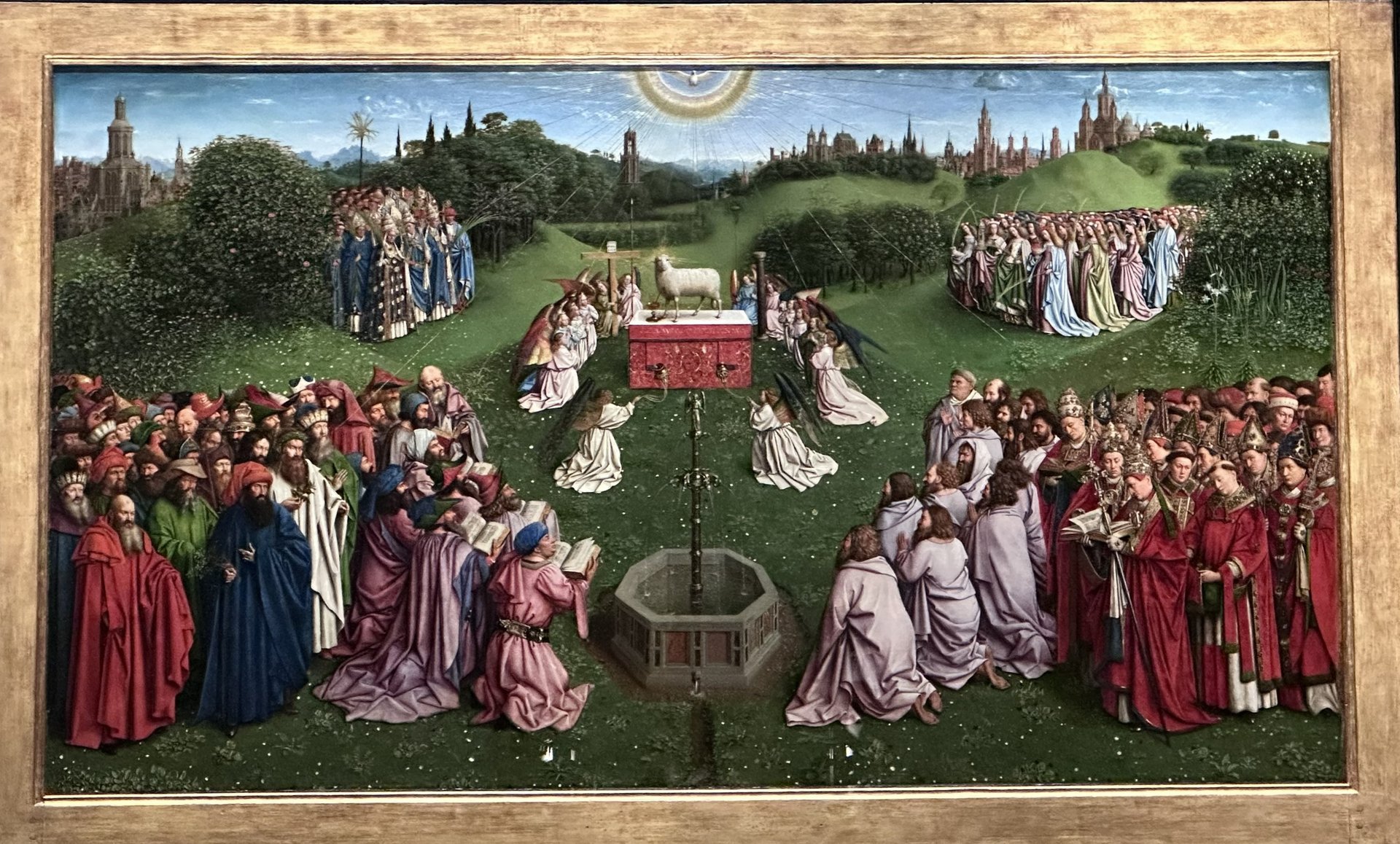
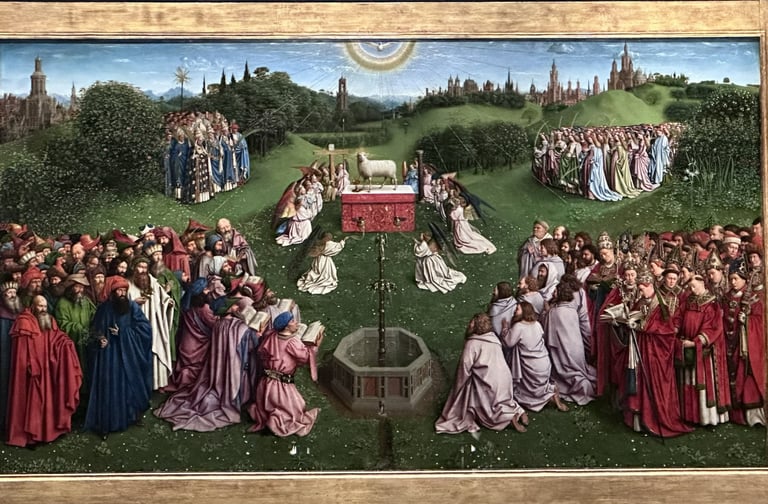
Van Eyck sought to integrate his work into its environment, blurring the boundary between real space and painting. His work is a testament to the skill and vision that characterised the Northern Renaissance. Like other artists from this period, he was more interested in the intricate piling on of details. They rendered fabric, furs and surfaces with stunning detail, paying less attention to creating a naturalistic illusion of reality. This is in stark contrast to their Italian contemporaries, who diligently studied anatomy and biology in order to depict their subjects with greater scientific accuracy. Van Eyck’s meticulous observation of nature is said to be even more patient, and his detailed knowledge is described as 'even more exact' than that of previous artists. He achieved this dedication to detail through the clever use of an external light source, creating a profound sense of immersion for viewers. Despite the traditional nature of the polyptych medium, which typically offered little room for innovation, The Adoration of the Mystic Lamb showcases significant changes in Western painting during that era. This transformation is particularly evident when we consider the frescoes painted by the brilliant Masaccio for the Church of Carmine in Florence between 1424 and 1428.
These groundbreaking works encouraged artists to experiment with new perspectives and techniques as they navigated the rapidly evolving world of Renaissance art. The complex history of the Ghent Altarpiece is almost as fascinating as the artwork itself. Years after countless artists, including the renowned Albrecht Dürer, had made the arduous journey to see the monumental piece, a wave of religious iconoclasm swept through the Netherlands during the Beeldenstorm (Iconoclasm) in 1566. Catholics in Ghent saved the panels by hiding them in the cathedral's bell tower before an angry mob stormed the church. Furthermore, during the tumultuous period of World War II, the altarpiece was stolen by the Nazis. The Monuments Men, a courageous group dedicated to retrieving stolen artwork, played a crucial role in returning the piece to the cathedral once the war had ended. However, it is important to note that damage had already been inflicted: one panel stolen in 1934 was never recovered, leaving an indelible mark on the altarpiece's history and providing a poignant reminder of its struggles over the years.