
Ruggero MAGGI
Farewell to the Mail Art Pioneer
FEATURED STORIES
By LS
12/16/2025
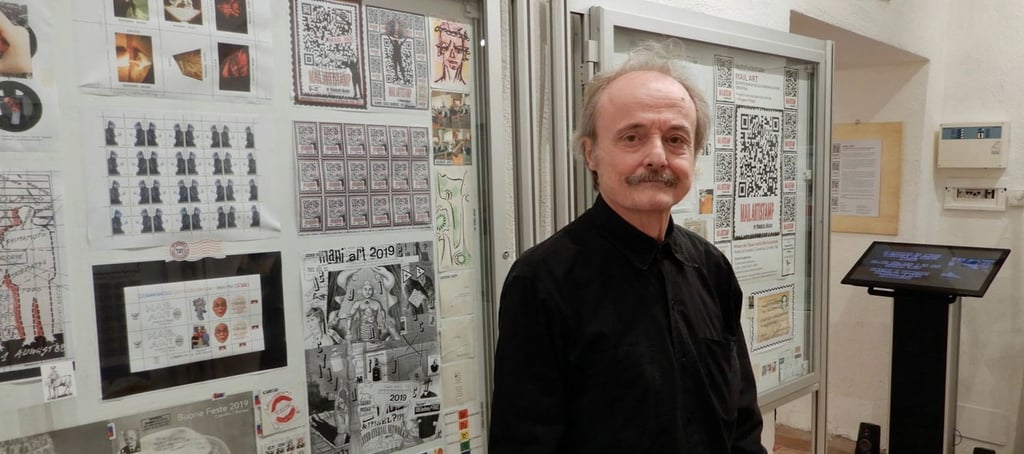
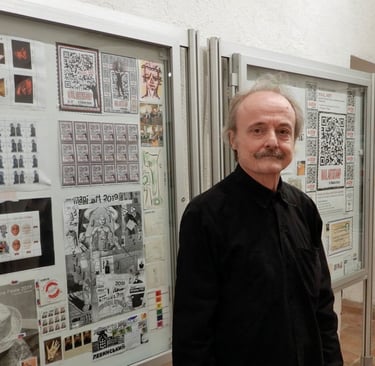
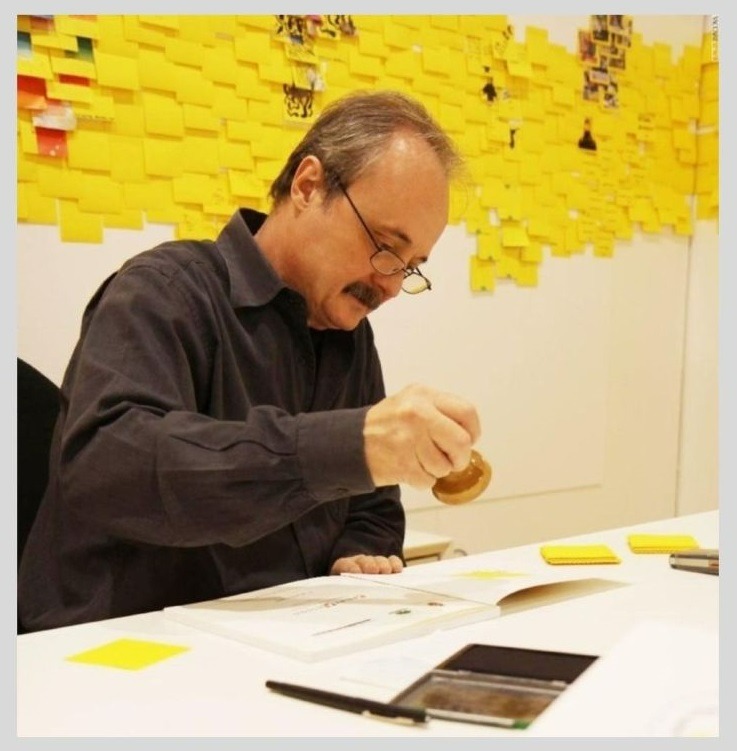
Ruggero Maggi was born in Turin, Italy, on October 16th in 1950, and he was an active researcher who has experimented extensively with art by using various medium technologies, including lasers, holography, and neon. He combined these state-of-the-art technologies with primary materials such as rocks, hemp, and sand, allowing him to create truly unique works that challenged conventional boundaries. He was not only an interior architect but also a curator and a dedicated artist. His main interests were vastly diverse: visual poetry (since 1973), copy art, artists’ books, and mail art (since 1975) captivated him. Additionally, laser art (1976), holography (1979), x-ray art (1980), and chaotic art, which was deeply rooted in the theory of chaos (since 1985), were central themes in his explorations and artistic endeavours.
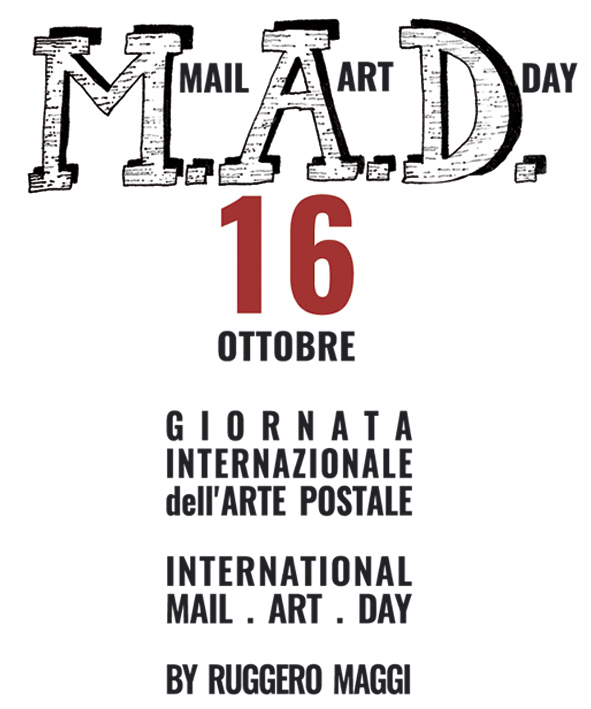
He had been featured in several exhibitions around the globe, showcasing his innovative approach to art. Notably, he participated in the 49th Biennial in Venice, where he was involved in the groundbreaking project “Poetic bunker,” and he also took part in the São Paulo Biennial in 1980. He participated also in the fiftieth, and fifty-second Venice Biennials. In 2007, at the 52nd Biennial in Venice, where he presented his thought-provoking project “Camera 312 – promemoria per Pierre.” A year later, in 2008, he was the curator of the project “Depth 45 – Michelangelo at work,” and in 2009, he curated a site-specific installation commemorating the 20th anniversary of the Fall of the Berlin Wall, which resonated deeply in a city still grappling with its own complex history. Since 1975, Maggi had been tirelessly arranging numerous Mail Art events and projects that brought artists together from all walks of life. In 1979, he took the initiative to organize the first-ever Mail Art show in Milan, paving the way for future artists to explore this unique medium. The following year, he embarked on his first Mail Art project, titled “Amazonic Trip,” which captivated many and opened up new avenues for artistic expression. The last project he curated was a heartfelt celebration of "Mail Art Day" on October 16th the same day of his 75th anniversary this year, a poignant and meaningful event that came just before he sadly passed away, leaving behind a rich legacy and countless admirers.
Thank you Ruggero for have invited me on your last project, it was an honour....Riposi in pace ♡ LS

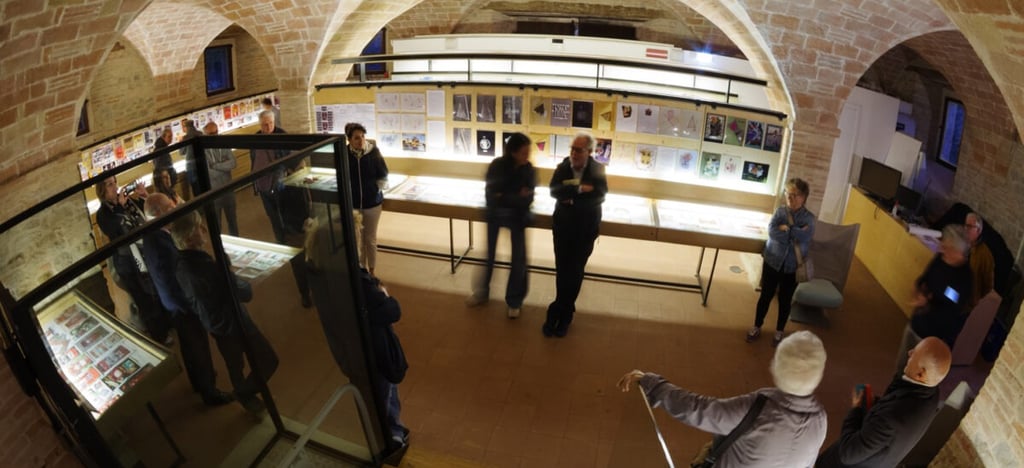
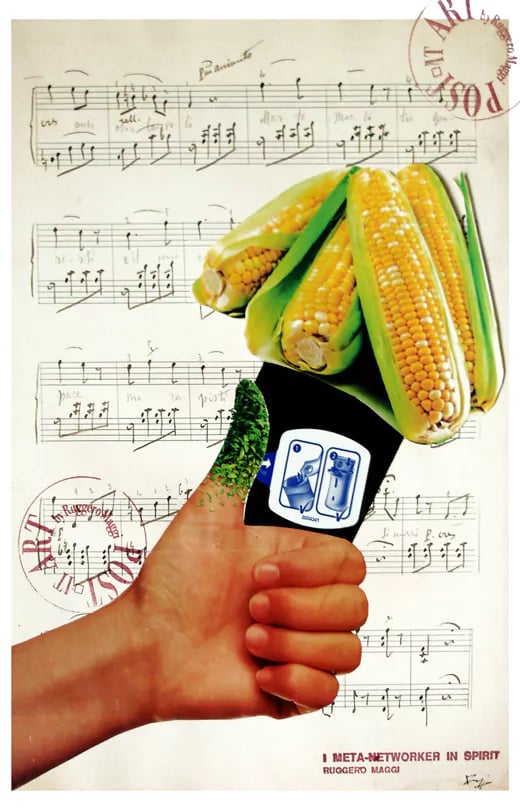
Art serves as a form of communication, and postal art can thus be viewed as the essence of creative dialogue, connecting individuals across the globe through the simple contents of an envelope. Postcards, stamps, and envelopes are the fundamental components of Mail Art, but it extends beyond these; it embodies a spirit of non-conformity, a decontextualization of images and objects, and a breaking away from established norms.
Mail Art embodies a desire to resist the constraints of the art market, which often stifles genuine artistic exploration. Mail art isn't created for financial gain or fame; it is an emotional experience, involving the thrill of receiving genuine works of art in envelopes, opening them to unveil their contents and discovering the unexpected treasures they hold. These treasures sometimes come from the far corners of the world and bear the marks of their journey. As defined by Robert Filliou, an "eternal network" is inclusive, welcoming both artists and non-artists alike. This encapsulates the radical freedom represented by Mail Art. While Marcel Duchamp demonstrated through his ready-mades that anything could be considered art and that each object harbours a poetic 'matrix' capable of reframing it as art, Mail Art enables anyone to access a new realm of creative exchange and a liberating flow of ideas, art and underground culture. The social dimension of mail art is reflected in the works of various artists, such as Clemente Padín, who defended it to the limit of his personal freedom. This led to his imprisonment for several years during Uruguay's military dictatorship in the 1970s. Other postal artists who epitomised this inherent 'vocation' of mail art in taking a critical stance against cultural and political systems included the Russians Serge Segay and Rea Nikonova. Despite facing censorship during that historical era, they established the first Soviet Museum of Postal Art in Eysk, which I had the honoor to inaugurate with my own exhibition in 1989.
Mail art is characterised by a strong inclination towards informality, in which the intrinsic connection between the sender, the object sent, and the recipient is of great importance. Local postal art plays a vital role in cultural globalisation processes, expressed locally through the actions of various postal artists participating in an extensive network of connections, much like the Tower of Babel with its intertwined fates. Within this global network, a new stage has emerged in the creation of art, or rather, in living art. The most common means of nurturing these extensive relationships is through mail art, which encompasses the entire world. Mail artists act as unique pieces within a magnificent mosaic situated in an infinite universe of poetic energies. Their role is distinctive because their position in the network and their connections to other artists are irreplaceable unique. // Ruggero Maggi
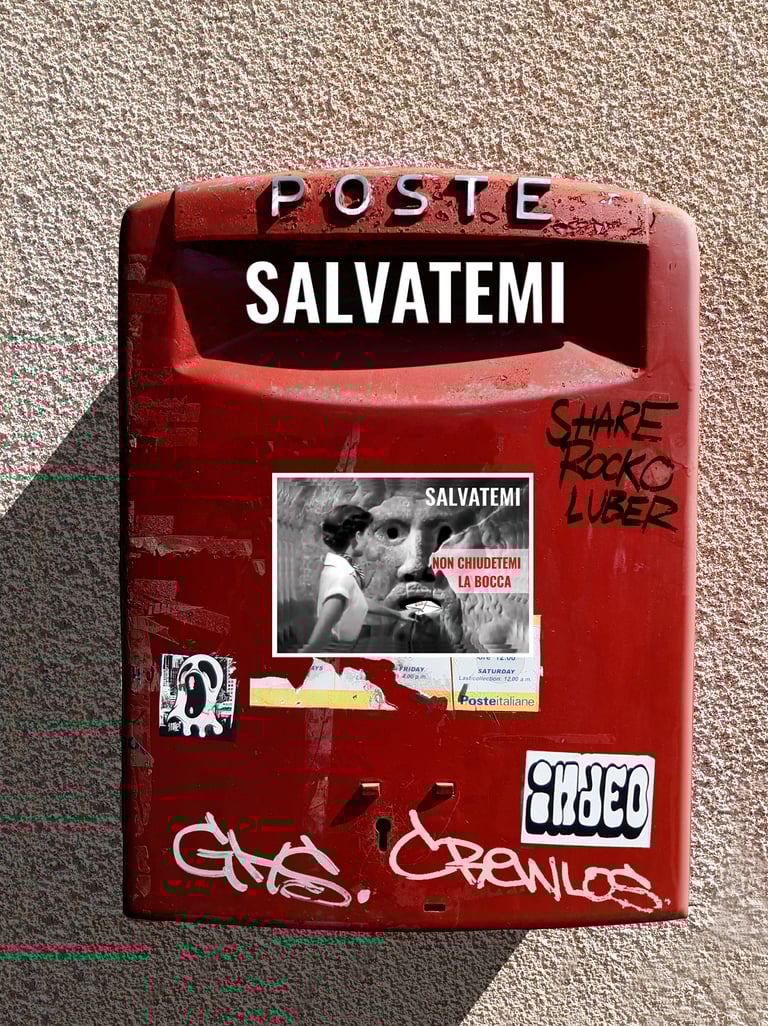
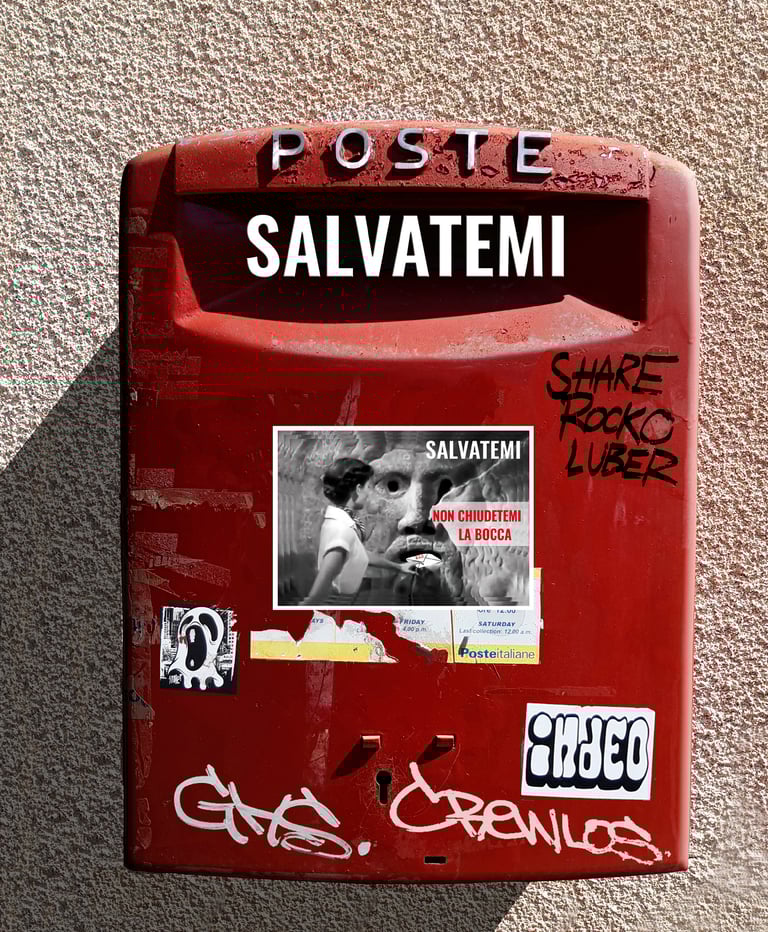
THE MAILBOX | AN INTERACTIVE OPEN-AIR MUSEUM
Already for some time in Italy, but also everywhere in the world, there is the tendency to close and remove mailboxes. The immoderate use of social media and email is relegating the “normal” mail to an increasingly obsolete communicational use, forgetting how important instead is also the tactile, visual and in some cases even olfactory “solicitations”. Not to mention the pleasure one receives in opening an envelope sent perhaps from the other side of the world and the “mystery” that is revealed as soon as it is opened. Now all this is being abolished in favor of faster dissemination and at the expense of a more personal and less homogenized communication, so: Let's shut the mailboxes mouths! Once irreplaceable elements of the urban context, but now considered obsolete and useless. What will be the next victim to be sacrificed on the altar of modernity and progress? the post office?! A place that will survive perhaps only as a sales outlet for various items and services, like any bank, like an insurance office… anything but a post office, thus effectively betraying the primary function for which it was created. Who among us posting a letter or postcard in a mailbox has not felt a thrill in entrusting his or her message to a hole, the inside of which cannot be seen? A bit like inserting one's hand into the famous Mouth of Truth, with the feeling of never being able to take it out again!
In Piazza Bocca della Verità is the ancient marble mascherone, one of Rome's most famous symbols, placed since 1632 in the pronaos of the Basilica of Santa Maria in Cosmedin. The marble disk has the features of a male face with a pierced beard, eyes, nose, and mouth-perhaps of Jupiter, a faun, or a river deity- flanked by several symbols, including a scarab, two claws, and two wolf heads. William Wyler's film Vacanze Romane (1953), starring Audrey Hepburn and Gregory Peck, established the Mouth of Truth to undisputed international fame.