Odyssey of Léa
EXHIBITIONS
16mag
11/16/2025
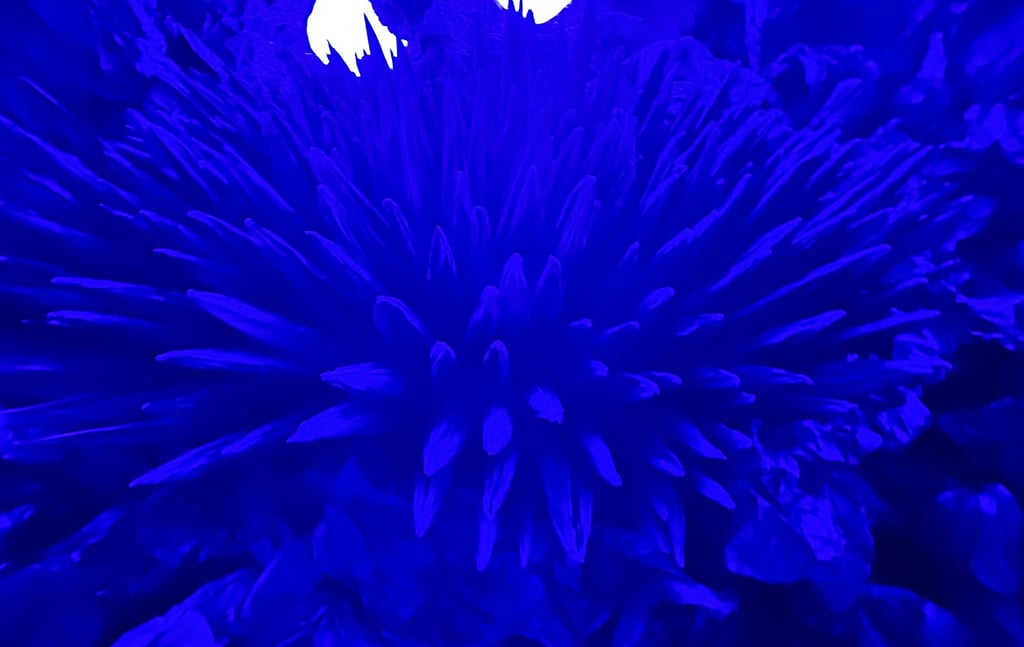
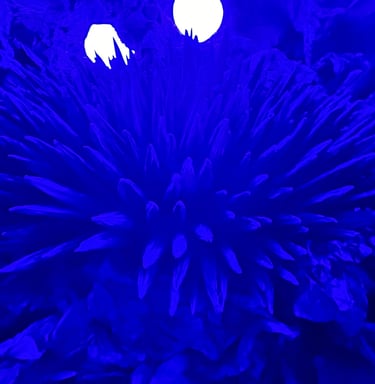
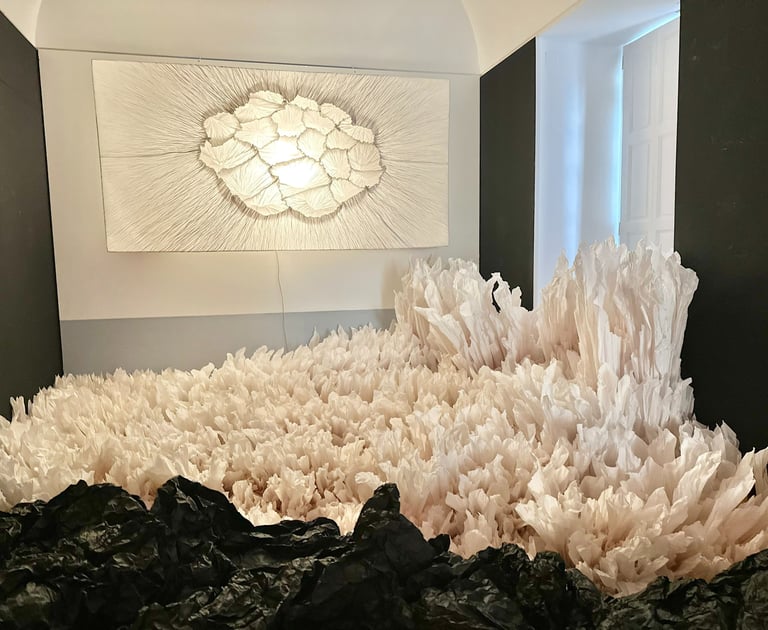
The Exhibition Odyssey of Léa takes visitors on a captivating journey through an enchanting underwater world made entirely of paper, from the profound depths of the ocean floor to the shimmering surface of the water. The artist Junior Fritz Jacquet brings awareness about the crucial issues facing our oceans and has skilfully designed this exhibition as an immersive journey that offers a breathtaking underwater adventure through five meticulously crafted rooms at Pavilion Vendôme-Clichy, in France. Here, monumental manta rays glide gracefully, vibrant forests of posidonia sway gently, suspended jellyfish float ethereally, and mysterious caves beckon the curious to explore. From room to room, the scenography plays artfully on contrasts: the dark, enveloping hues of the abyss dramatically give way to radiant spaces bathed in rich blues and whites, creating a brighter and more airy atmosphere that lifts the spirit.
❝ You might think the ocean is untouchable with its immense power, its gigantic waves, its raging storms - surely it is eternal, invincible. It has watched continents form over millennia, swallowed entire civilizations whole, and holds more mysteries within its depths. These mysteries are not merely relics of the past but also lessons for the future. And yet, it is suffering quietly, deeply, in a state that may fail to recognize. Today, the ocean stands as one of the most endangered ecosystems on earth. The causes of its distress are many and diffuse, often invisible to the naked eye, yet they are profoundly impactful. Average sea temperatures are steadily rising, disrupting ancient thermal balances that have maintained life for centuries; the ice in polar regions is melting at unprecedented rates; ocean currents are shifting in ways that disturb established marine habitats; storms are becoming more intense and frequent; and entire species vanish before they are even discovered, mysteriously disappearing from the web of life that keeps our planet thriving. The water grows increasingly more acidic, oxygen becomes scarce, and coral reefs - the very pillars of marine life - are bleaching, dying, and crumbling under the weight of neglect. Meanwhile, plastic finds its way everywhere, from the ocean floor to the stomachs of fish, from tropical beaches to the bellies of birds that mistake it for food. And yet, humanity behaves as if nothing is wrong. As if the vast sea were an infinite reservoir, as if it could endlessly absorb our waste, our pollution, our excess - without consequence. But the ocean is not merely a passive entity. It is alive. It reacts, destabilizes, and resists the toxic tide of our actions. Some areas have become barren marine deserts - devoid of fish, no sounds of life, no movement, just heavy silence signalling an invisible collapse. Other zones suffocate, oversaturated with nutrients from run-off, stripped of all diversity, and transformed into lifeless expanses. And yet... There is HOPE; the ocean is resilient. When given space and time, when freed from relentless exploration and exploitation, it begins to heal slowly but surely, like a bruise fading away with care. Coral reefs can return, species can reappear, and waters become clear. Life, even when wounded, always finds a way to adapt and survive. This profound cycle of life and rebirth echoes the truth that the ocean is not just a resource for us to exploit, but a complex, living system that sustains us all, shaping weather patterns, regulating temperature, and supporting countless forms of life.❞
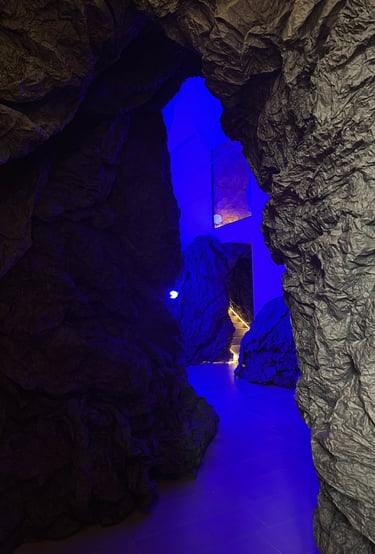
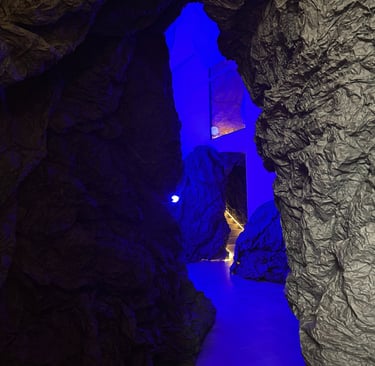
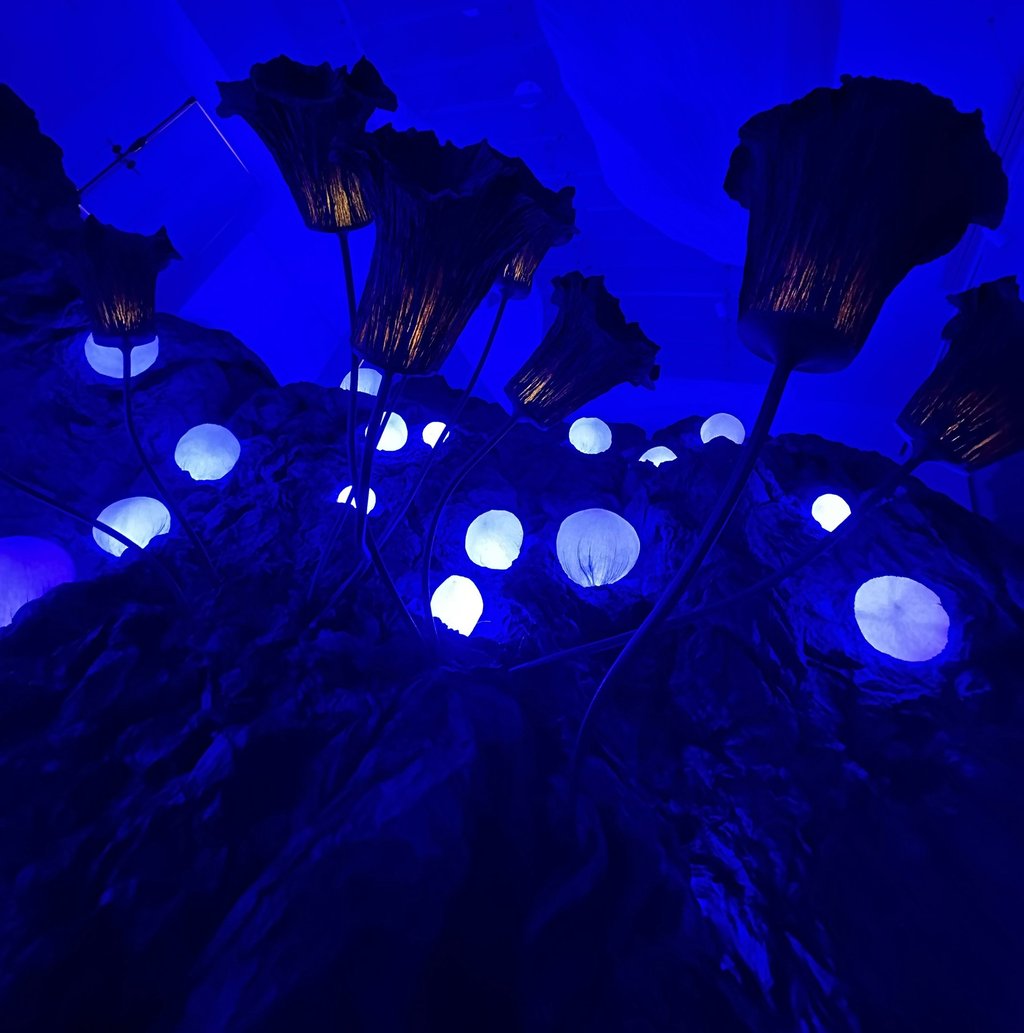
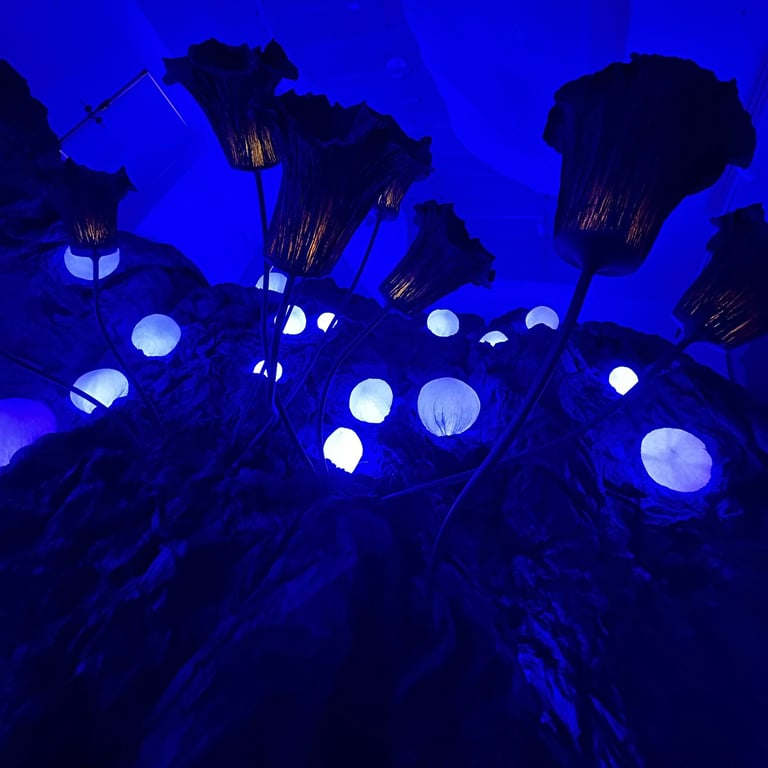
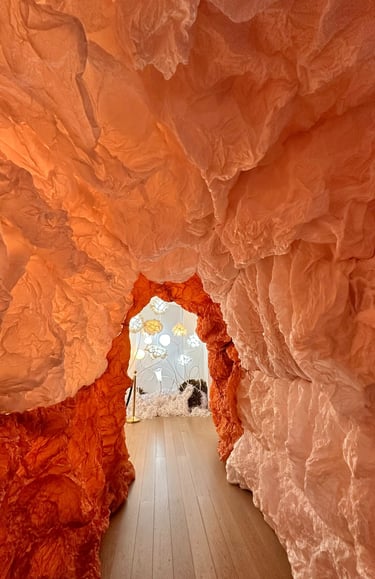
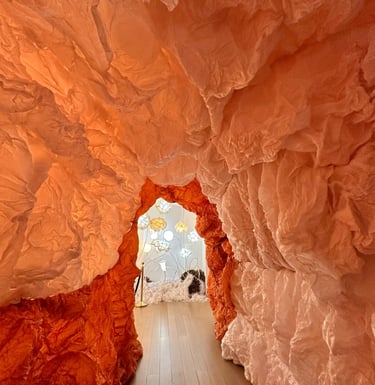
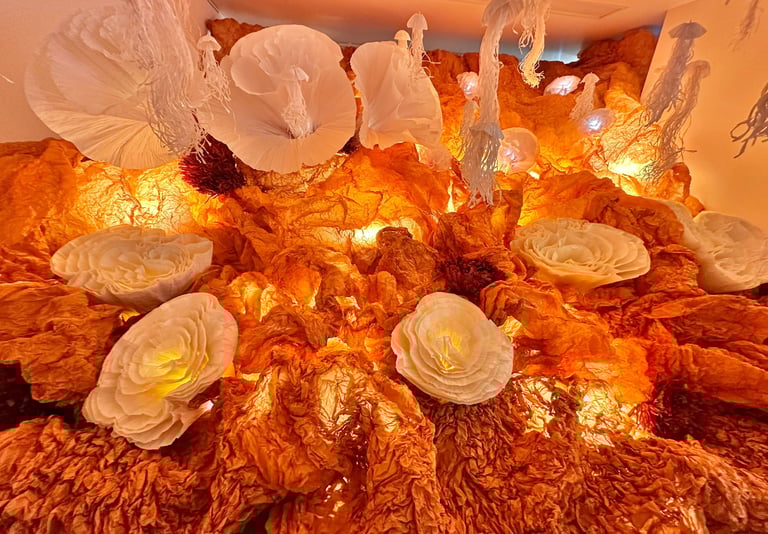
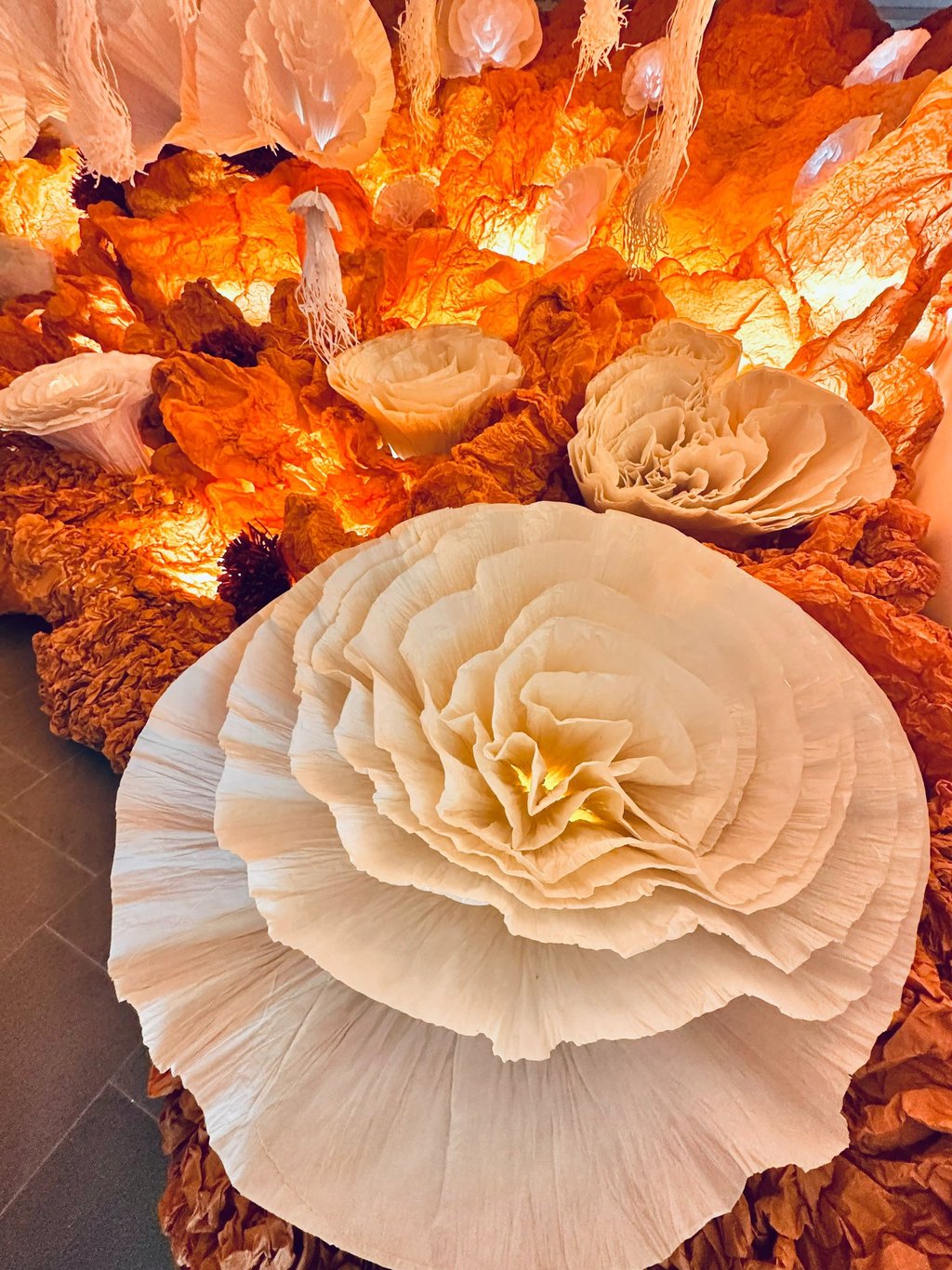
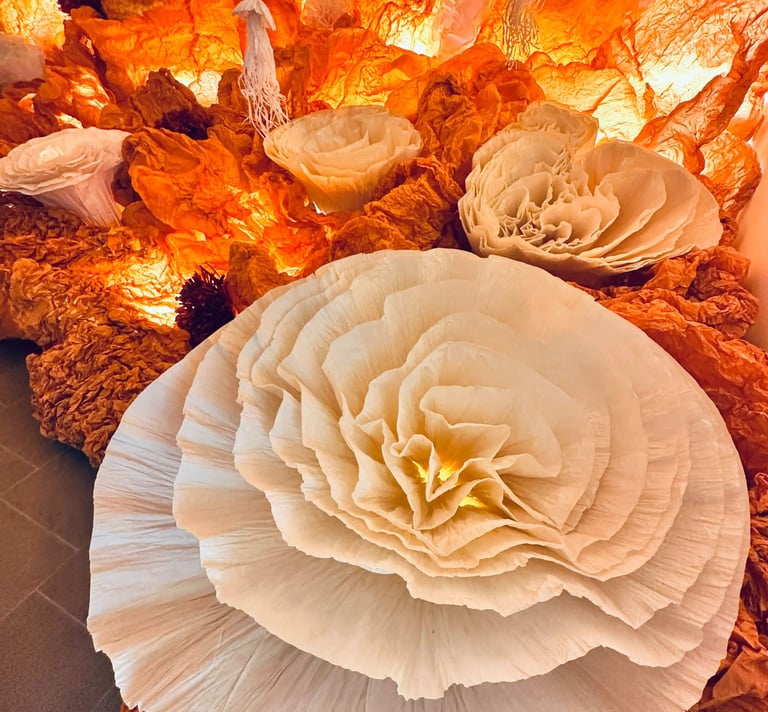
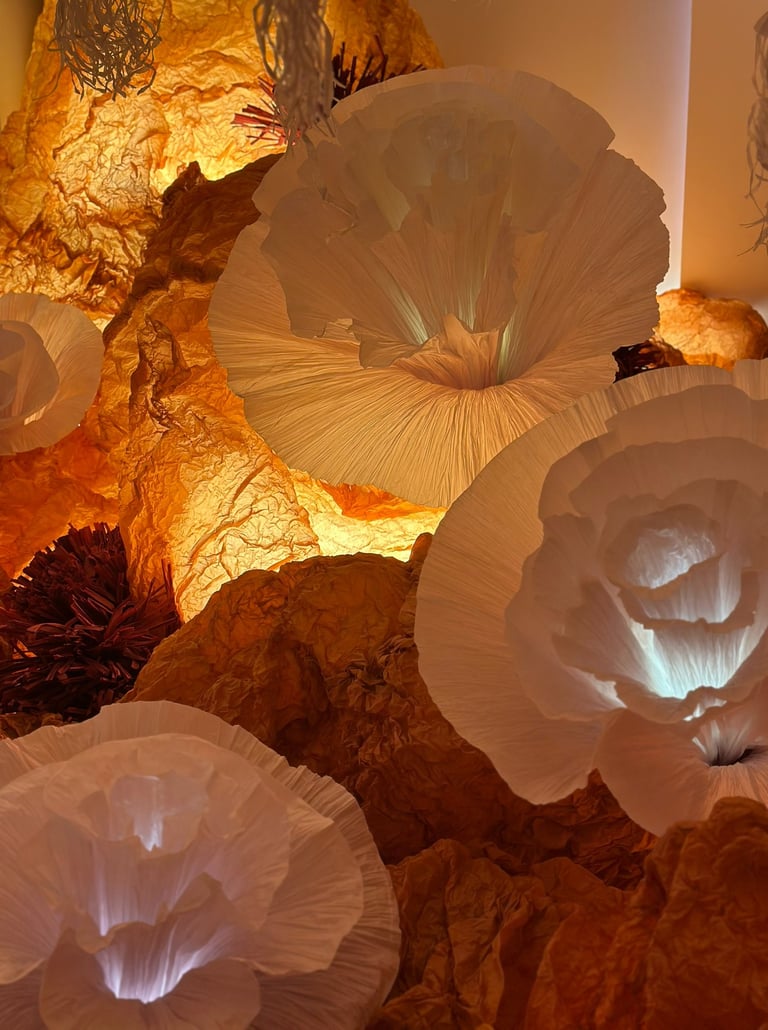
The paper reveals all its stunning metamorphoses, transforming from raw and crumpled material to delicate and poetic forms that seem to dance in the light. Beyond this material exploration represented by paper, the exhibition offers a mesmerizing world of sound and light, inviting visitors to engage their senses and enjoy a truly sensory and fantastical experience, where each element stimulates the imagination and evokes a sense of wonder. The installation is deeply rooted in an eco-responsible approach: no less than ten tons of greaseproof paper, initially destined to be thrown away by factories, have been thoughtfully reused to create this monumental decor, a true ode to the ocean and its mysteries. By giving new life to this material, Junior Fritz Jacquet has created a work that not only captivates the eye but also raises critical awareness of the urgent need to protect our precious oceans through the visual and symbolic power of creation. As visitors wander through this extraordinary exhibition, they are encouraged to reflect on the beauty of the marine world and the importance of preserving it for future generations, creating a dialogue about sustainability and environmental stewardship that resonates long after the visit ends.
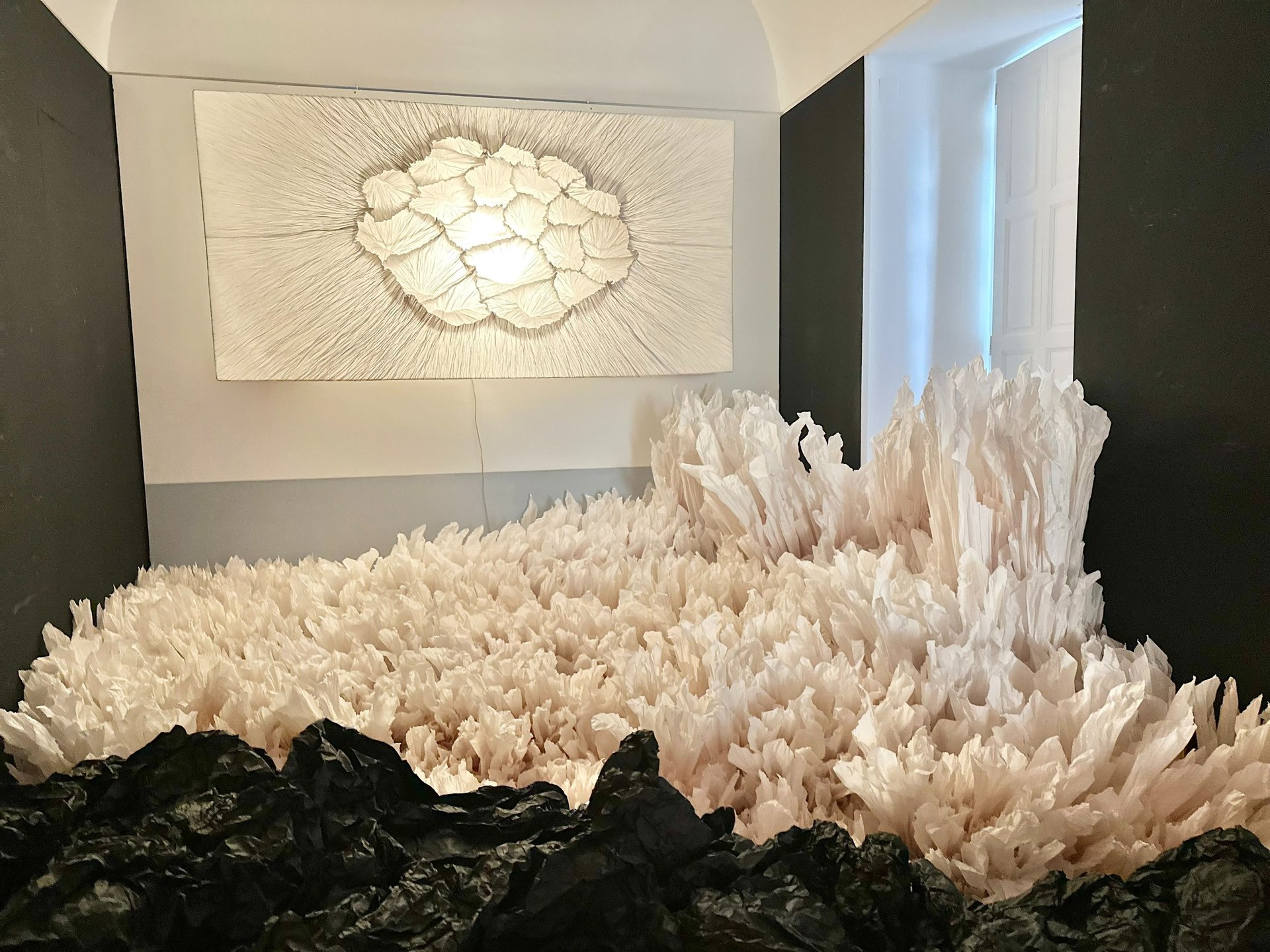
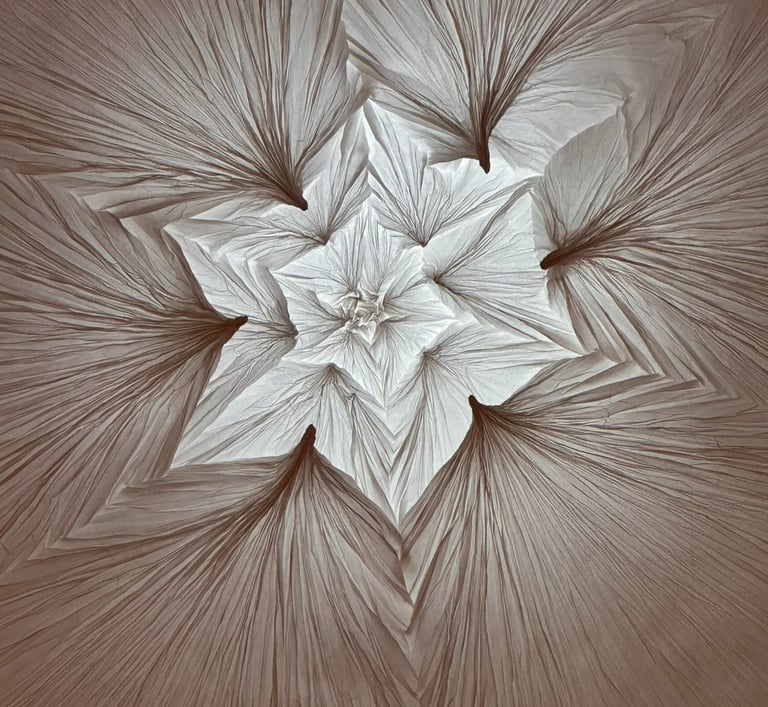
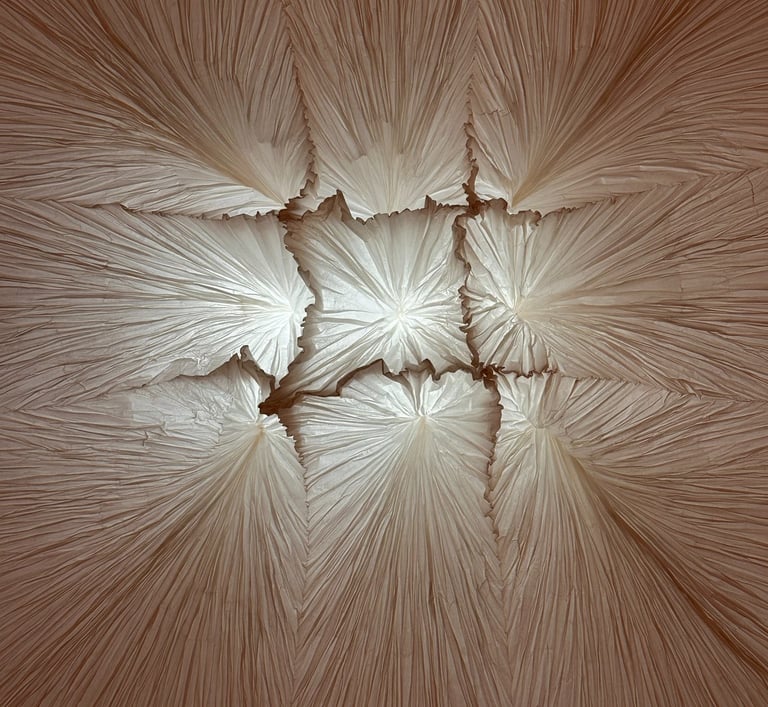
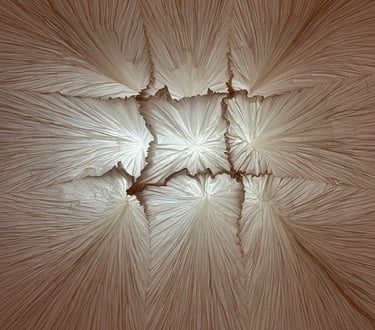
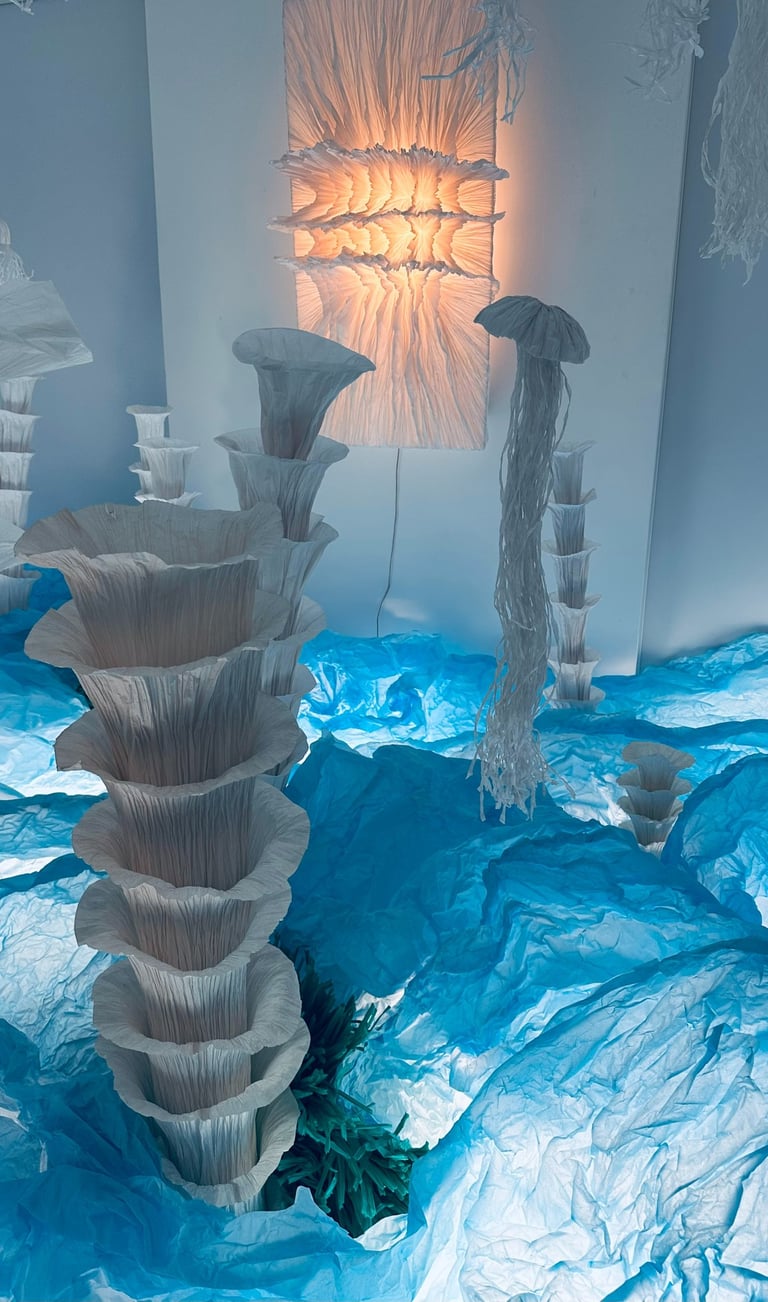
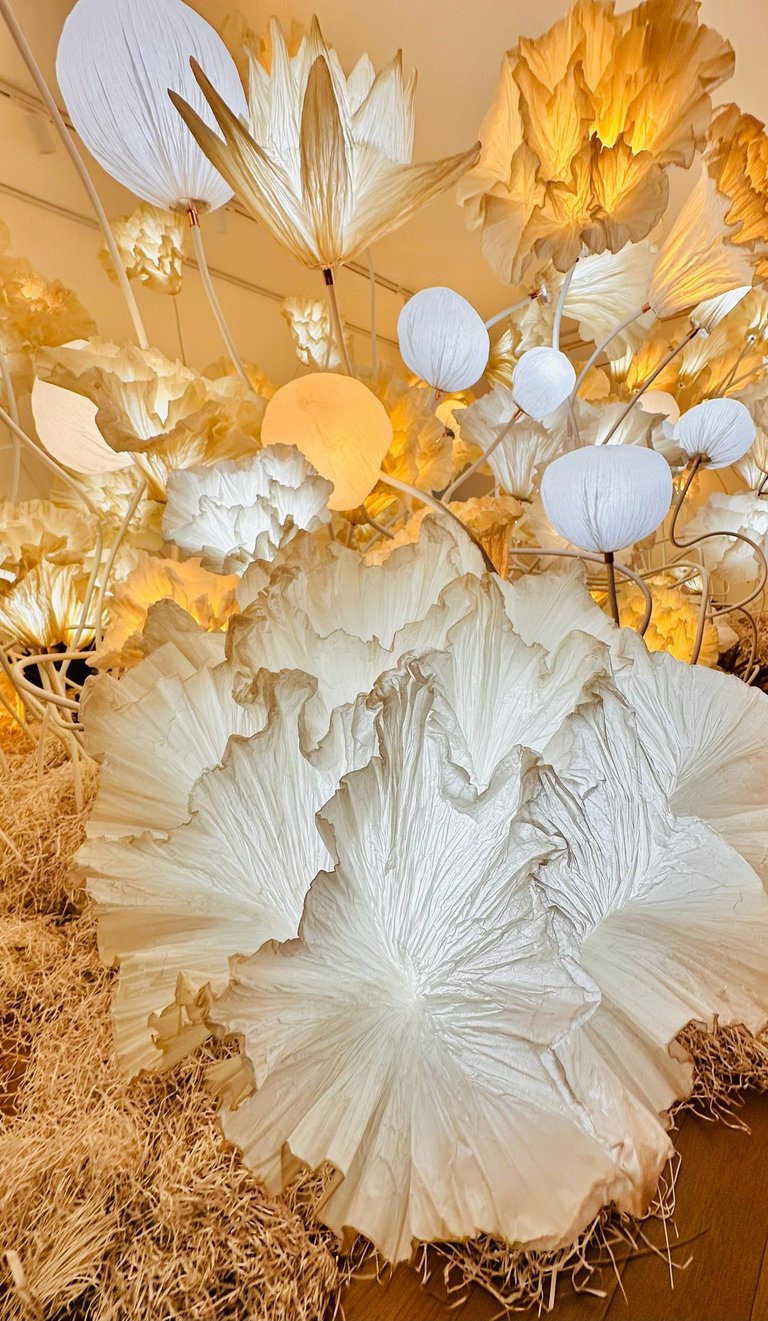
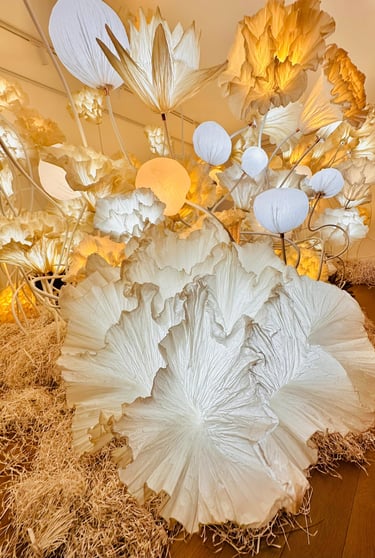
Junior Fritz Jacquet discovered art origami back in 1994, and became a Master Origami Artist, receiving the highest distinction awarded by the Nippon Origami Association in 2004. Since then, he has dedicated himself to a profound exploration of this intricate craft. He works with paper with a lasting respect, patience, and an innate intuition that guides his hands. He doesn't simply paint on the surface or force his creations into existence; rather, he listens to the material itself, allowing it to guide him. Furthermore, he crumples it, shapes it, folds it, and opens it—each action is deliberate and thoughtful—much like one might carefully uncover a hidden form in a seashell or reveal the complex grain of a tree. Each sculpture is born from a silent dialogue between hand and material, creating an intimate connection that transcends the ordinary. Between his artistic research, a strong commitment to education, and a deep exploration of the diverse material he uses, Junior Fritz Jacquet asserts a unique universe where paper transcends its everyday functionality to become a language all its own, serving as both medium and sculpture. His work invites observers into a new realm of understanding, where the delicate art of folding paper transforms into a profound means of expression. Paper is undoubtedly an ecological choice; yet, it is also a powerful symbolic one. It emerges from the processes of recycling, reuse, and the ethos of second life. In this exhibition, paper transcends its physicality to become a language without words, a silent narrative that speaks directly to our emotions and senses. It suggests a deeper contemplation, inviting us to slow down, observe, and truly pay attention to the subtleties of our environment and our own feelings. This artistic gesture stands not only as an expression of creativity, but also as a potent form of resistance in the face of the ongoing ecological crisis and urgency we currently face. That may, indeed, be art's greatest power: to create spaces of shared vulnerability and introspection; spaces where, for a fleeting moment, we are not mere spectators to life’s vivid tapestry but rather sensitive beings—fully engaged and listening intently to the world around us, the whispers of nature, and the stories that paper has to tell.