La Boîte-en-valise and Cities Unseen
ARTICLES
By LS
5/16/2026
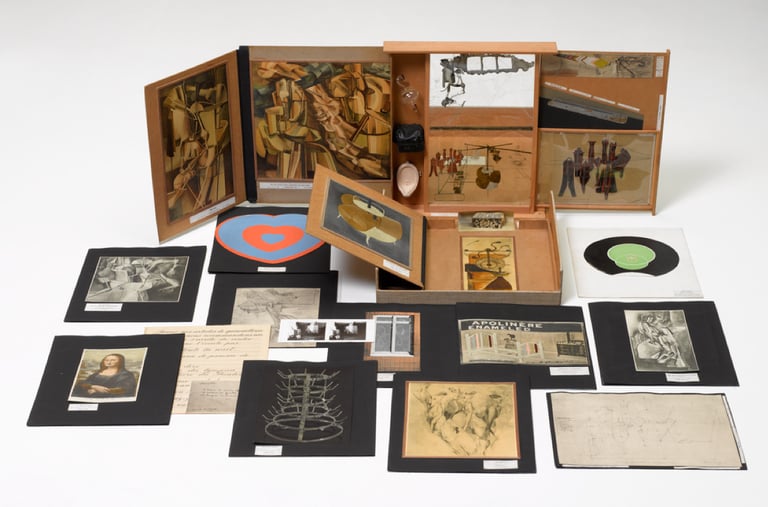
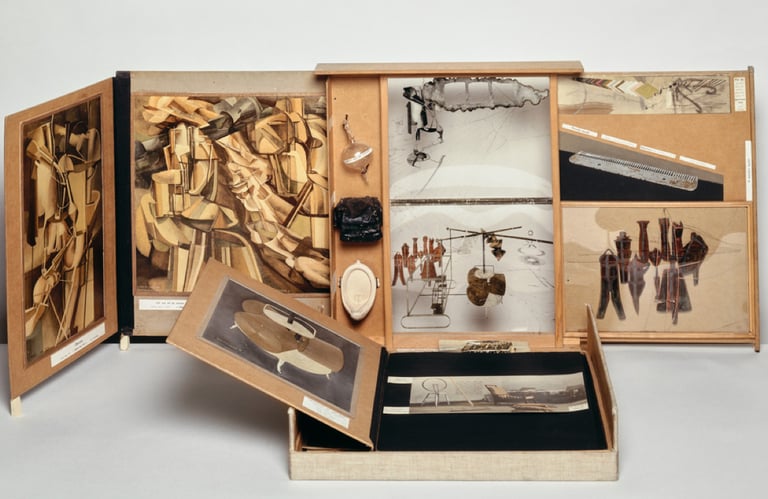
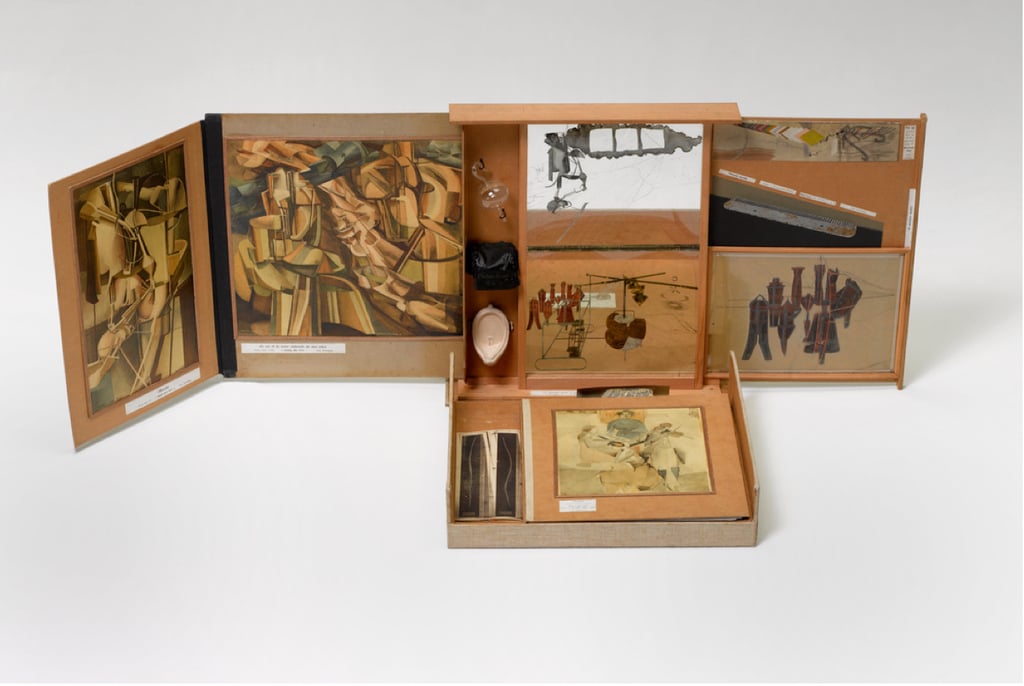
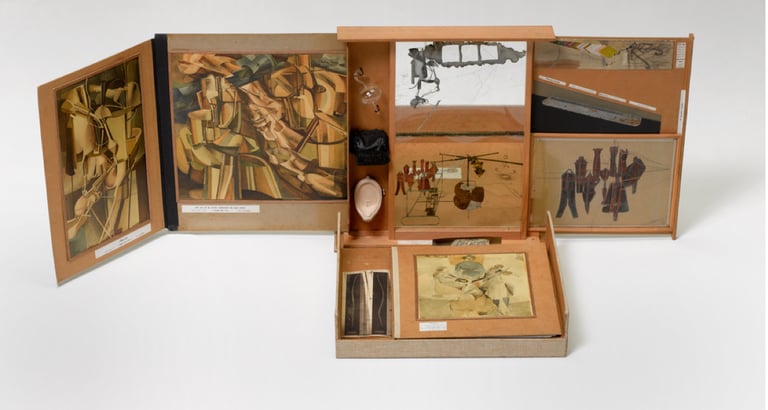
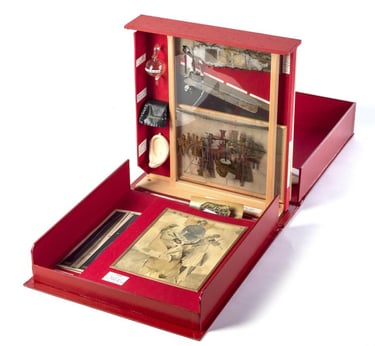
In 1934, Marcel Duchamp (1887-1968) embarked on a comprehensive retrospective of his work, reflecting on both the pieces he had created and the philosophical implications of his artistic journey. However, as was always the case with him, he did not want this evaluation to hold him back or weigh him down. Instead, he came up with the innovative idea of creating a unique box in which to bring all his works together, reminiscent of a miniature museum essentially a portable museum encapsulating his life's work. Acting as both sales representative and curator of his artistic creations, Duchamp audaciously sidestepped the traditional role of the artist, challenging the notions of creativity and authorship in the art world.
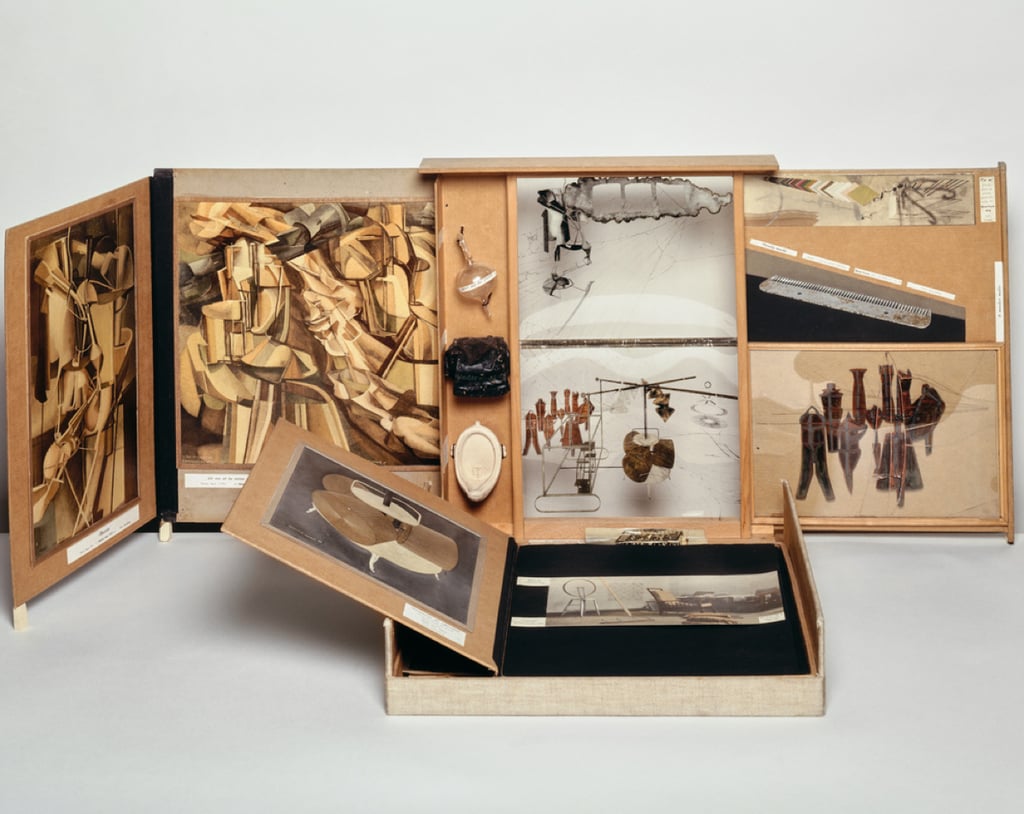
On 16 May 1940, Marcel Duchamp escaped Paris by train as the Nazis advanced on the city. He travelled south with his companion, Mary Reynolds, to the small seaside town of Arcachon, where he joined his sister Suzanne and his brother-in-law, the painter Jean Crotti. Despite finding himself in an area classified as the occupied zone, Duchamp remained in Arcachon, attempting to resume a normal life. During his displacement, which began in 1940, Duchamp worked on La Boîte-en-valise, or 'the box in a suitcase'. This contained sixty-nine reproductions of his past artwork and was begun in 1935. It was to be serialised in an edition of more than 300, twenty of which were placed in leather valises. "My whole life's work fits into one suitcase," Duchamp explained. By 1941, he had completed most of the reproductions. However, living conditions had worsened, so he decided to leave France. First, though, he had to transport the materials for his Boîte from occupied Paris to the unoccupied south of France, from where he could ship them to New York.
In 1941, Duchamp created this ready-made piece as a ‘portable museum’ of his work, a unique concept that combined artistry and practicality. The suitcase contains miniature replicas, photographs, and colour reproductions of his works, as well as an ‘original’ drawing that reflects his innovative spirit. Among these eclectic items is a tiny model of his urinal, one of his most important and provocative works that continues to spark discussion and intrigue. Meticulously designed, this little box reads like a fascinating puzzle that reveals the connections between the various works he produced over a period of some thirty years, inviting viewers to explore the intricate relationship between them.
«Tout ce que j'ai fait d'important pourrait tenir dans une petite valise» (‘Everything of significance I have ever done could fit into a small suitcase.’) This poignant statement encapsulates Duchamp's belief in the simplicity and profundity of his work, emphasising the idea that true art transcends physical form and can be reduced to its most essential elements.
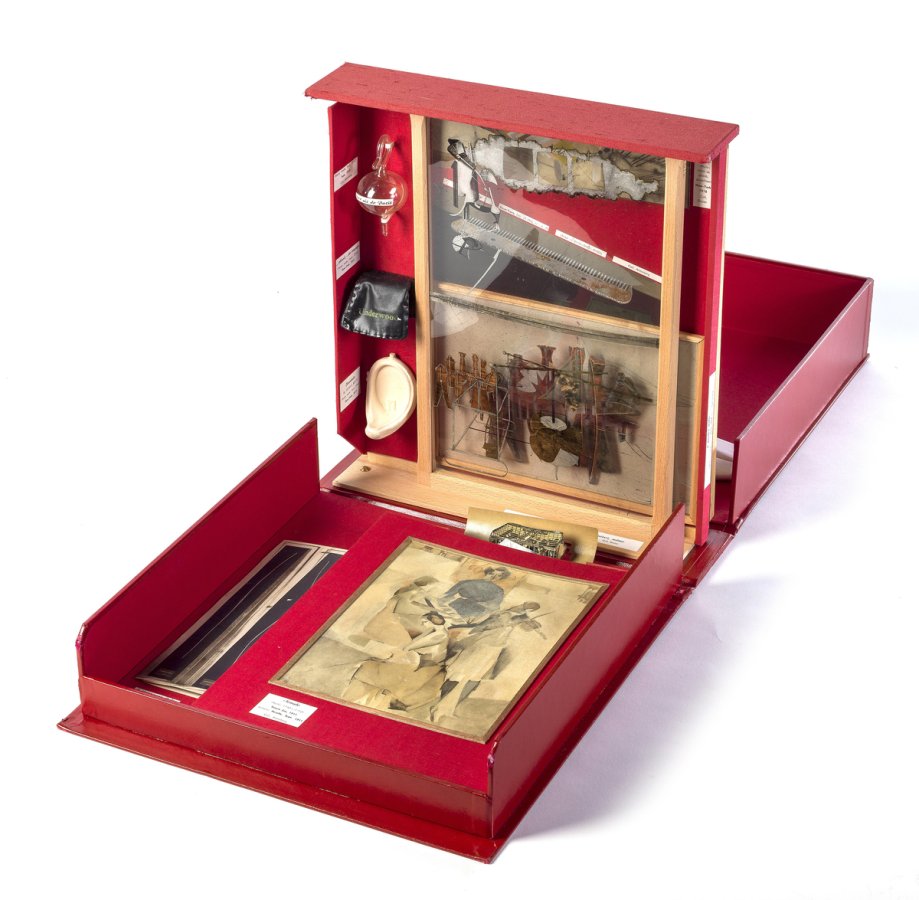
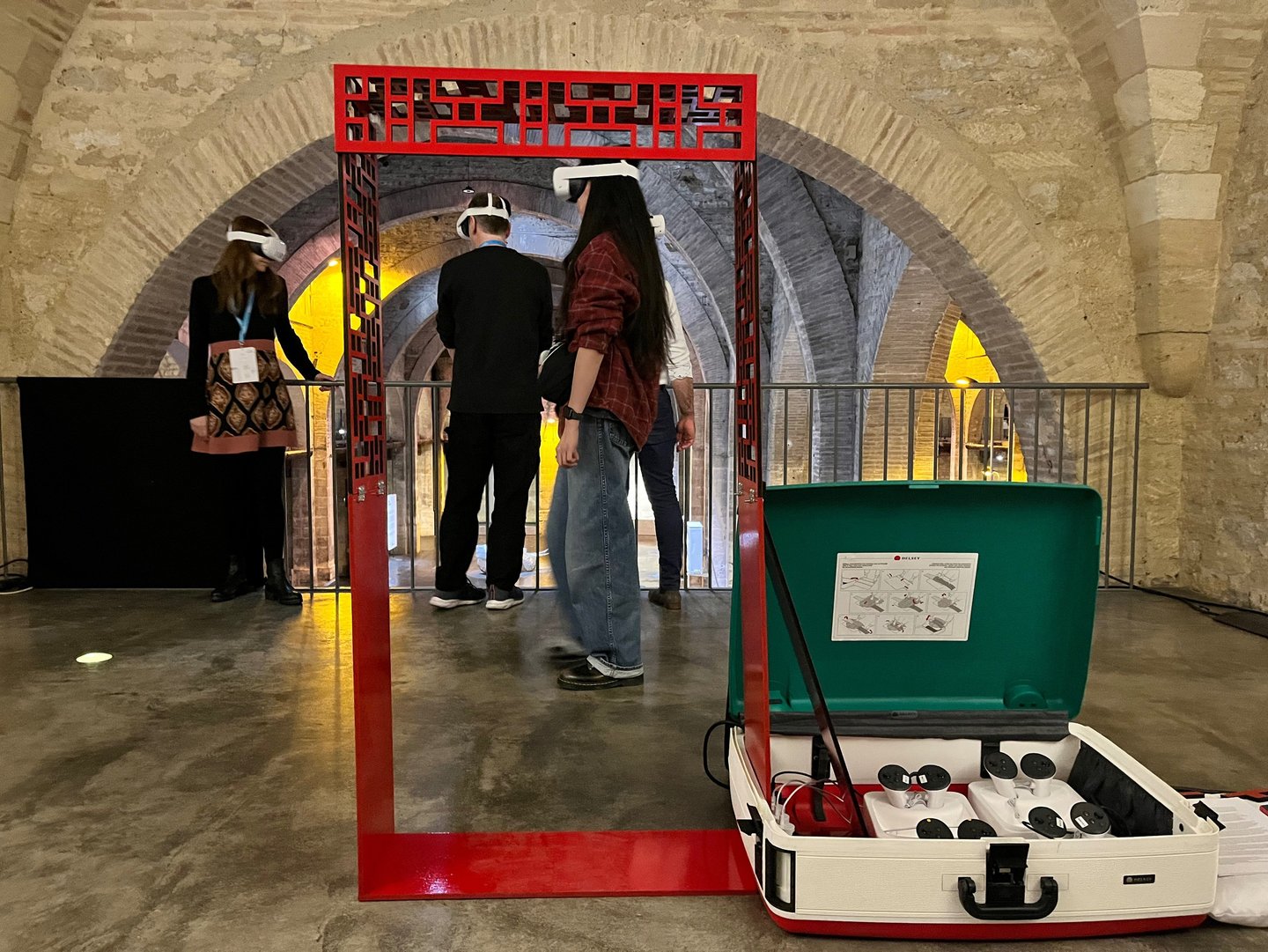
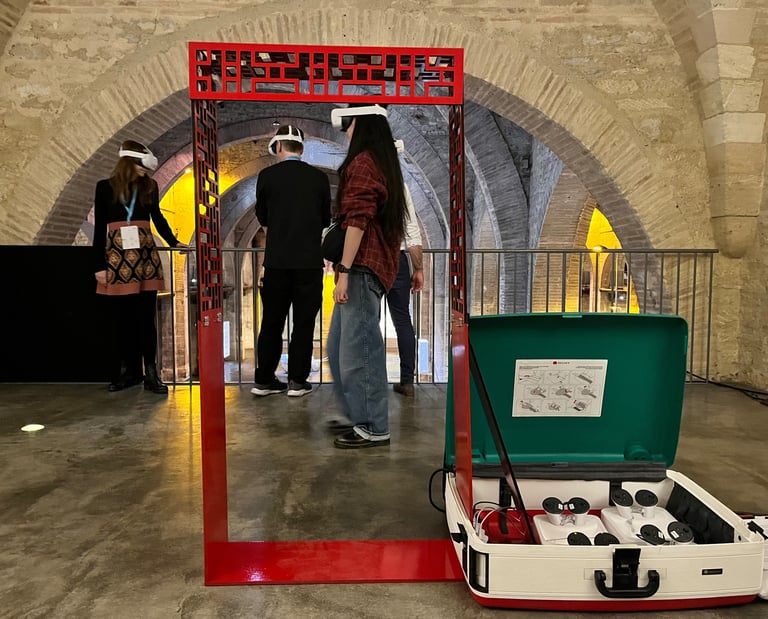
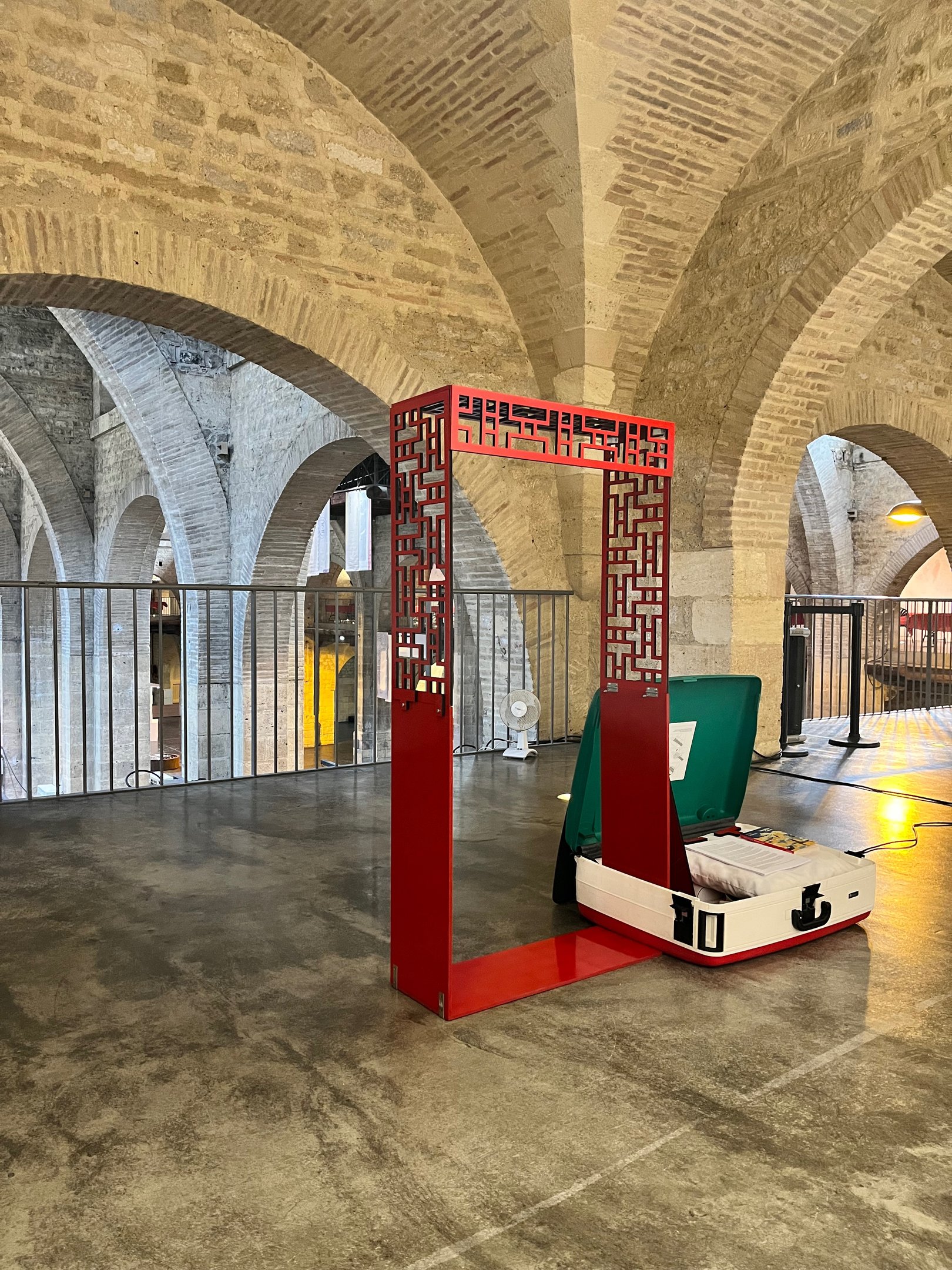
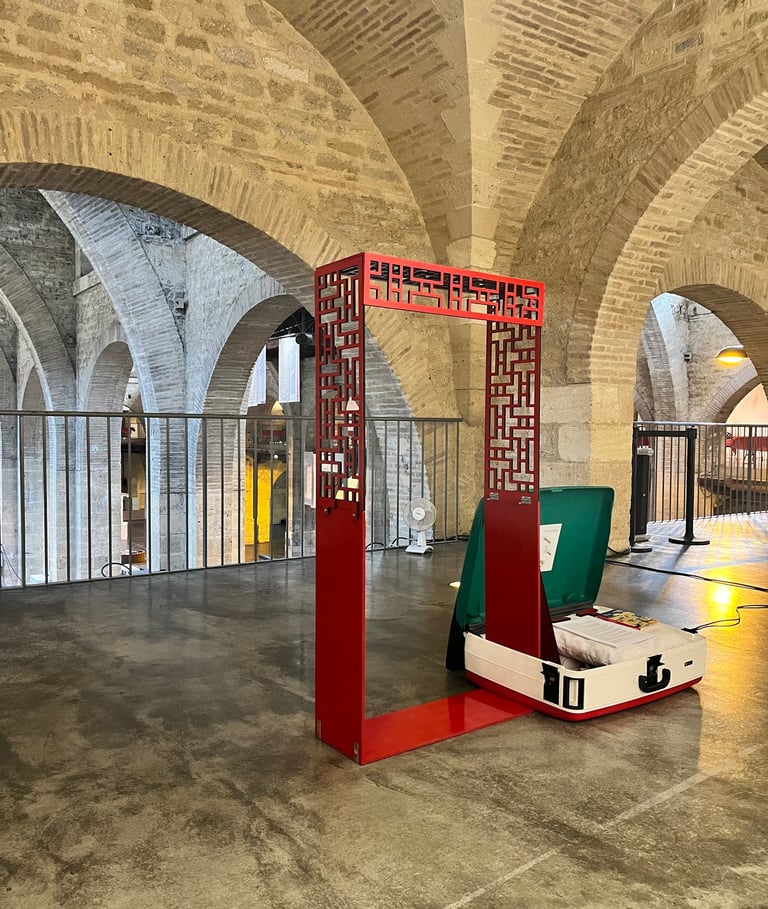
This remarkable artwork has inspired countless artists with its profound concept that transcends the ordinary. Drawing inspiration from Marcel Duchamp's Boîte-en-Valise, Kristof Timmerman's Cities Unseen is an art installation that embodies the idea of a portable, miniature universe, and challenges our perception of art and the viewer's relationship with it. Just as Duchamp's work brought together replicas of his most significant creations in a meaningful and compact way, this installation contains entire imaginary cities within a designed physical object. This enables a new kind of spatial storytelling, encouraging viewers to explore deeper interpretations. The fascinating emergence of the Tartarian portal is based on the idea that travel is a mental and sensory journey which transforms the traveller's perception of physical distance, bringing about significant shifts in awareness. This allows individuals to reflect on their own experiences and the universal nature of the journeys we all undertake. Interacting with the installation is made more engaging through the use of unexpected textures and materials, creating an immersive environment that encourages audience to explore it further.
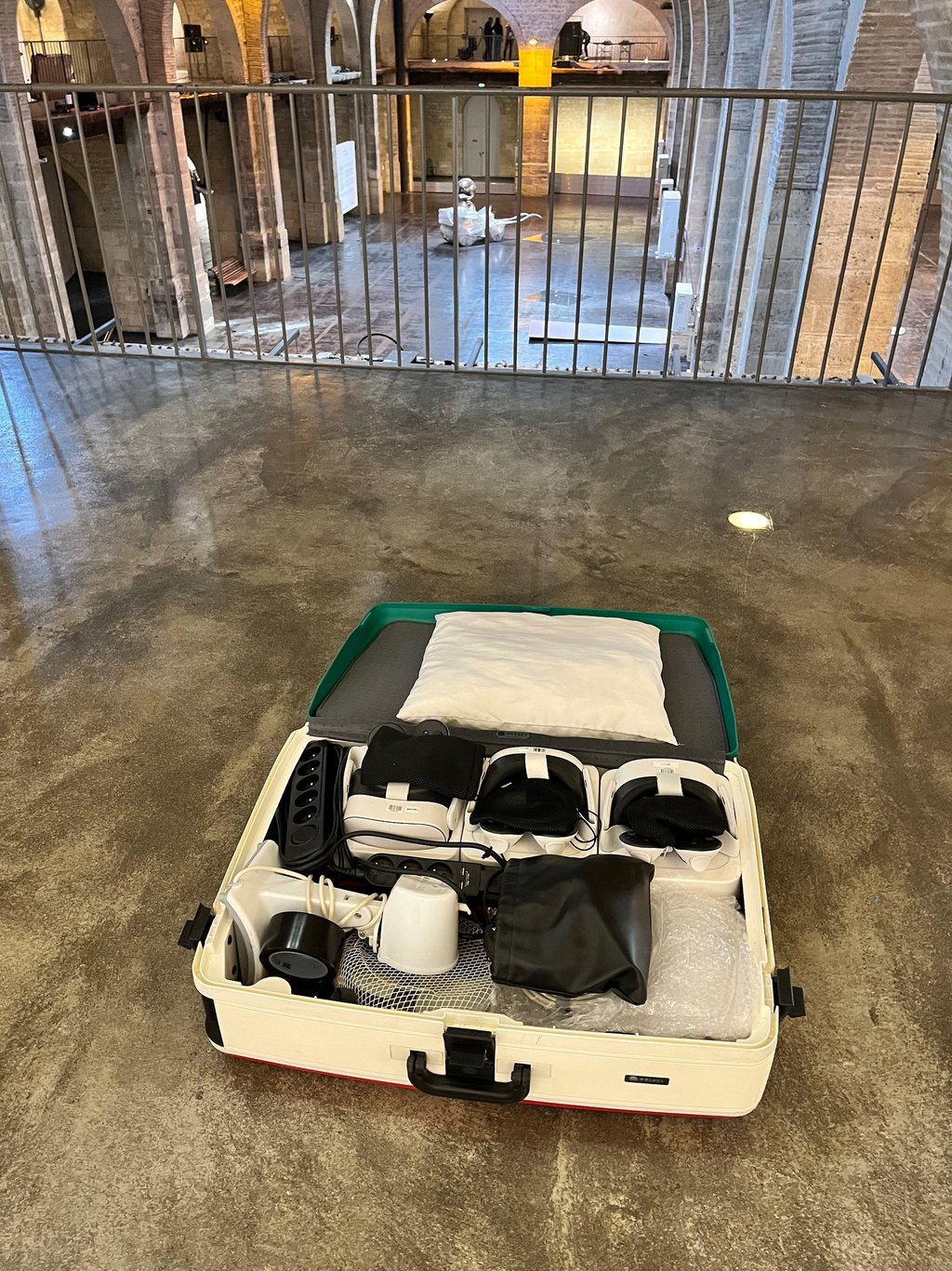
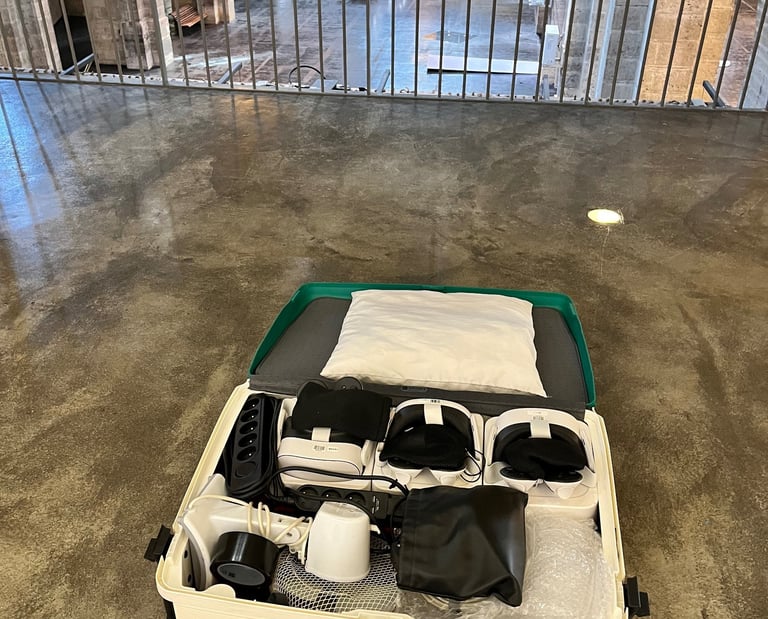
Credit ☞ Concept, design and prompting: Kristof Timmerman - Virtual Reality development: Arafa Yonçalik, Rob Mertens, Lowie Spriet, - Setup Comfy UI and prompting: Karen Pauwels - Set design assistance: Elke Claeys
Royal Academy of Fine Arts Antwerp & Immersive Lab, AP University of Applied Sciences and Arts, Antwerp, Belgium
The Cities Unseen installation explores storytelling and how world images are formed. In Italo Calvino's narrative, Kublai Khan perceives an understanding of his empire by listening to Marco Polo's tales of invisibles cities, which may be real, fictional or a blend of both. Visitors step through a Tartarian portal into cityscapes that emerge from poetic descriptions, blurring the boundaries between reality and imagination. The portal reflects the space where both realities coexist, connecting participants to their physical surroundings while emphasising the boundary between authenticity and virtuality. These cityscapes, which are generated using AI, transform Calvino's prose into ever-changing virtual landscapes. Each landscape is a unique interpretation of Calvino’s text, offering an interactive terrain to explore. This process challenges the distinction between the seen and the unseen, the physical and the virtual, with the AI adding an interpretive layer intertwined with human imagination. Cities Unseen builds on the idea by incorporating AI-generated interpretations and introducing an algorithmic dimension to the human experience of recounting and reimagining places. Just as travel shapes our worldview, so does storytelling.
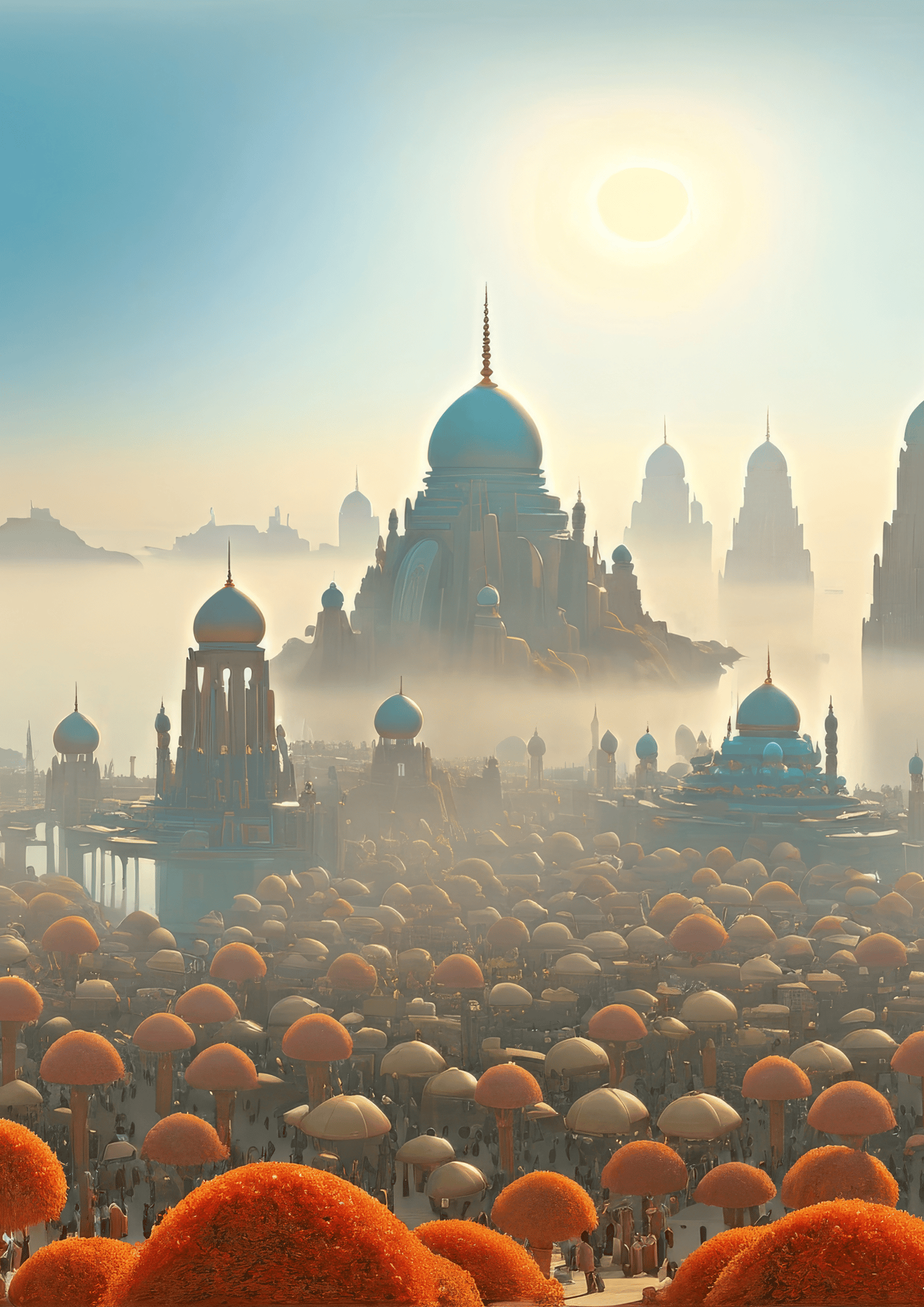
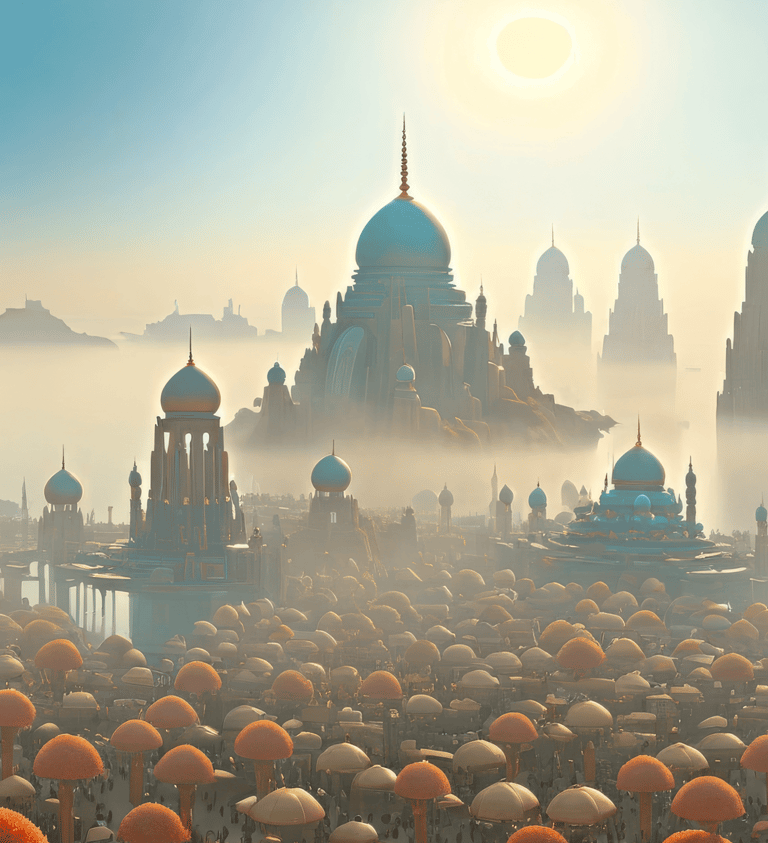
“Despina can be accessed in two ways: either by ship or on a camel. The city reveals one aspect to those traveling overland and another to those who arrive by sea...” Italo Calvino
By enabling shared exploration, Cities Unseen highlights the important social aspects of virtual travel experiences. Rather than being isolated, participants become co-explorers who engage with one another as they traverse fascinating landscapes together. This experience illustrates how imagined spaces are shaped by individual interpretation and interaction with others, thereby enriching the stories we tell. The installation invites the audience to reconsider the limits of reality and the potential of the unseen, depicting travel as a dialogue between reality and imagination. It offers insight into how we share the world we inhabit, whether real or virtual. The installation challenges us to interact with our surroundings in new ways, thereby deepening our understanding of the human experience. Through its fusion of generative AI and interaction, with each step, new layers of storytelling unfold, reshaping our perception of space and our position within it.
'Cities Unseen' celebrates creativity, fostering free thought and broadening our horizons. It reminds us that art has the power to inspire movement, both across the globe and within our own minds. The narratives formed through these imaginative experiences are not confined to the digital world; they forge connections that extend into our physical reality, encouraging individuals to look beyond their current surroundings and engage with a richer spectrum of ideas and perspectives. Every interaction is an invitation to embrace curiosity and explore the depths of our creativity, transforming the invisible into the visible and sparking extraordinary conversations. As participants immerse themselves in this vibrant exchange, they embark on a communal journey, with every shared moment contributing to a larger narrative. This ultimately enriches not only their individual lives but also the collective human experience.