Interval Four
EXHIBITIONS
By 16mag
3/16/2026
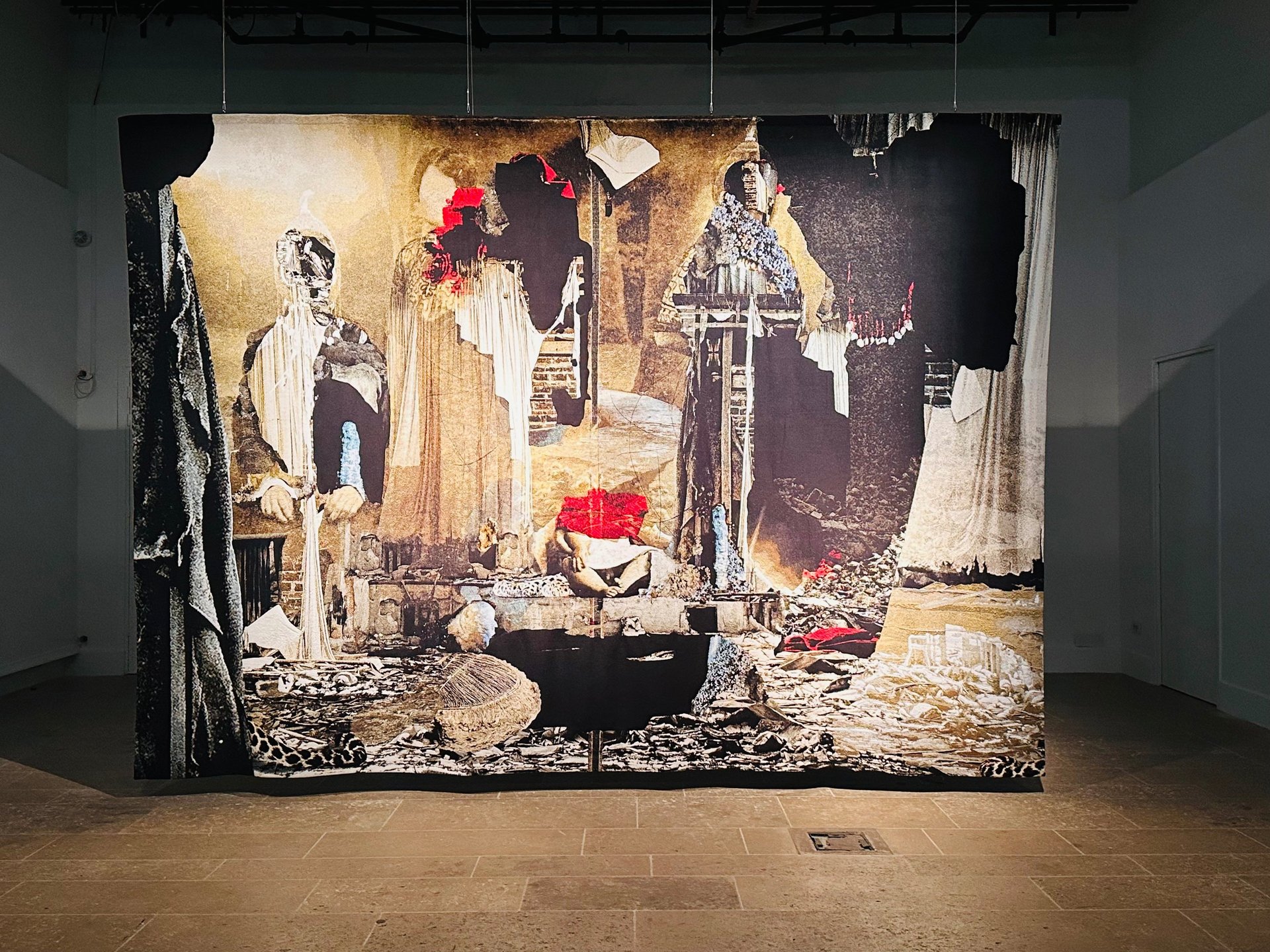
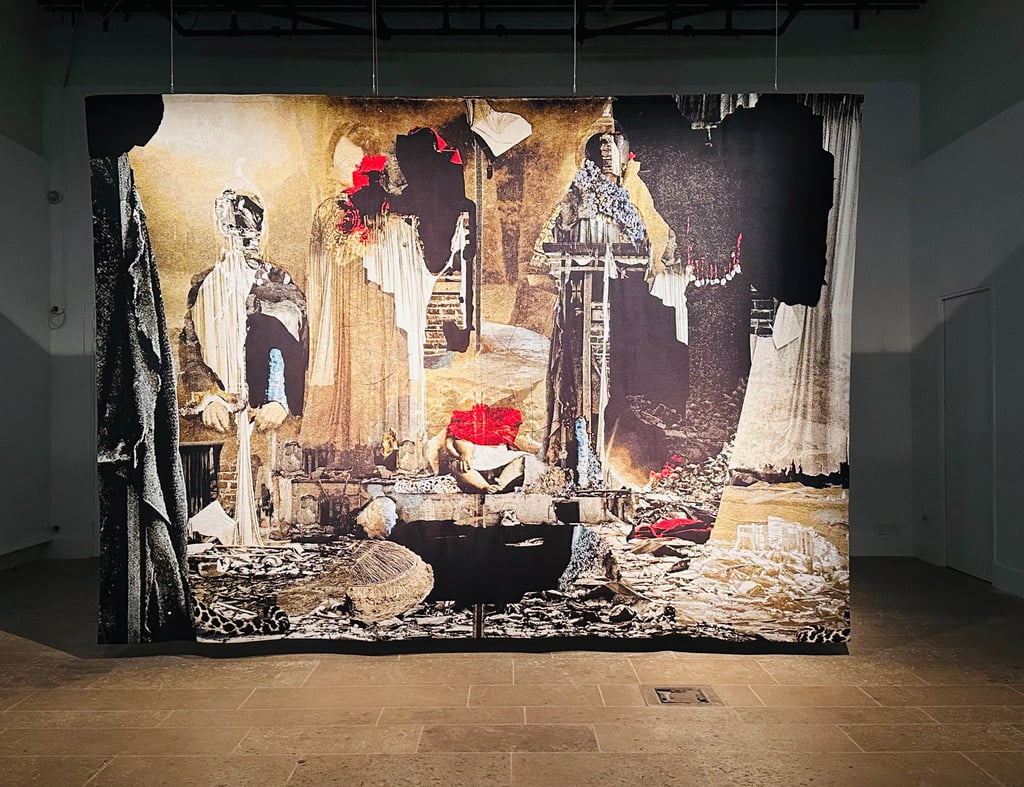
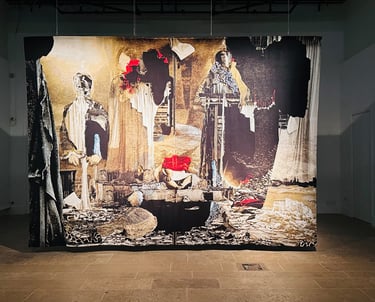
'Interval Four', an intriguing exhibition featuring the Irish artist Ailbhe Ní Bhriain, is showing at the Centre Culturel Irlandais in Paris. It presents a monumental jacquard tapestry representing the fourth remarkable piece from her 'Interval' series (2023–2025). Meticulously woven from silk, wool, cotton and lurex, this impressive 280 x 400 cm tapestry, blends the artistic techniques of photography and collage to create a richly layered scene. The resulting composition is both precise and dreamlike, inviting viewers into a world where the lines between reality and imagination blur. A Victorian-era portrait, traditionally a symbol of industry, empire, and permanence, is juxtaposed with striking images of underground geological formations and contemporary ruins. These powerful juxtapositions create an engaging dialogue that situates the scars of human ambition within the profound and expansive context of deep time, challenging all preconceived notions of stability and endurance. One of the key references for the Interval series is The Dream Pool Essays, written in the XIth century by a Chinese polymath Shen Kuo. The exhibition encourages contemplation of the intertwining of the past, present and future, revealing the complexities of our impact on the world around us.
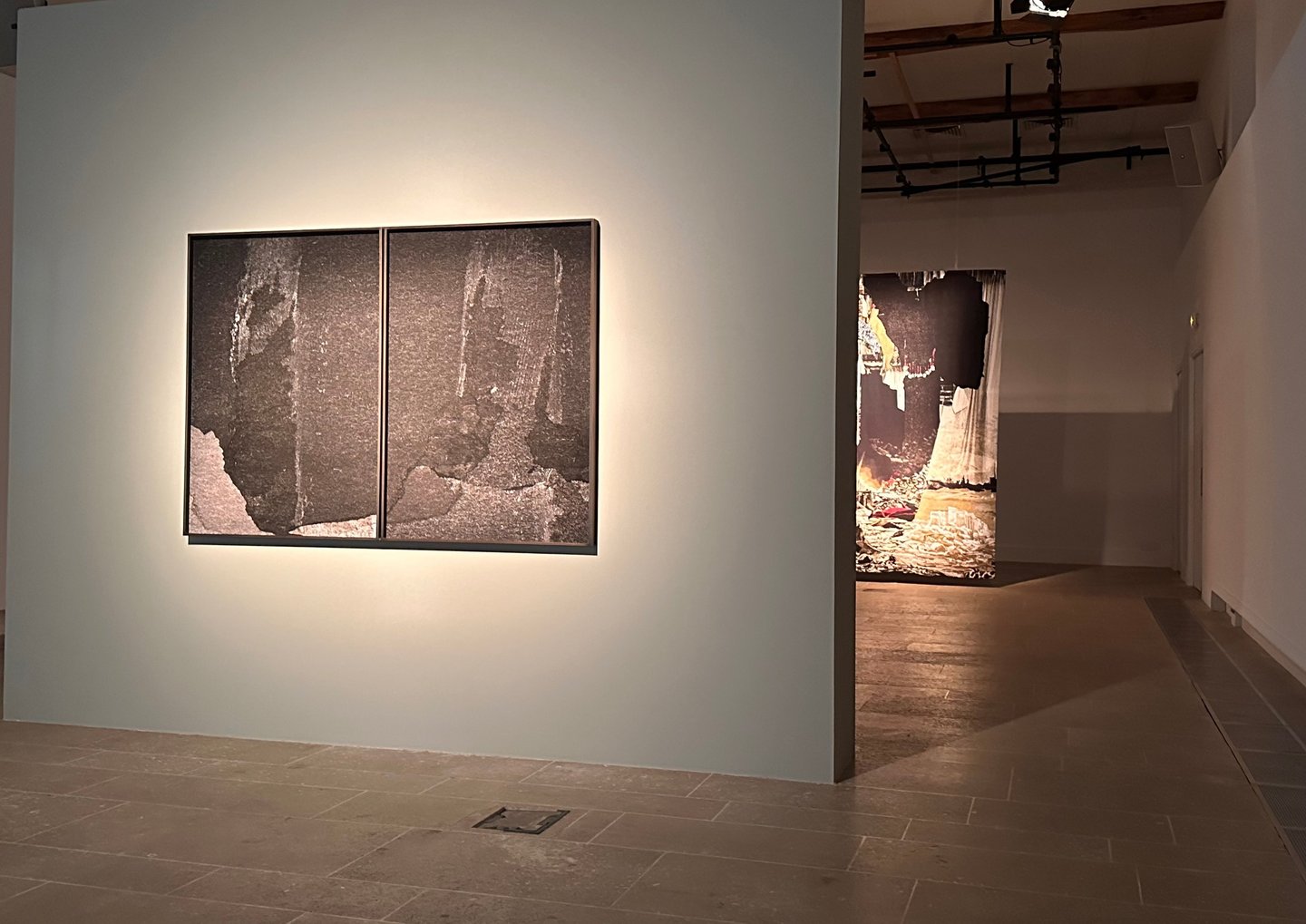
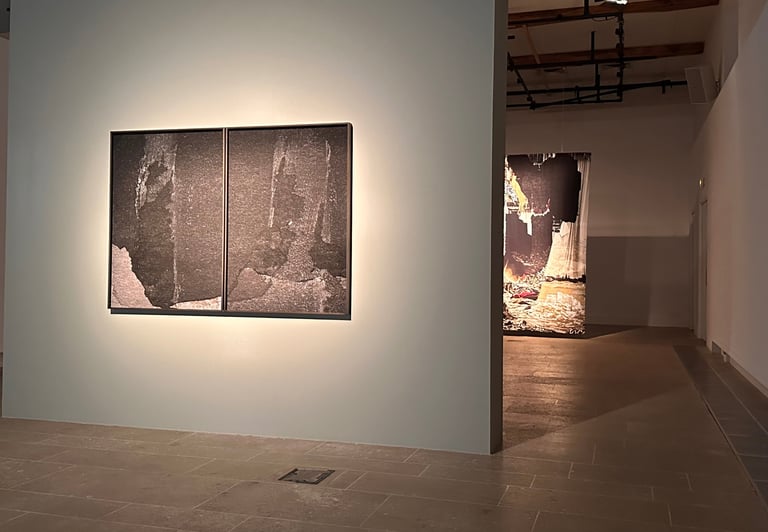
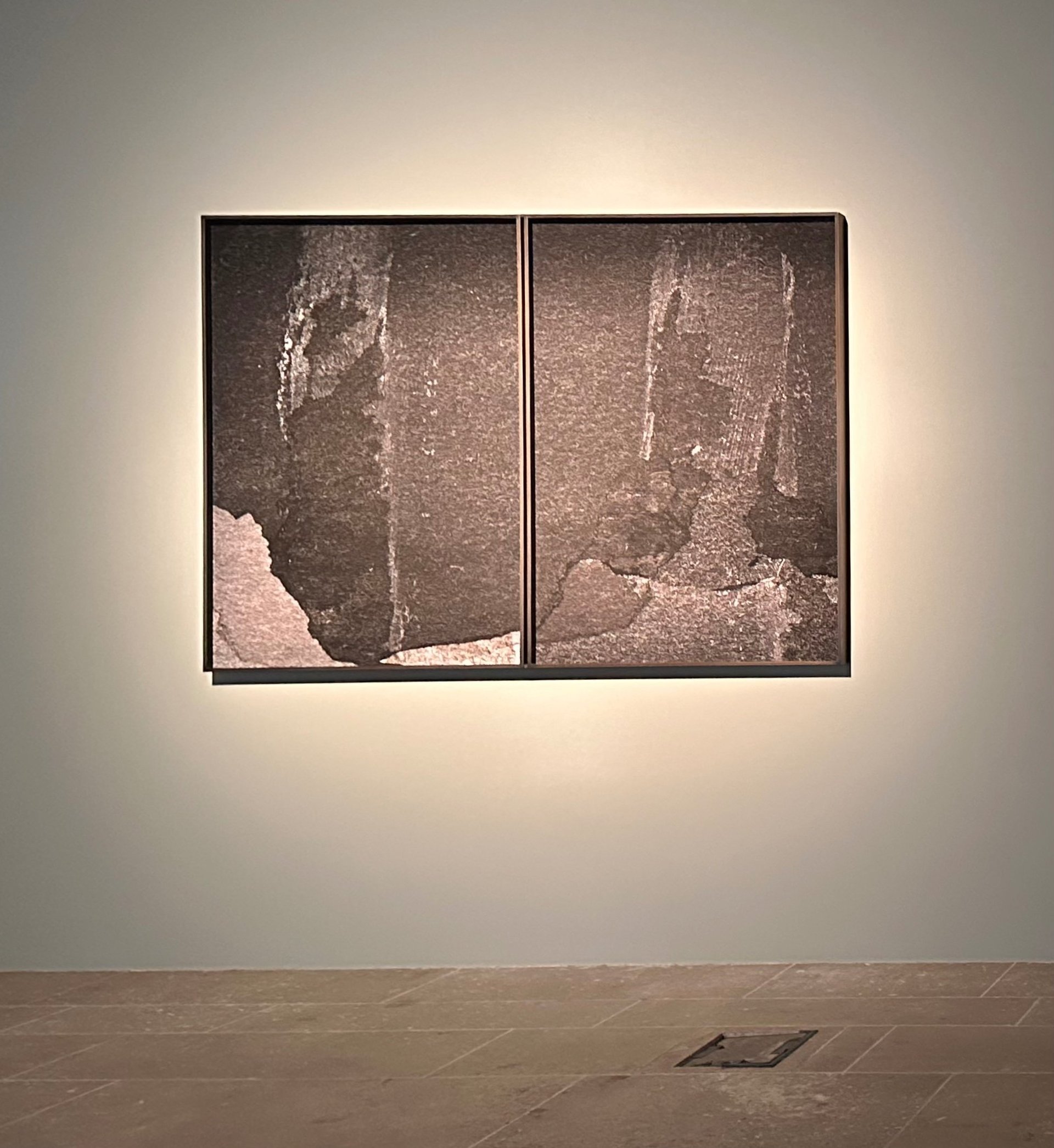
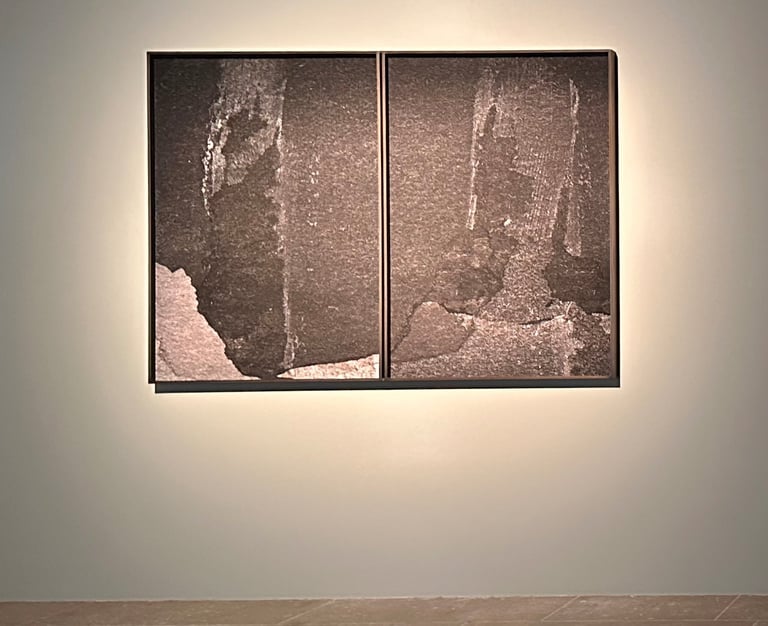
Displayed facing the entrance-central wall is the quieter abstract piece from Ní Bhriain's Picture Series (2022–2025), which envisages a future archive where photographic images exist solely as material traces. Each piece has been partially handcrafted to emphasise the artist's dedication and meticulous attention to detail. They are framed in bespoke brass frames that mirror the margins and book spines. These images reveal the reverse sides of early photographic prints, offering viewers a unique insight into the production process and engaging them with the historical narrative through absence and concealment. This captivating collection explores the nature of time, encouraging viewers to contemplate the relationship between memory, absence and the enduring nature of art. As they explore it, viewers are compelled to consider how photography acts as both a visual medium and a commentary on the flow of time and the fragility of memory.
Ailbhe Ní Bhriain's artistic practice explores how histories are formed, communicated, and conveyed through images, artefacts, and institutions. Using photomontage, tapestry, film, computer-generated imagery and installation, she creates intricate visual environments drawing on archival documents, historical photographs, museological display systems and ruined architectural or environmental sites. Rather than embracing binaries, she uncovers the layers of ambiguity and contradiction intrinsic to the delicate topics she engages with.