ART ❌ WAR
ARTICLES
By LS
7/16/2026
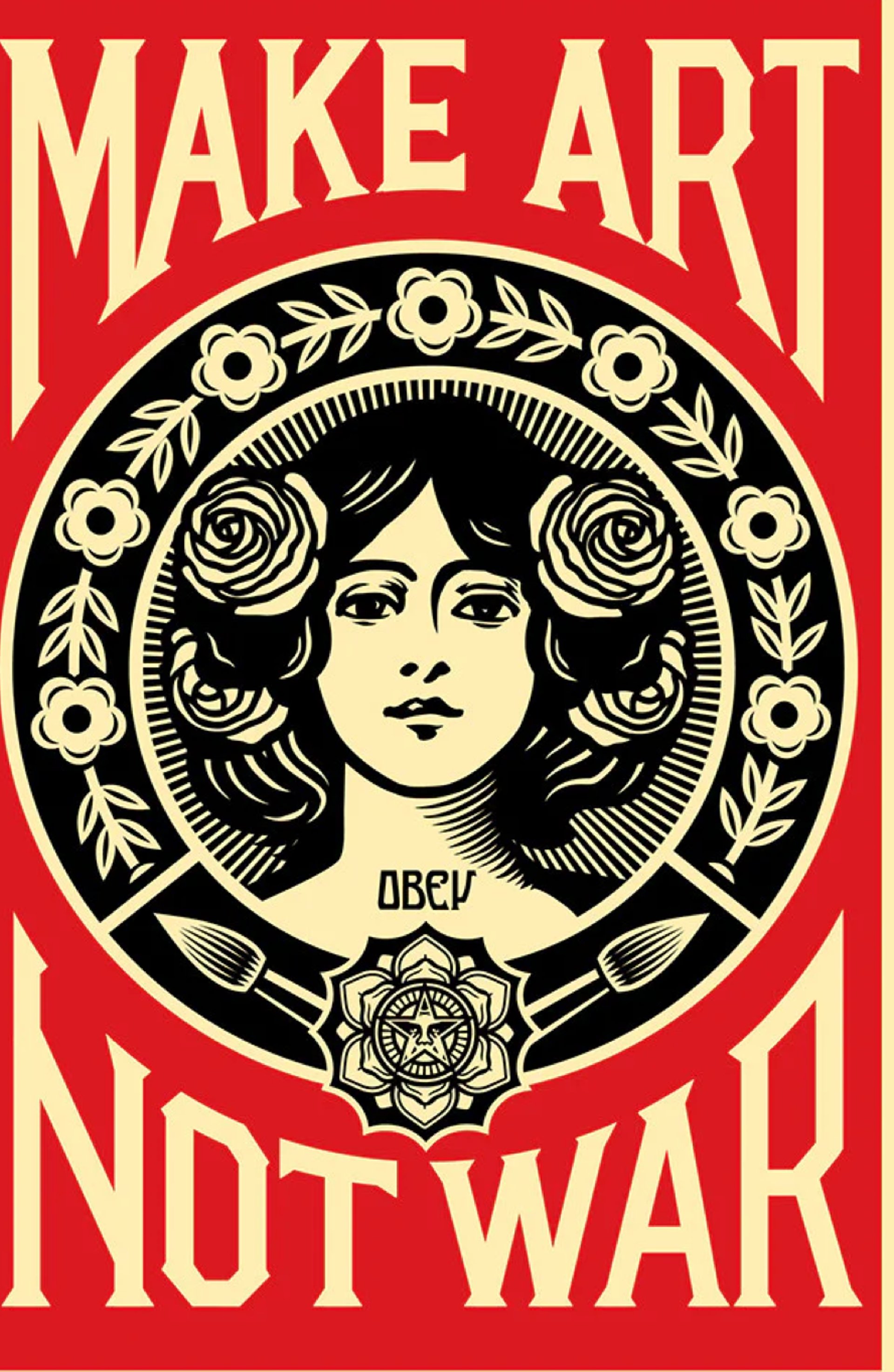
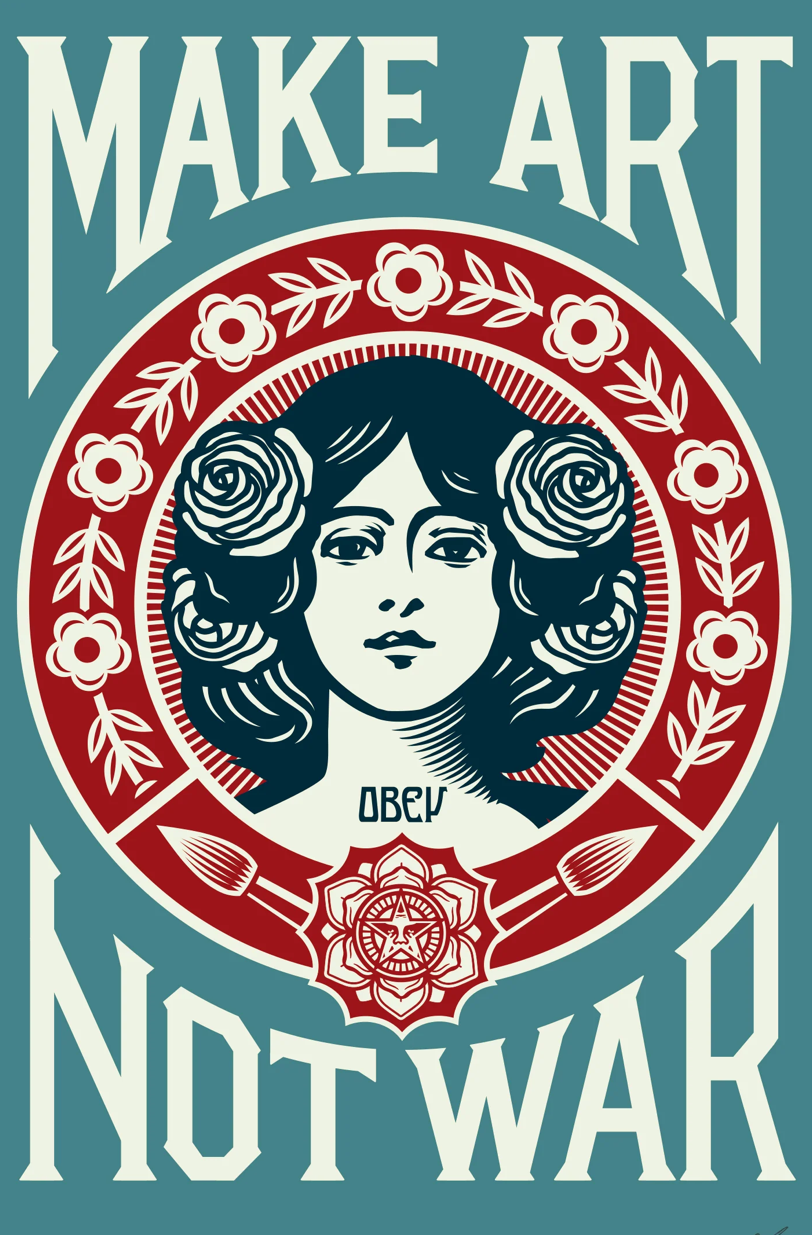
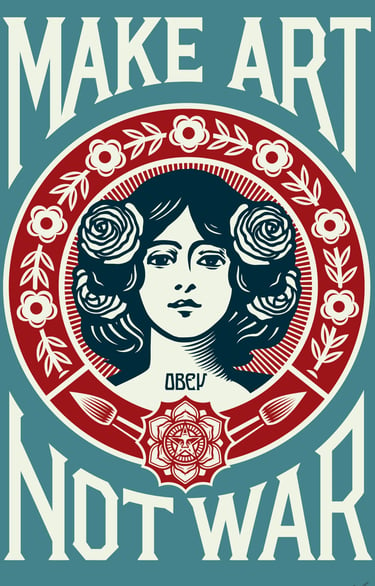
'Make Art Not War' is a visually compelling and iconic offset lithograph by the American artist Shepard Fairey. It was created during the tumultuous period of the Iraq War. Powerfully reinterpreting the 1960s slogan 'Make Love, Not War', it emphasises the importance of creative expression over senseless destruction. The piece artfully blends Art Nouveau styling with hidden imagery that engages viewers and encourages reflection. The print features a striking and confident female figure enclosed within a floral wreath, symbolising beauty, life and renewal. The paintbrushes positioned beneath her resemble spears, juxtaposing the tools of creation with those of war. The bold word 'OBEY' emblazoned on her neck offers a pointed critique of authority and societal control. Through this powerful visual commentary, Fairey challenges us to reconsider our relationship with conflict, art, and the messages we choose to amplify. He urges us to reflect on our individual roles within the broader tapestry of society.
Throughout history, artists have used a wide range of media to express their diverse views on conflict. Their work gives a voice to the voiceless, conveying emotions, thoughts and experiences that deeply resonate with audiences. They challenge leaders and authorities to confront injustice, inequality, and the harsh realities faced by many, reminding us that peace is inextricably linked to our shared human rights. The role of art in advocating for peace and justice is indeed invaluable. It is a catalyst for change, reflecting our collective consciousness and often pushing the boundaries of what is acceptable and expected in society. In a world once again gripped by escalating violence and profound uncertainty, the urgent call to make art, not war, is particularly poignant. This message resonates deeply throughout societies, reflecting the feelings and desires of individuals seeking solace, comfort and clarity amid troubling times. From the Middle East, where conflict is persistent, to Eastern Europe, where uncertainty reigns, our news feeds are dominated by images of pervasive violence, loss, and devastation, painting a stark and often disturbing picture of the human condition.
Yet, even in the face of devastation, artists continue to create, protest and reflect on life's complexities. Their creativity is a powerful form of resistance, offering a means to express both pain and suffering, as well as hope. It reminds us of our shared humanity, transcending borders and differences. Through various forms of expression, including painting, music, literature, performance and new media, artists strive to foster meaningful dialogue, inspire action and heal the emotional and societal wounds inflicted by conflict. Their art emerges as a beacon of hope, guiding us towards a more enlightened, thoughtful and compassionate world, where understanding and empathy flourish. By embracing the transformative power of creativity, we realise that it is not merely a means to an end, but an essential part of our existence. It reminds us, and will remind future generations of the importance of peace, harmony and artistic expression in navigating our shared life journeys.
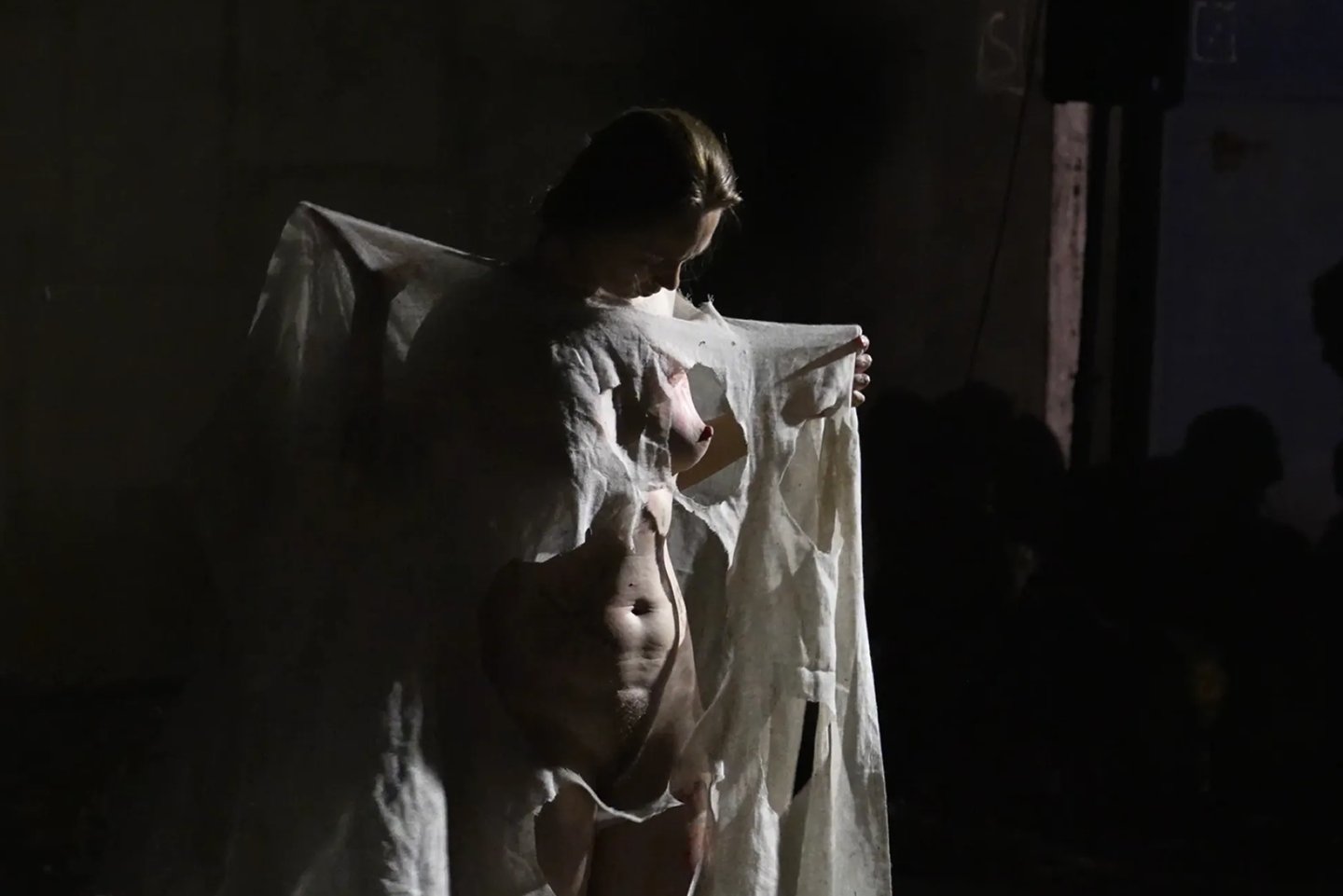
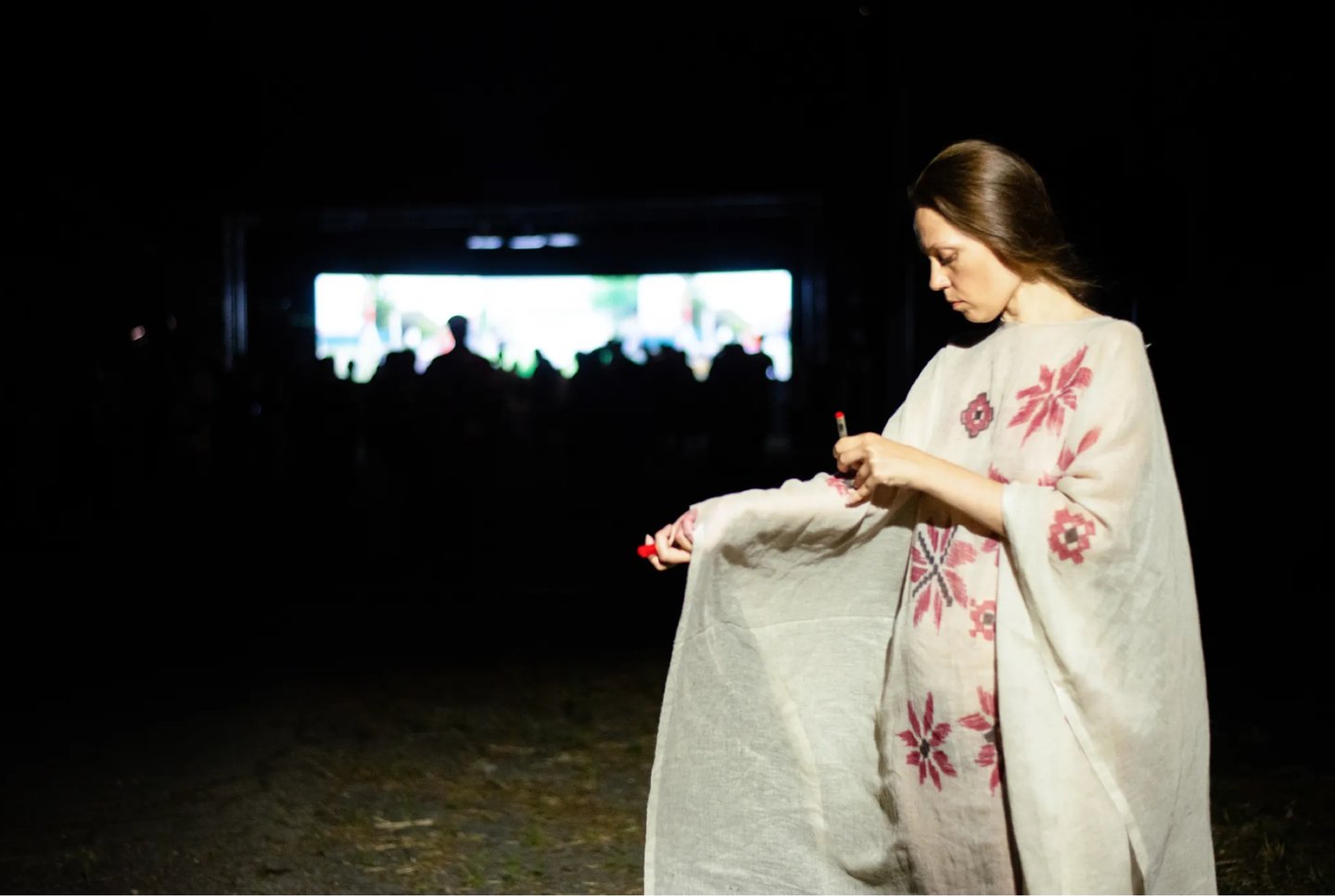
Following the Russia's ongoing attack on Ukraine, Ukrainian artist Maryna Semenkova wrote in her notes:
“Something inside of me is burned,
Something inside of me is raped,
Something inside of me is killed,
Something inside of me is fighting
and won’t give up until my last breath.”
Three months after the full-scale military invasion of Ukraine and after receiving information about Bucha and other crimes committed by Russian soldiers on Ukrainian territory on 27 May 2022, Maryna was overwhelmed by emotion and despair as she contemplated the harrowing experiences of those affected. 'Something inside of me is burned,' she said, capturing the depth of her anguish and the painful memories that would not fade. Though time may pass, the haunting echoes of that suffering lingered in her mind like shadows, persistent and unforgiving. 'Something inside of me is raped,' she said, her heart heavy with the weight of the atrocities she had heard about; each word a painful reminder of the relentless suffering of countless individuals. 'Something inside of me is killed,' she continued, her voice shaking as she recounted the stories of lives shattered and dreams extinguished. Memories flooded her thoughts, each one pulling her back into the depths of sorrow shared by those who had endured such violence. “Something inside of me is fighting and won’t give up until my last breath.” Her resolve was palpable: a fierce determination to honour the suffering, to remember and memorialise the experiences of those who had endured such violence, and to ensure that their voices were heard amidst the chaos and horror of war.
It was more than just a statement; it was a commitment to staying strong and embodying the spirit of resistance against conflict's tyranny and inhumanity. Every word she wrote was a call to action, urging others to recognise and respond to the plight of her nation and its people.
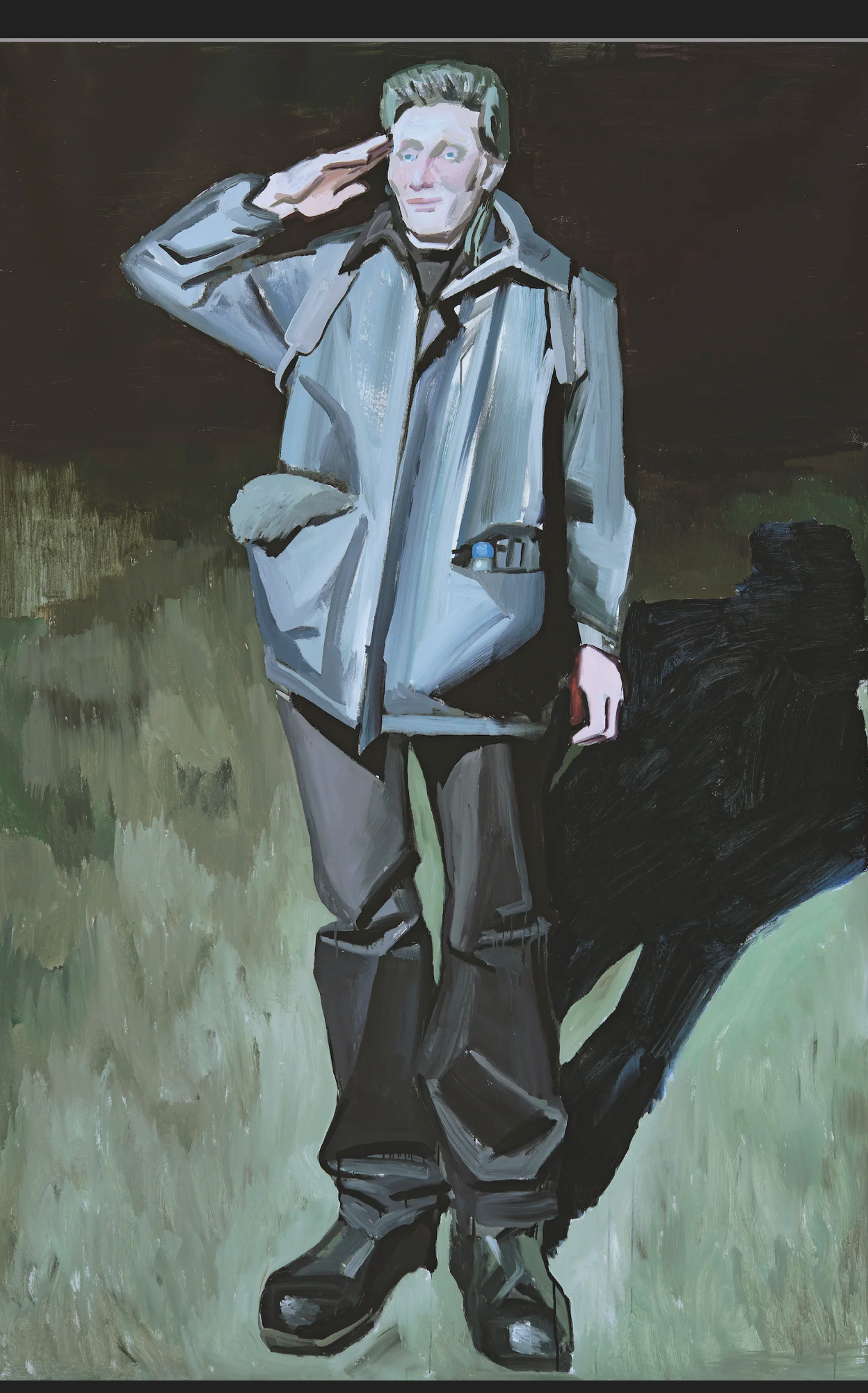
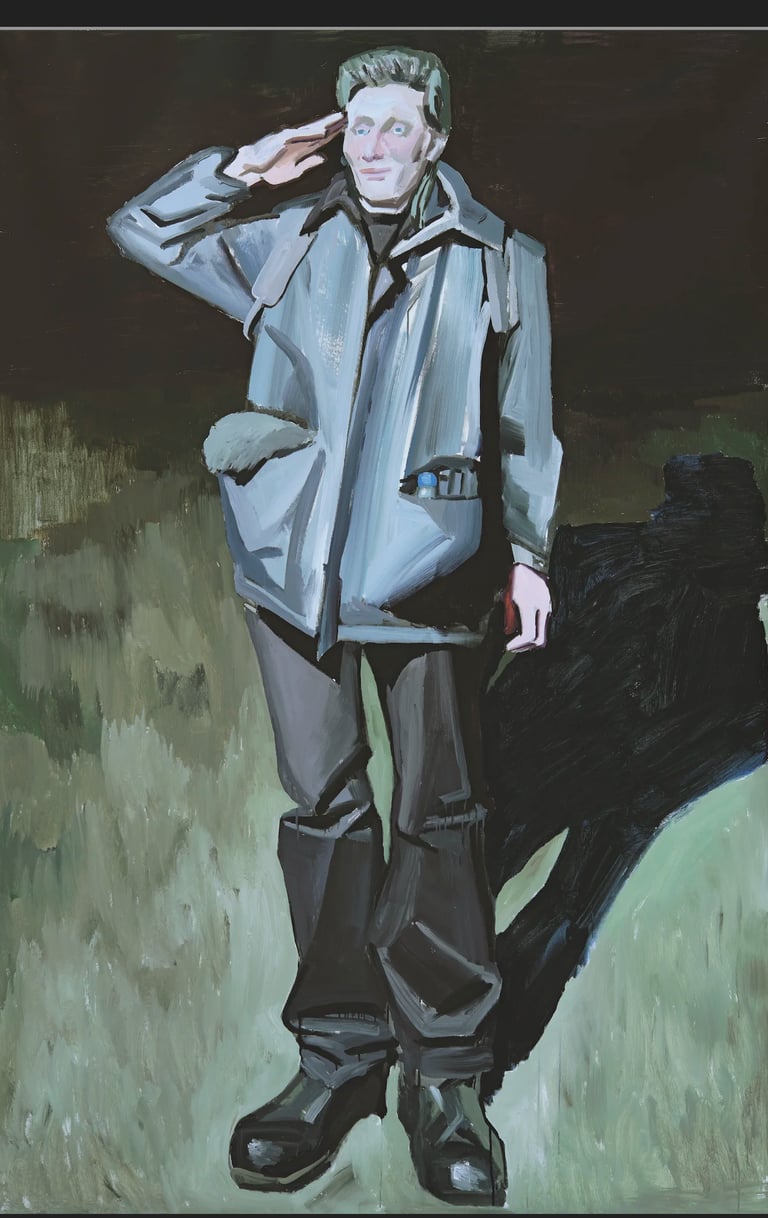
Meanwhile, Lesia Khomenko, has painted an emotionally charged portrait of her new husband, Max, who is one of the many Ukrainian men who have been drafted to fight the Russians invasion. Max, a musician and media artist before the war broke out, Max's life has been completely transformed in ways he never imagined possible. He was not just a figure in the art scene, but a vibrant spirit who brought creativity and passion to everything he did. His interactions with others were filled with warmth and energy, enabling him to forge connections that inspired his work and the people around him. Max and Lesia were a loving couple who shared dreams, aspirations and a profound understanding of each other’s artistic souls. When he joined the army, Lesia experienced an immense and overwhelming emotional toll, but she found the remarkable strength and resilience to cope with the heartbreaking circumstances and was able to leave the country to seek safety and refuge.
Over the months of separation, he regularly sent her selfies to maintain their connection and remind her that he was still there, even though they were miles apart. Each photo captured a moment in time, but during those months, Lesia began to notice significant changes in Max. 'Now he's completely in military uniform,' she remarks, a mixture of pride and sorrow evident in her voice. She senses a new tension in him, reflecting not just the physical changes, but the emotional weight he was carrying too. There's a scowl on his face that wasn't there before, indicative of the hardships he had endured. He stands as straight as possible, saluting in a way that conveys both discipline and despair. His expression is serious, resolute and determined, revealing the inner turmoil he grapples with daily amidst the chaos of war. His clothes are oversized and ill-fitting, contrasting sharply with the man she once knew. 'I wonder if I can still recognise him,' she whispers.
Even though it meant being away from Max, the love of her life, she felt she had to leave her country. 'It’s too dangerous in Ukraine.' I have a young daughter and I am responsible for her well-being. I can't continue to live in a place where every day feels like a battle for survival. The thought of being apart from Max is painful, yet I know it’s something I must endure for the time being. But I have to stay strong for my daughter. She has to run to the basement to hide from shelling three times a day: You’re filled with fear, a fear that grips your heart and doesn’t let go, as if a vice is tightening around your chest. You constantly worry about what the next day might bring, and whether you will see your loved ones again; uncertainty eats away at your hopes. It’s an existence filled with uncertainty and sleepless nights. But with help from technology, she and Max were able to make the fear almost bearable. Although they were far apart, they found ways to bridge the gap: they got married online, a celebration that honoured their love despite the distance. They were surrounded by friends and family in their hearts. (The story is from an interview with Susan Stamberg on NPR.)
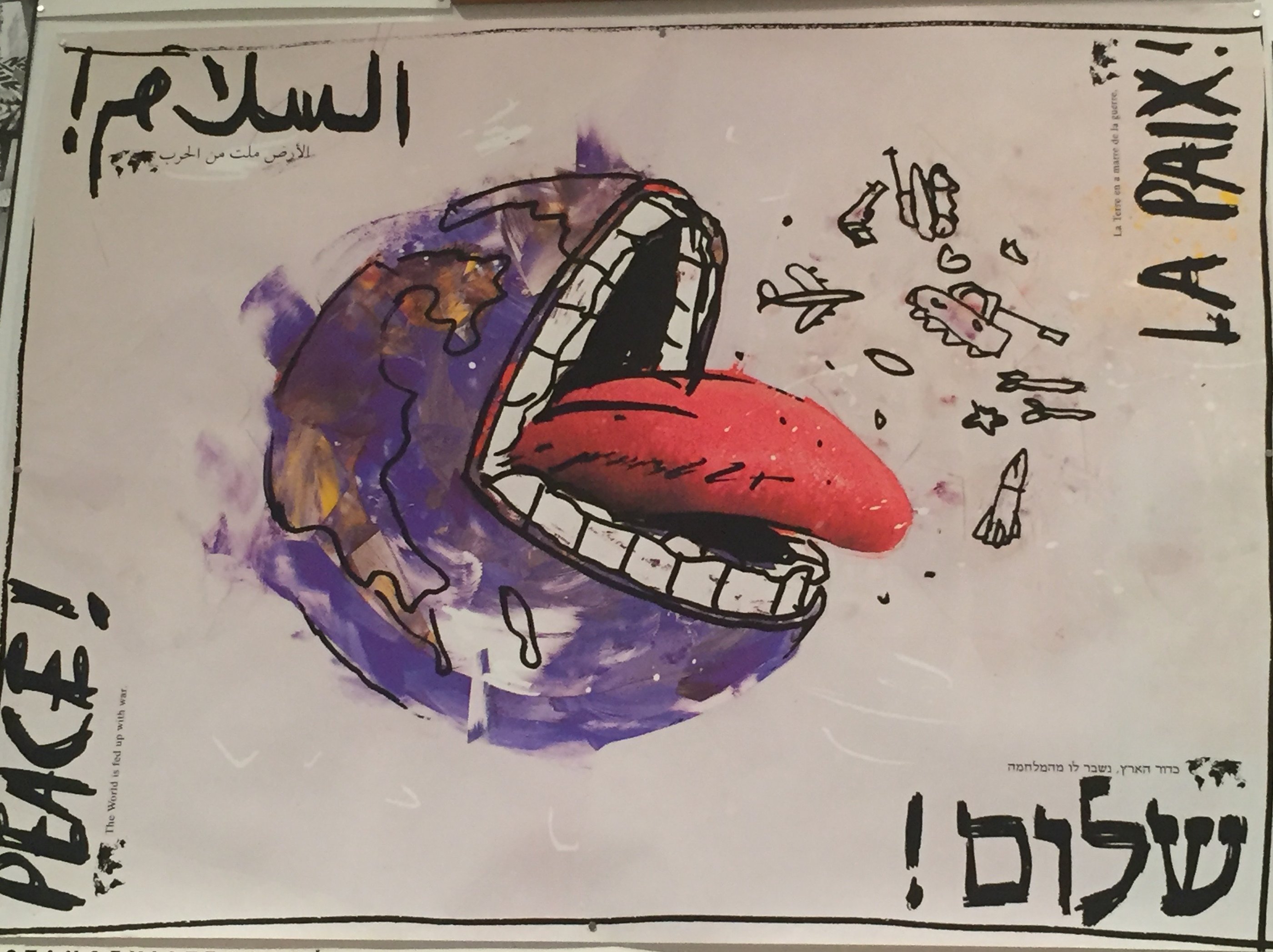
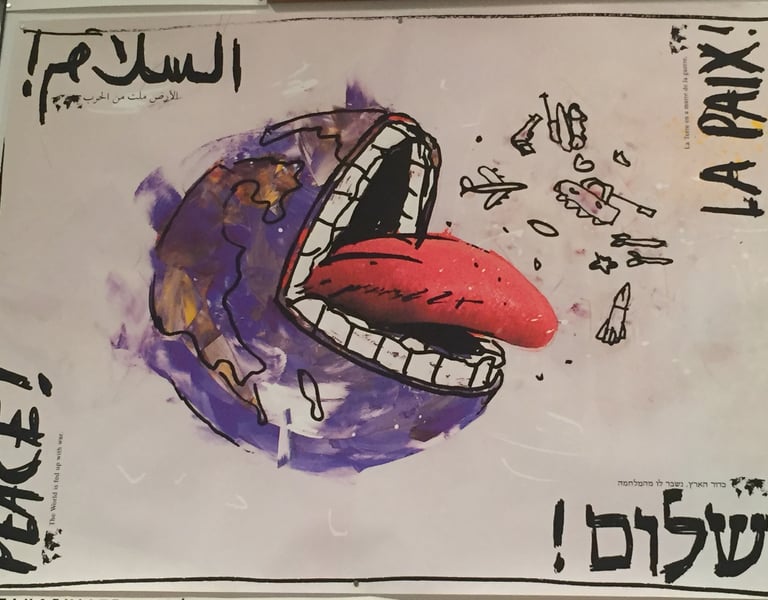
The World is fed up with war
The urge to speak out against violence is as old as war itself. Throughout history and across cultures, artists have used their work to bear witness to the horrors of war, to protest, to mourn and to demand change. From Renaissance frescoes to street art sprayed under the cover of darkness, protest art has taken many forms, but its message remains remarkably consistent: to make visible the pain that power tries to hide. The voices of these artists echo through time, reminding us of the impact of war not just on the battlefield but also on the hearts and minds of civilians. In tumultuous times, their creations inspire us to take action, urging us to reflect on our choices and stand up against injustice. Each stroke of paint, each vivid mural and each poignant performance or sculpture is a testament to the resilience of the human spirit and the relentless pursuit of peace. It urges future generations to carry this torch of hope and creativity in the face of adversity.
Artists spark conversations, challenge societal norms and confront the status quo. By doing so, they remind us that art is a powerful tool for social commentary and change, rather than merely being a passive observer. Furthermore, they can express emotions through their art that words often fail to articulate, enabling audiences to connect with the universal human experiences associated with conflict. By sharing the stories of those affected, these artists document history, inspire empathy and foster understanding among diverse communities. Their messages persist across various mediums, suggesting a collective yearning for a future without violence, where dialogue replaces conflict and creativity flourishes without fear. Thus, artists play a vital role in reflecting the society they inhabit and acting as a beacon of hope for a better future and reminding us that change is possible when we confront uncomfortable truths and envision a better world.