A Journey into M.C. ESCHER Art
EXHIBITIONS
By 16mag
1/16/2026
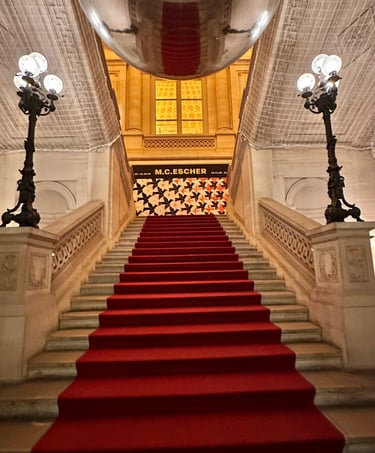
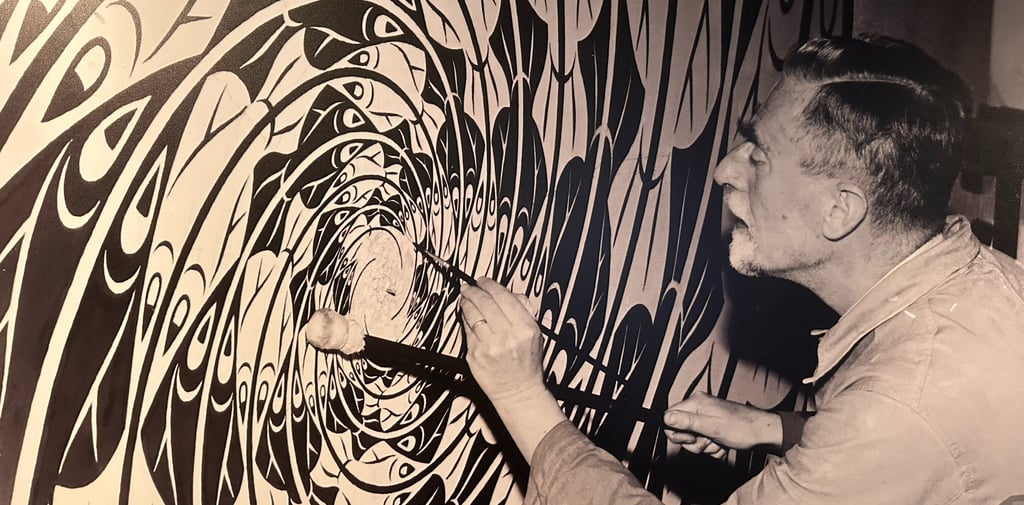
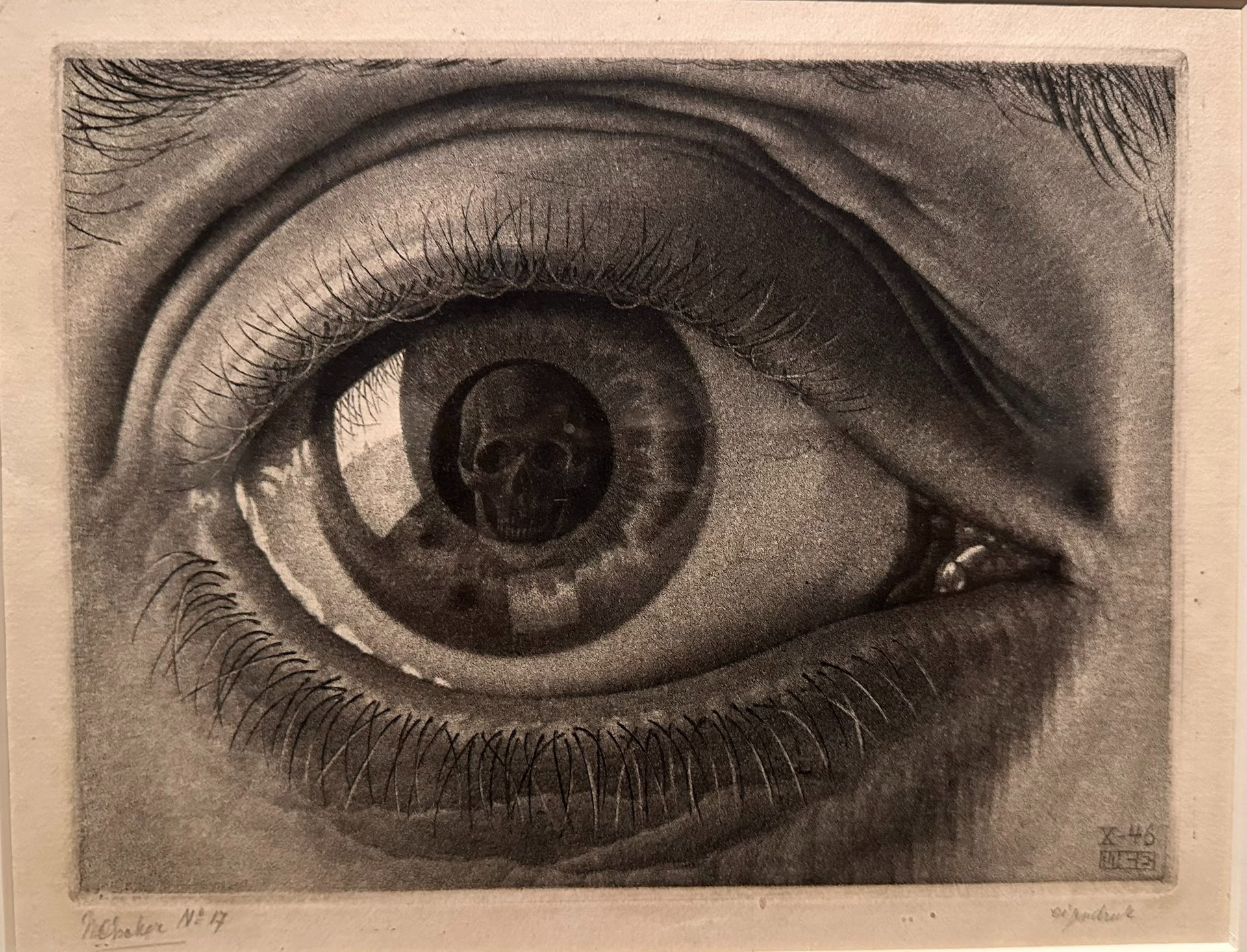
The exhibition devoted to Maurits Cornelis Escher (1898-1972) presents some of the most enigmatic, important, and paradoxical works of the Dutch artist, one of the most renowned printmakers in the world. The exhibition not only highlights Escher's unique artistic vision but also explores the intricate mathematical concepts and philosophical themes that inspired his creations. His work lies at the crossroads of scientific rigor and poetic imagination, and has profoundly influenced the world of design, graphic design, and visual communication.
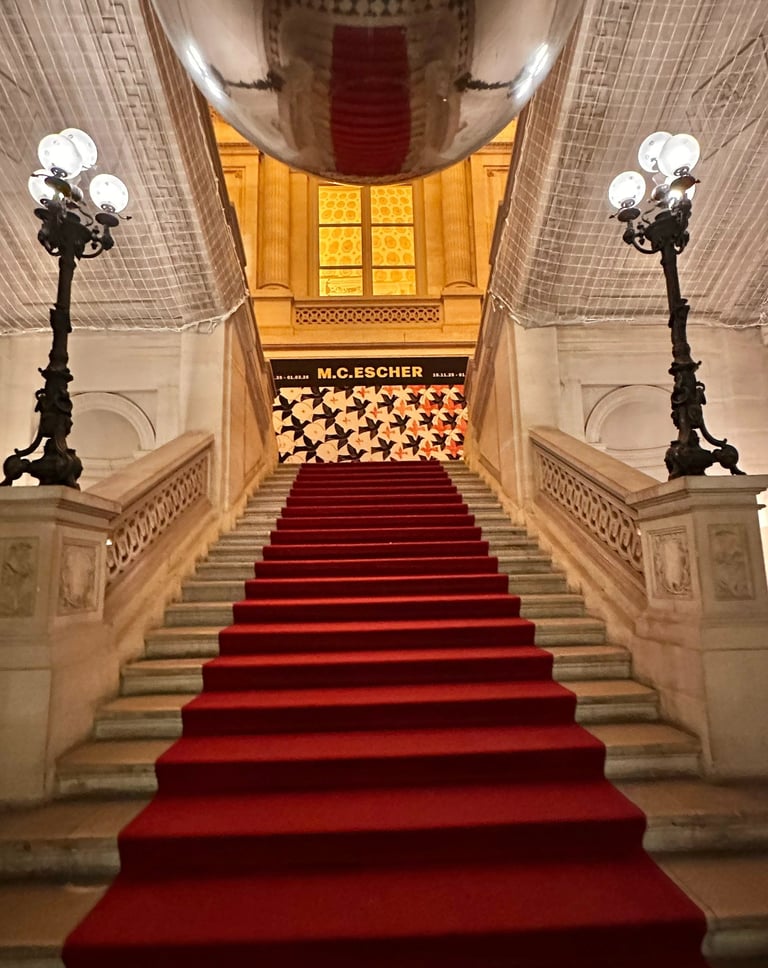
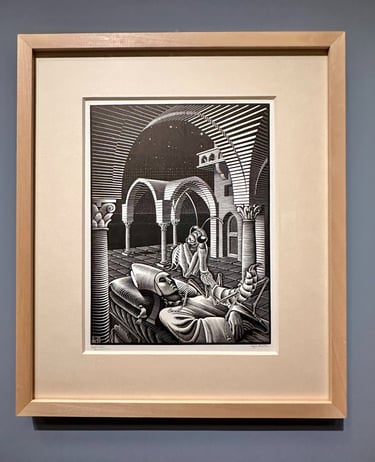
The exhibition at the Museum Monaie de Paris is divided into eight main sections that trace M.C. Escher's artistic career. The exhibition begins with realistic prints and drawings inspired by nature and Italian landscape, the macabre, spiritualism, forced perspectives, and ambigous images. A unique journey to explore a range of prints that capture his unique ability to blend reality with illusion, turning seemingly simple landscapes into complex visual puzzles.
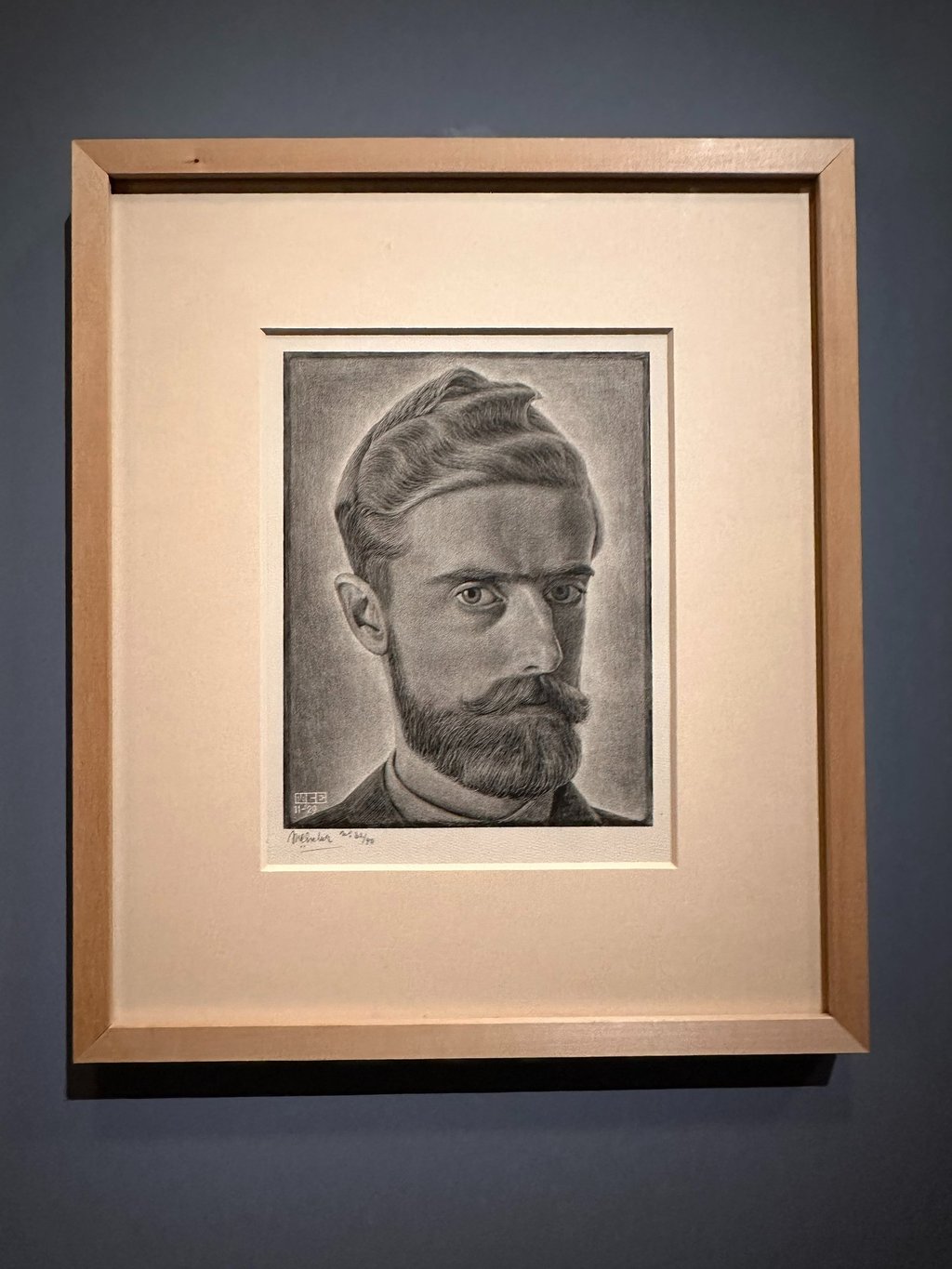
Maurits Cornelis Escher was born on June 17, 1898, in Leeuwarden, The Netherlands. In 1903, his family relocated to Arnhem. Despite experiencing multiple illnesses, Maurits enjoyed a joyful childhood and developed a passion for drawing at an early age. In 1912, M.C. Escher attended secondary school in Arnhem. Subsequently, his studies in Delft did not go well, resulting in him not completing his first year. To appease his parents, M.C. Escher enrolled in September 1919 at the Haarlem School of Architecture, Decorative Arts, and Artistic Crafts. He joined the architecture department, but after just a week, he shared his artwork with the graphic arts instructor, Samuel Jessurun de Mesquita. The instructor recommended that he transfer to the printmaking department. Following a conversation with Jessurun de Mesquita, his parents agreed to let Maurits pursue a career as a graphic artist.
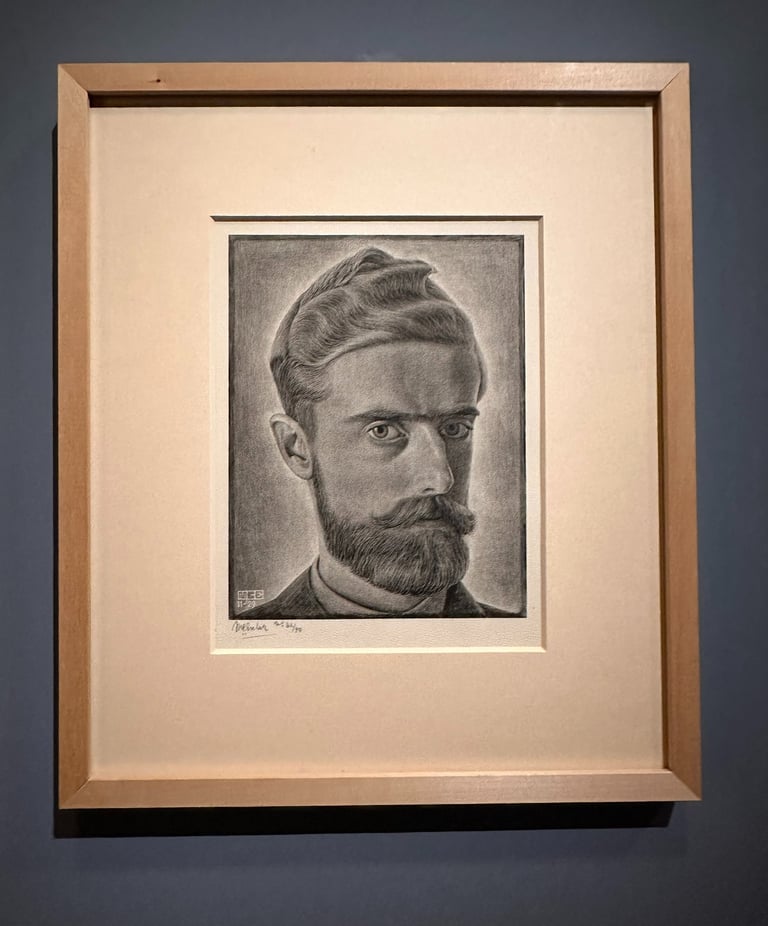
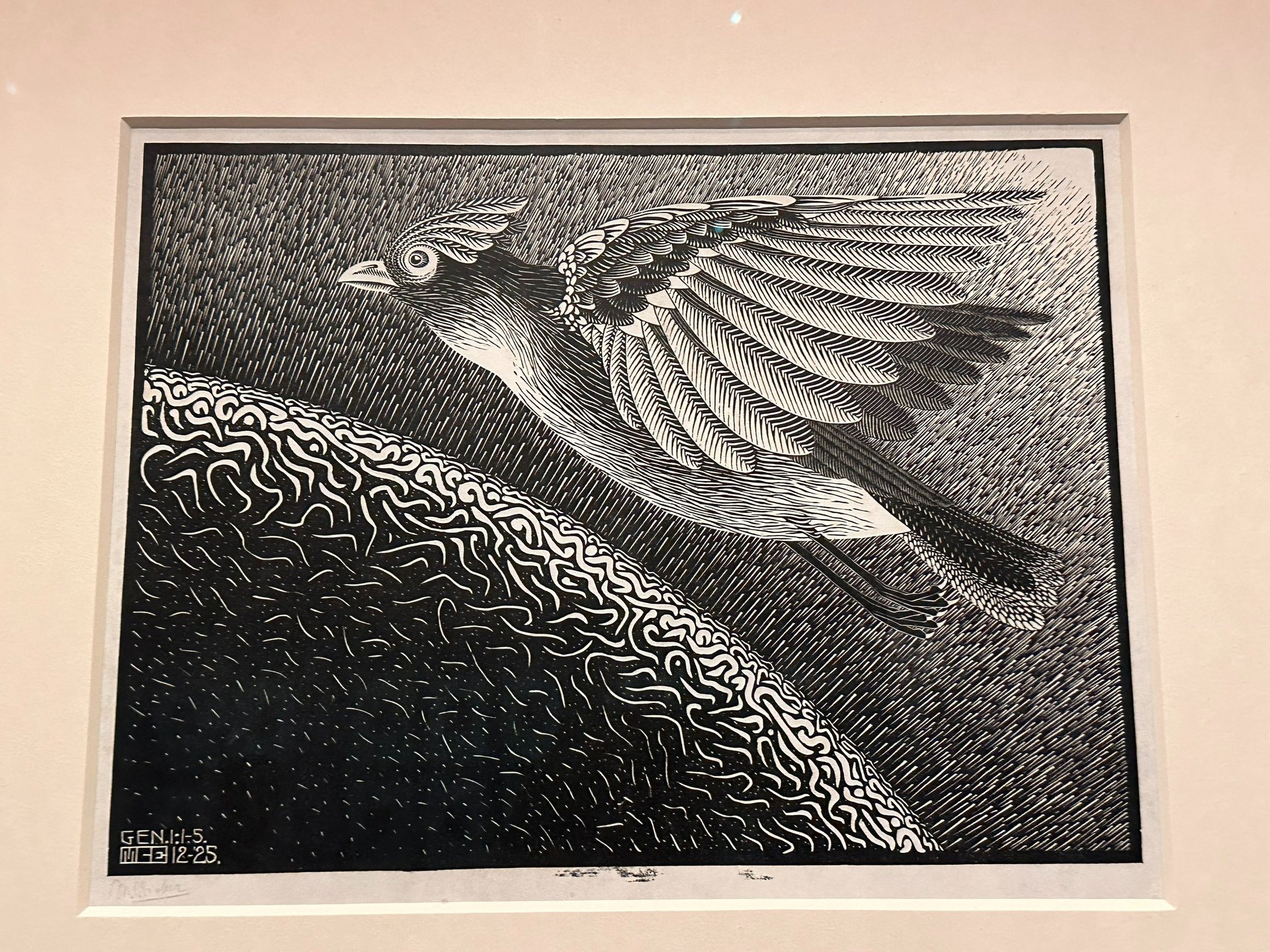
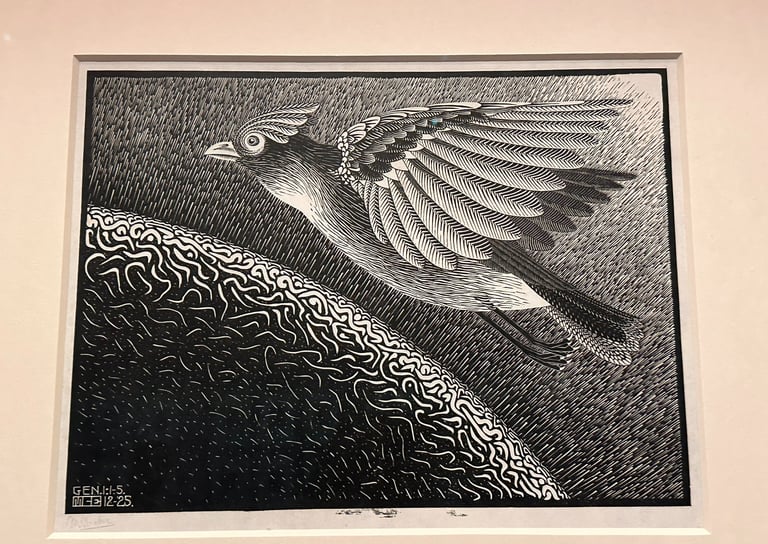
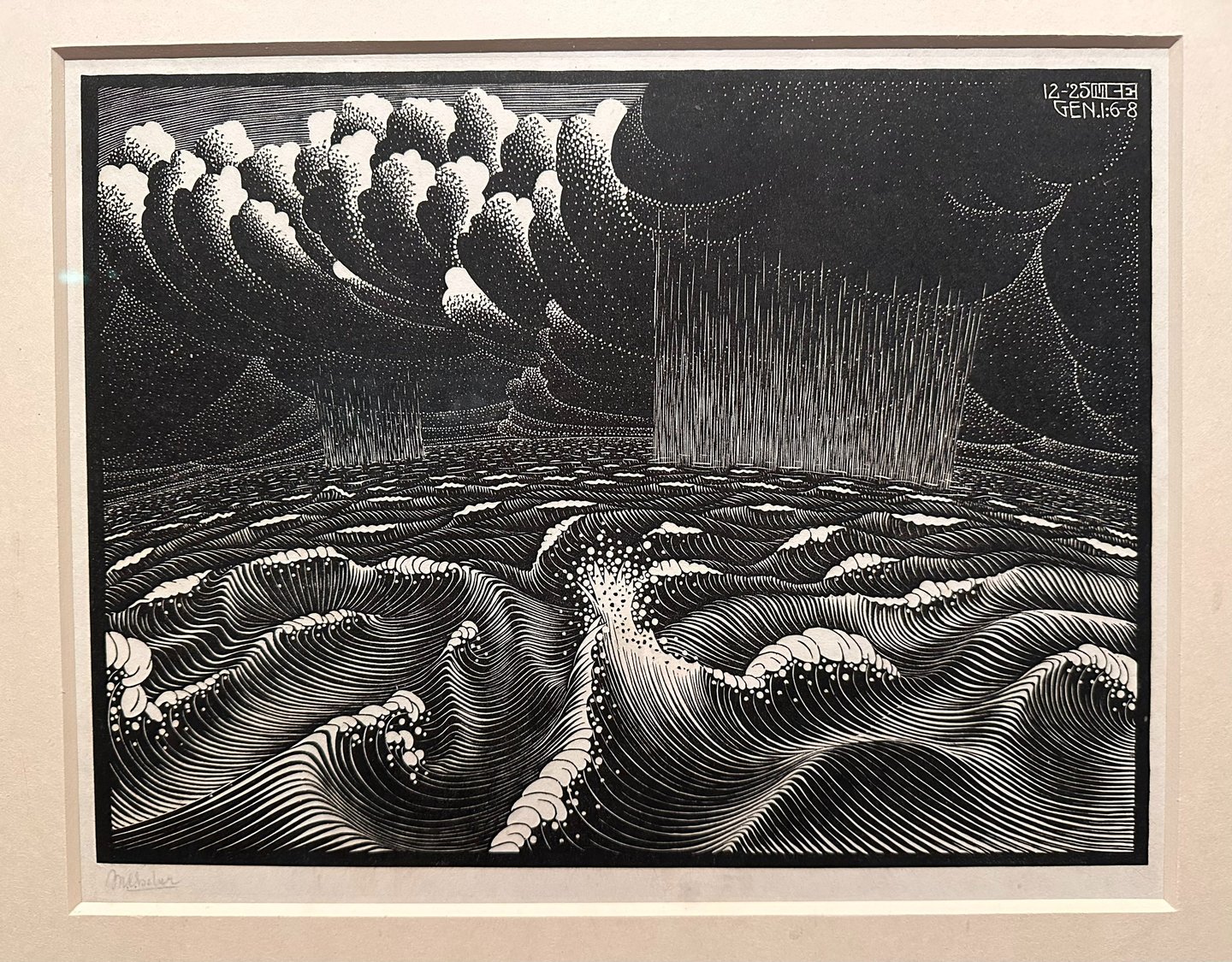
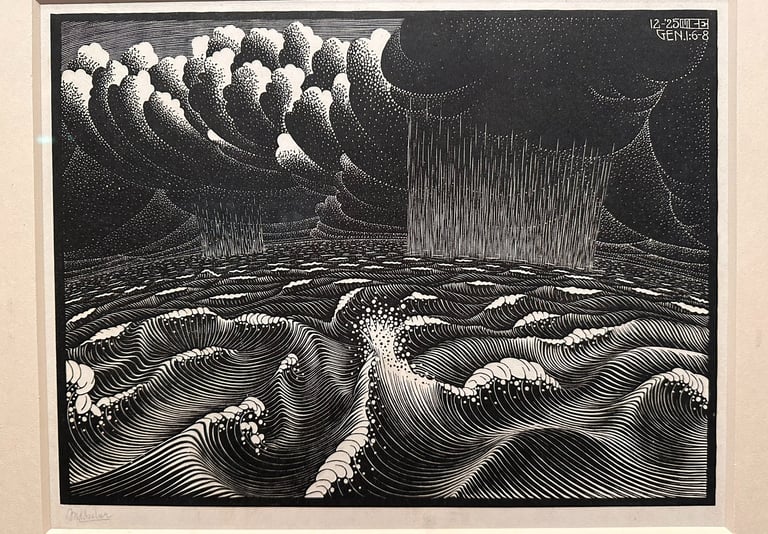
The collection titled The Days of Creation, which adheres to the biblical storyline, comprises six woodcuts created between December 1925 and March 1926. These pieces illustrate the initial six days of Creation, concentrating on the final results rather than the Creator himself. A few months after finishing this collection, in 1926, Escher crafted a kind of frontpiece showcasing a bird, the Italian titles of the prints, along with the related biblical excerpts. This series was finalized in 1927 with The Fall of Man. The Second Day of Creation (The Division of the Waters) is regarded as one of Escher's earliest masterpieces and drew inspiration from the woodcut The Great Wave of Kanagawa by the Japanese artist Katsushika Hokusai (1830)
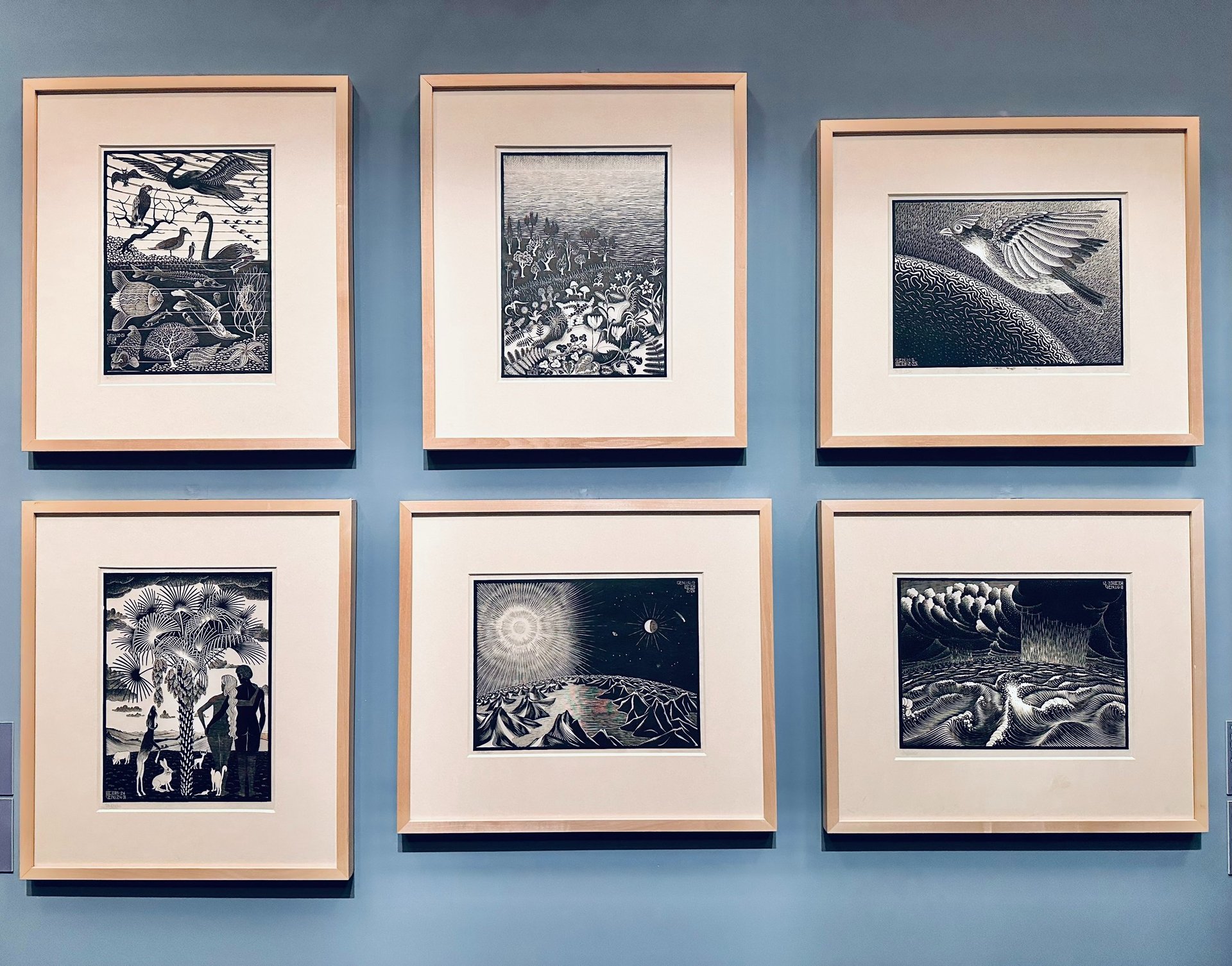
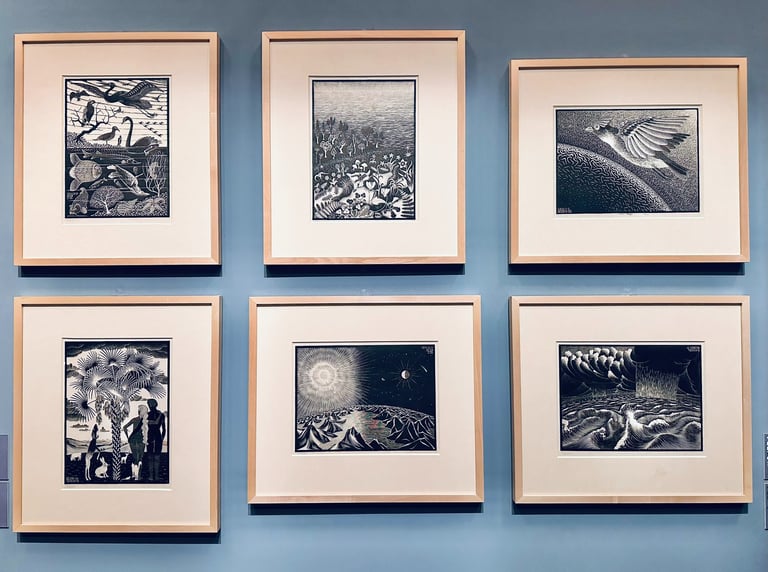
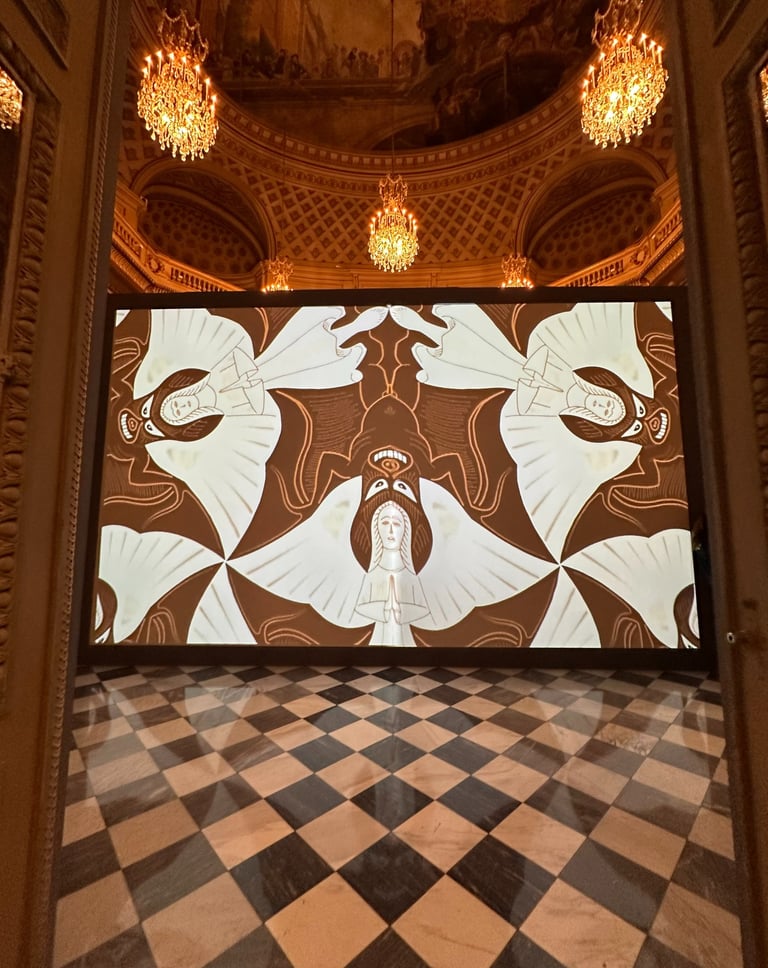
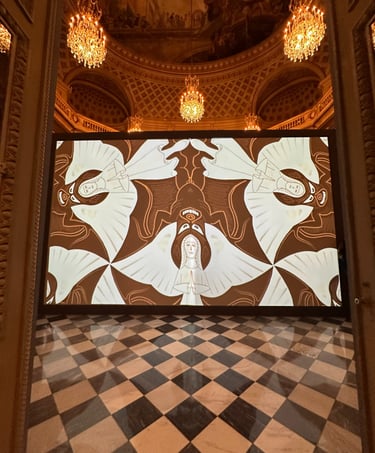
Flor de Pascua (Easter Flower), a series of wood engravings were created by Escher to illustrate a poetry collection written by his friend Aad Van Stolk, in an edition limited to 222 copies. Although Escher created these woodcuts when he was only 23 years old, they represent a significant milestone in his career and artistic development. The intricate designs not only showcase his technical skill but also reflect a deep exploration of artistic themes. They delve into various complexities, such as nature's beauty, perspective manipulation, intricate tessellation, and captivating reflections, all of which would become central subjects in his later works.
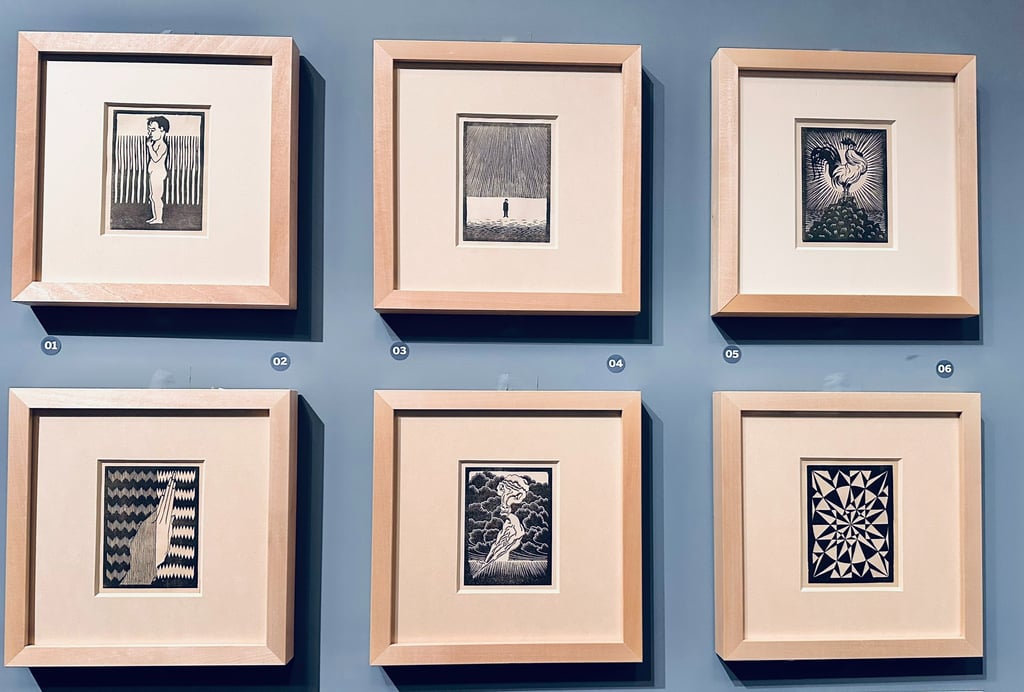
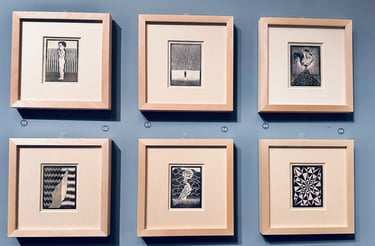
1. Flor de Pascua (Convention) - 2. Flor de Pascua (Madonna) - 3. Flor de Pascua (No Title )
4. Flor de Pascua (The Ghost) - 5. Flor de Pascua ( Theosophy) - 6. Flor de Pascua (Beautiful)
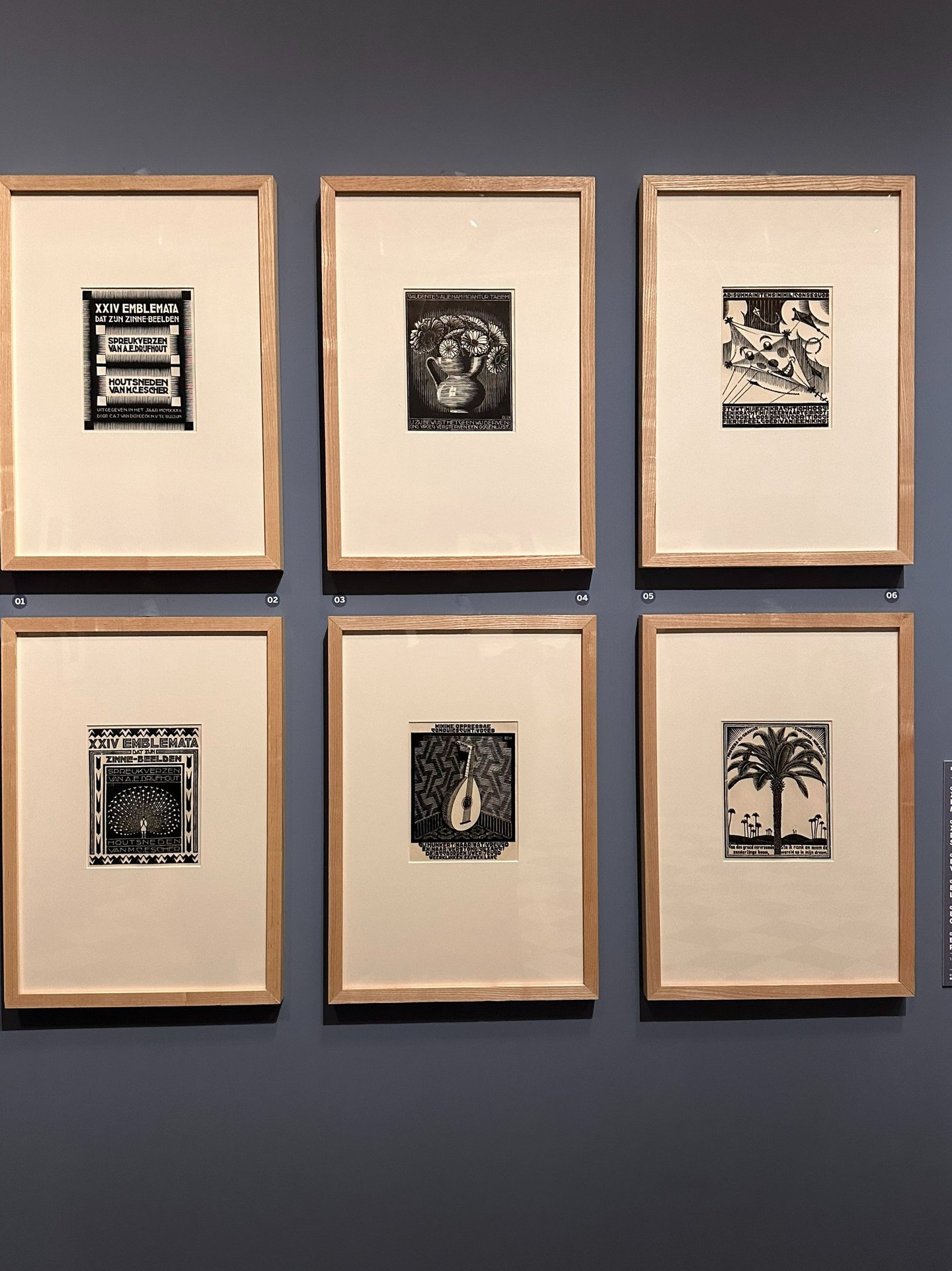
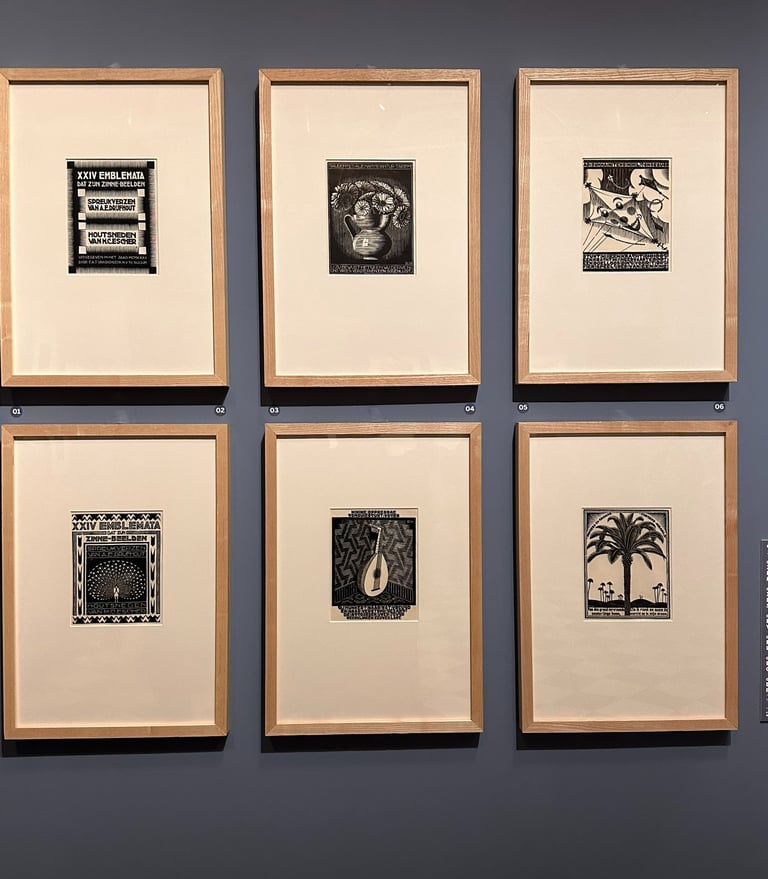
The volume XXIV Emblemata consists of a collection of woodcuts commissioned from Echer in 1931 by Godefridus Johannes Hoogewerff, who was the Director of the Dutch Historical Institute in Rome. This work featured twenty-four epigrams, each comprising a quatrain in Dutch, preceded by a Latin motto ascribed to A.E. Drifthout, Hoogewerff's own pseudonym, and illustrated by Echer. These texts draw upon the tradition of Flemish maxims and the Emblemata published by Andrea Alciato, a sixteenth-century Italian humanist. Popular during the seventeenth century, Emblemata were educational and moralizing combinations of images and text designed to inspire reflection. This series was printed by the publisher C.A.J. von Dishoeck in 1932 in Bussum, the Netherlands, in a limited edition of three hundred copies.The Emblemata series covers a wide range of topics. The illustrations depicting plants, animals, and flowers clearly showcase the impact of Italy's natural setting.
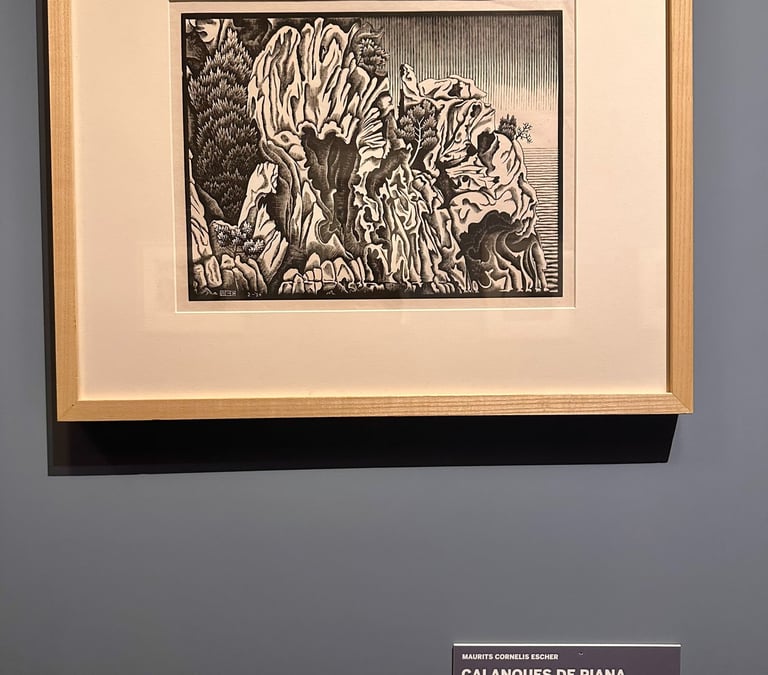
Escher first visited Italy in 1921. After completing his studies, he returned the following year and settled in Rome from 1923 to 1935. These were peaceful and productive years: he started a family, began exhibiting his work and received his first accolades. Living in Rome allowed him to broaden his horizons and collaborate with other artists. During this period, he travelled extensively throughout Italy and the Mediterranean, creating sketches and photographs of landscapes and monuments which he later rendered as lithographs and woodcuts.
He also visited France several times, becoming particularly fascinated by Corsica's evocative landscapes. In 1926, he held a solo exhibition at the Palazzo Venezia in Rome, presenting a series of six woodcuts dedicated to the Days of Creation. This exhibition earned him his first significant success.
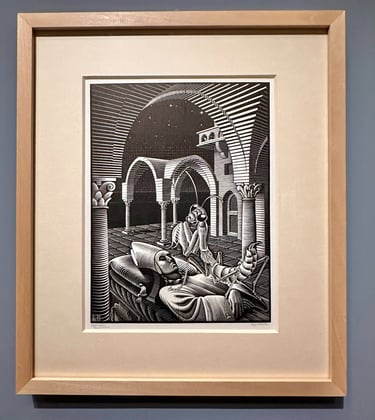
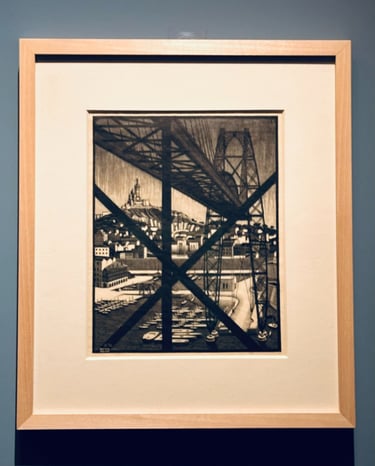
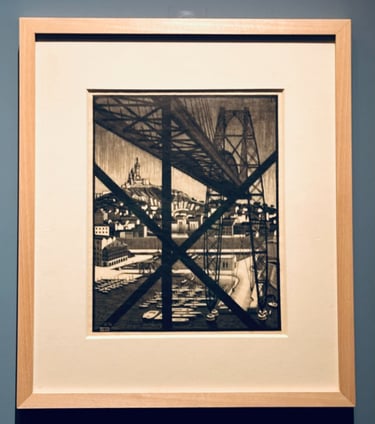
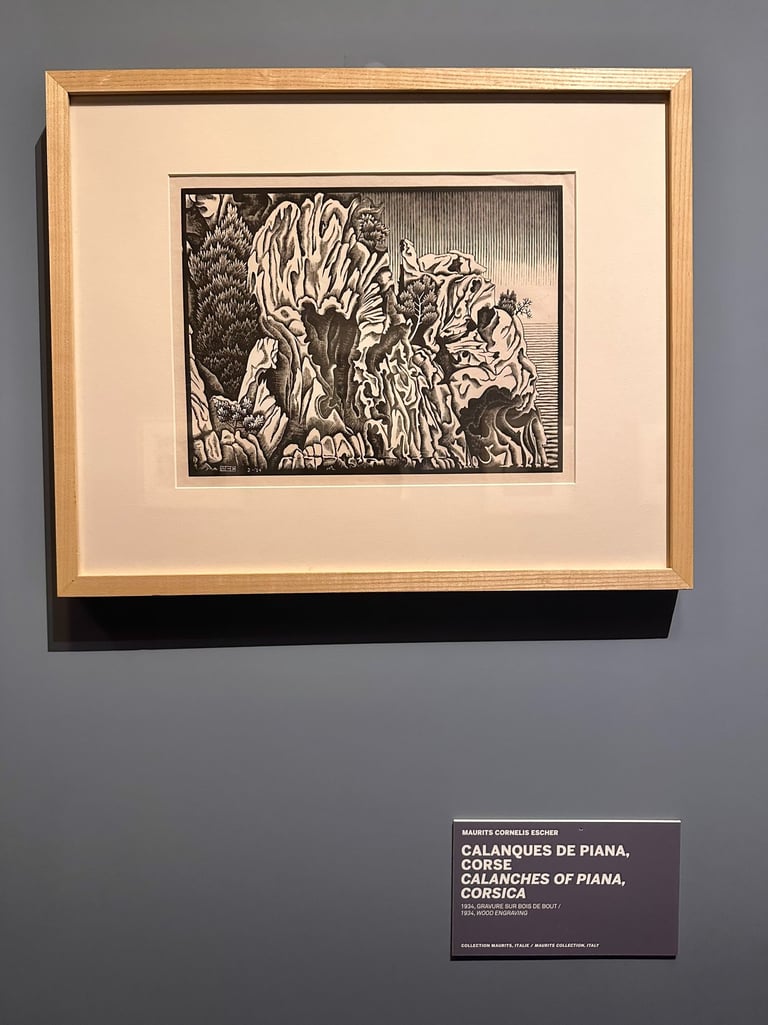
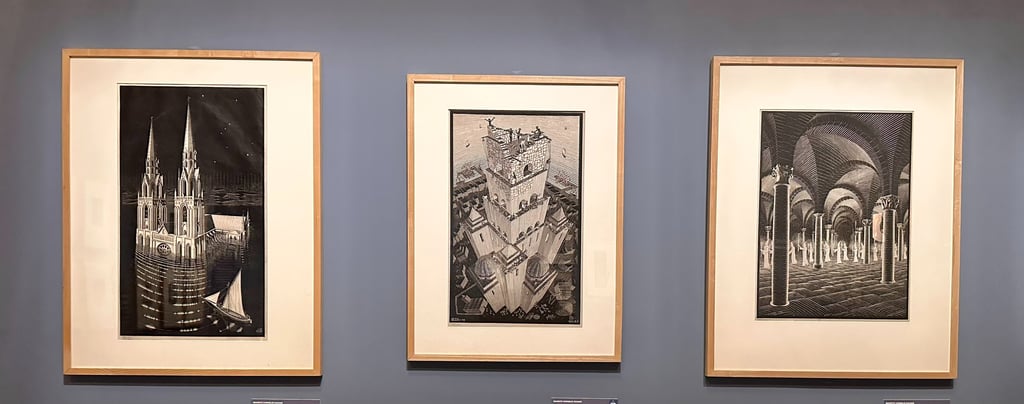
A pivotal moment in Escher's artistic journey occurred during his second visit to southern Spain in 1936. During this trip, he explored famous monuments such as the Alhambra in Granada and the Mezquita in Cordoba, finding inspiration for an in-depth examination of the patterns created by artisans to adorn the walls and arches of Moorish architecture. He cultivated a fascination with tessellations: geometric designs formed from triangles, squares, or hexagons that are repeated like tiles to seamlessly cover a surface without any gaps. Diligently, he created 137 watercolours documented in a notebook, showcasing various tessellation designs and illustrating several of the seventeen techniques for filling a flat area by translating, rotating, and reflecting a single tile. His research also investigated different colour options.
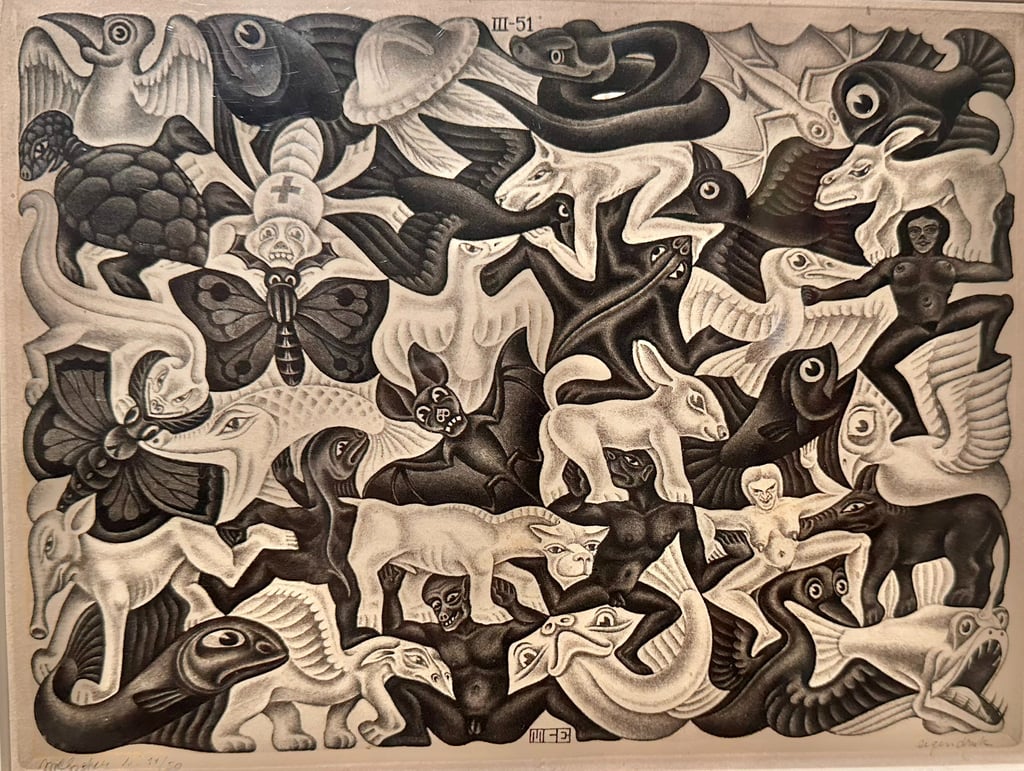
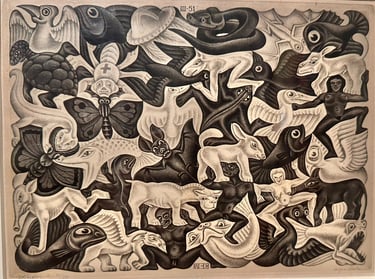
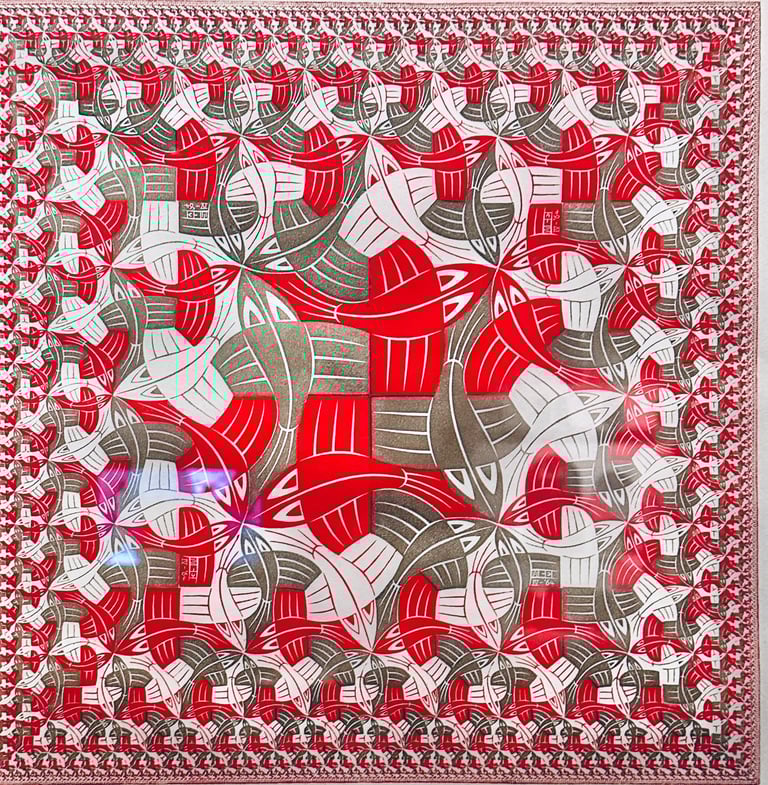
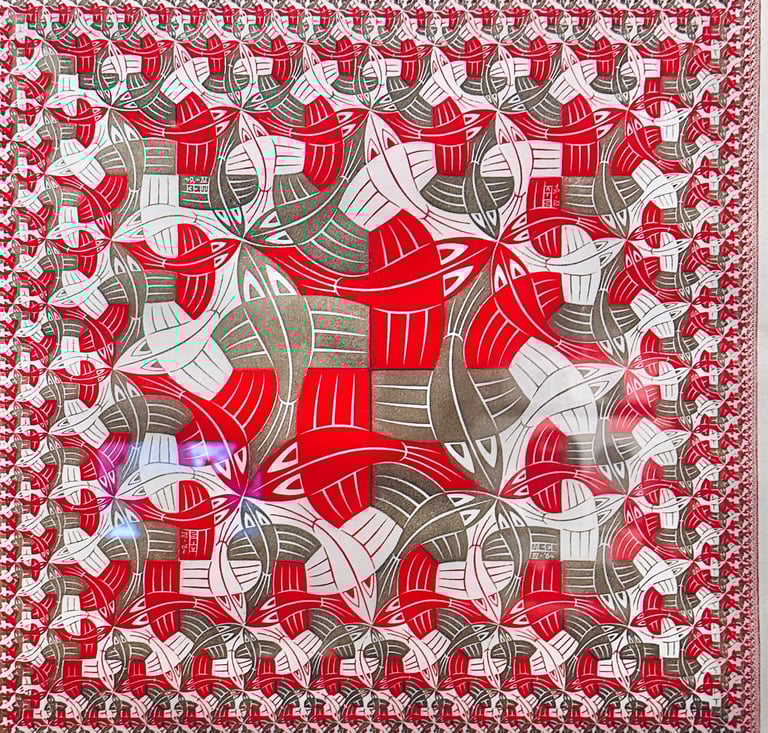
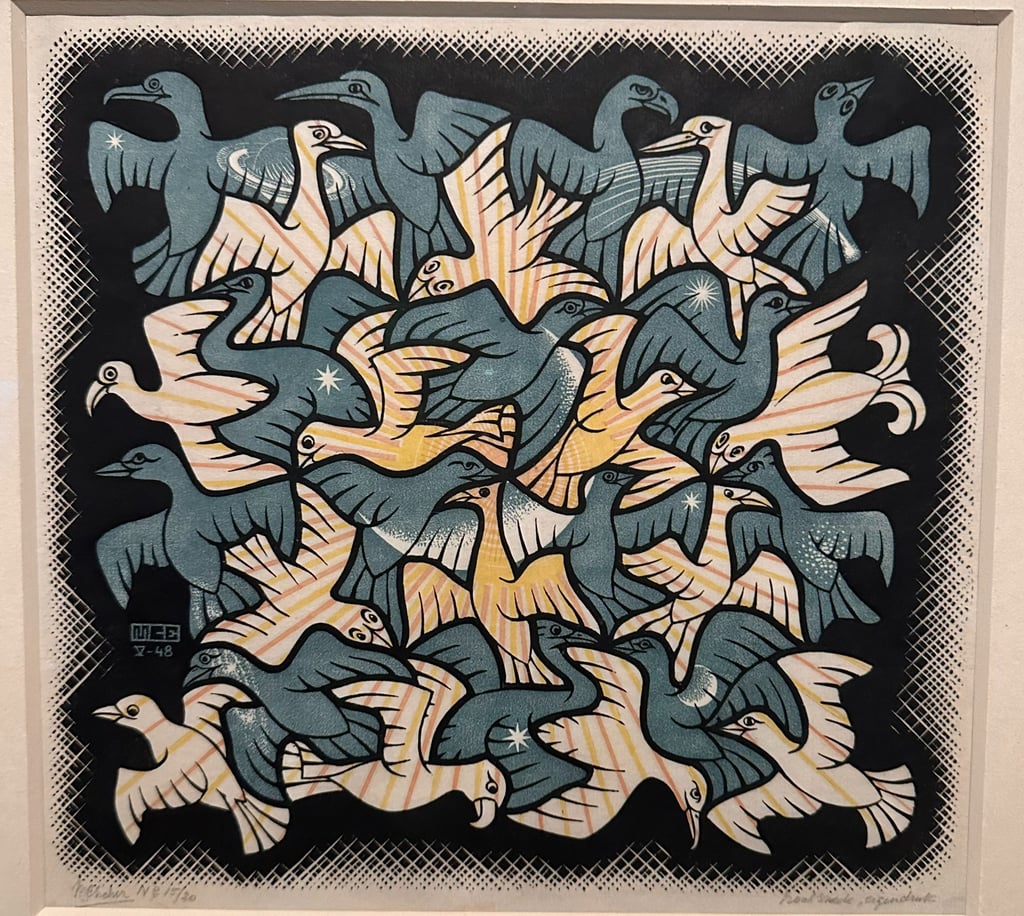
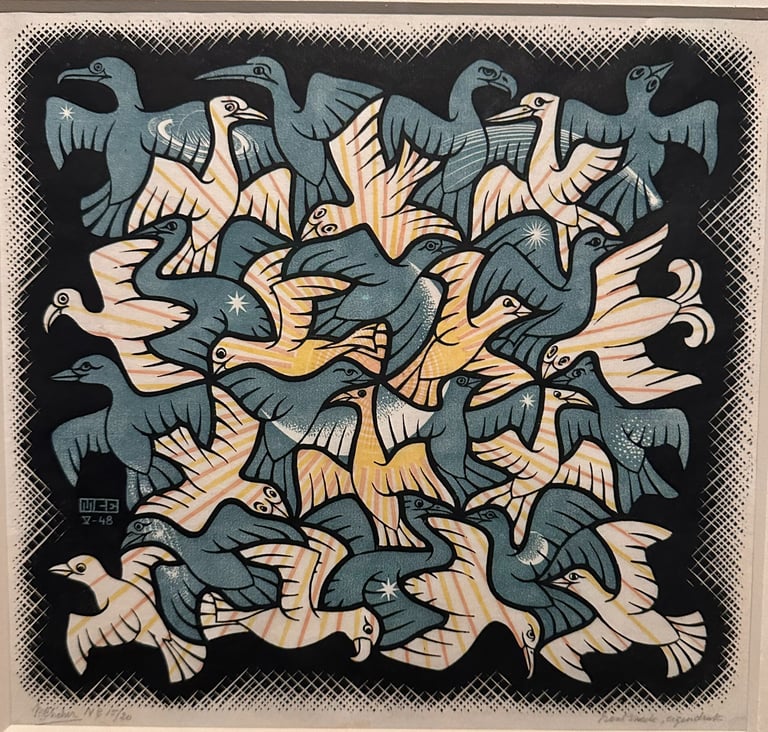
Pavings are the basis of cycles and metamorphoses: a subject dear to M.C. Escher from 1937 onwards. For the artist, a metamorphosis is generated by the modification and succession of several ‘tesserae’. He thus creates a world in which different figures give rise to whirlwinds of transformations from abstract forms to animated forms and vice versa, passing seamlessly from one to the other in a continuous metamorphosis.
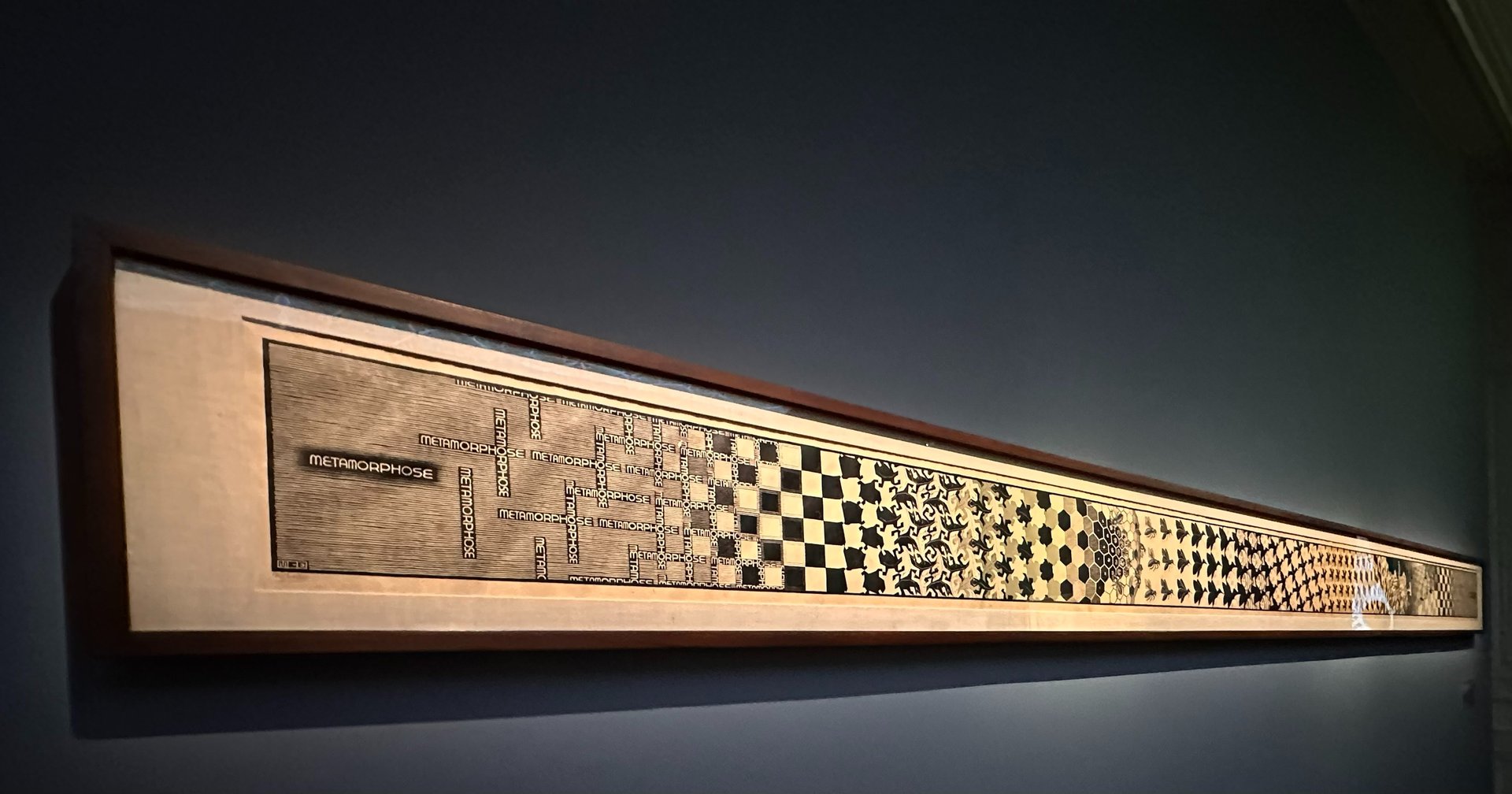
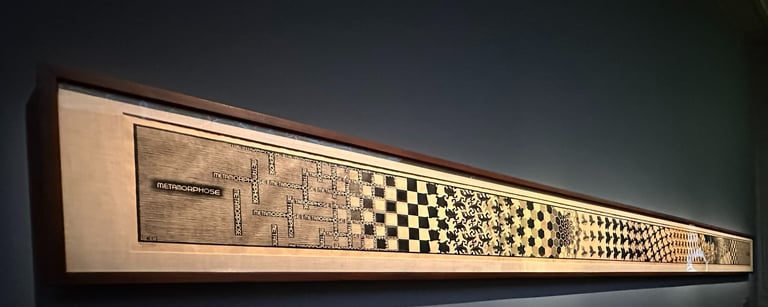
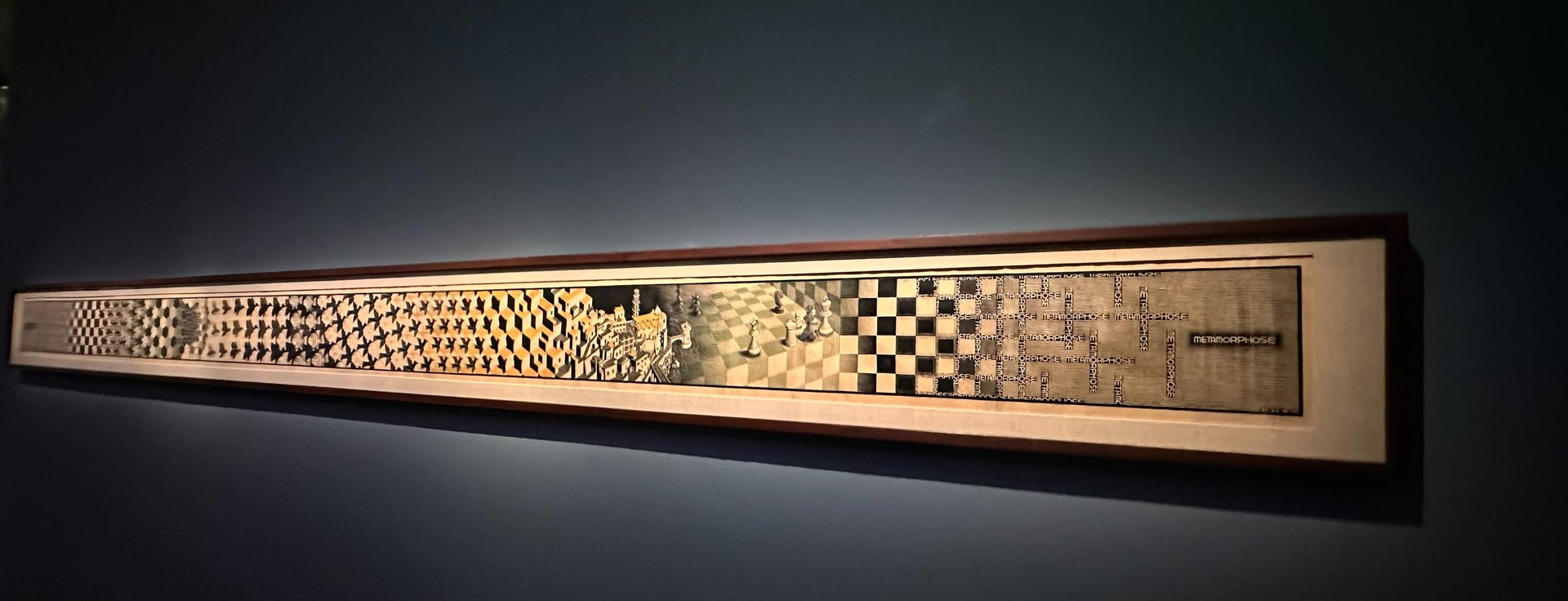
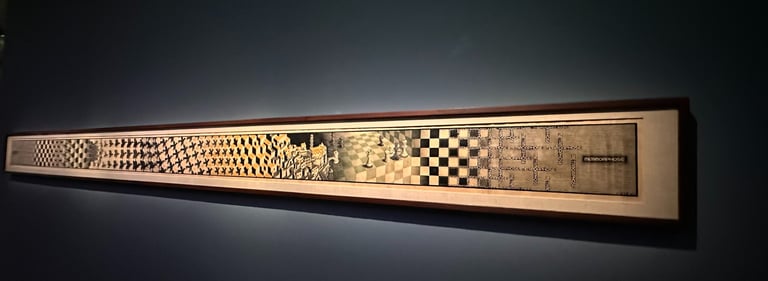
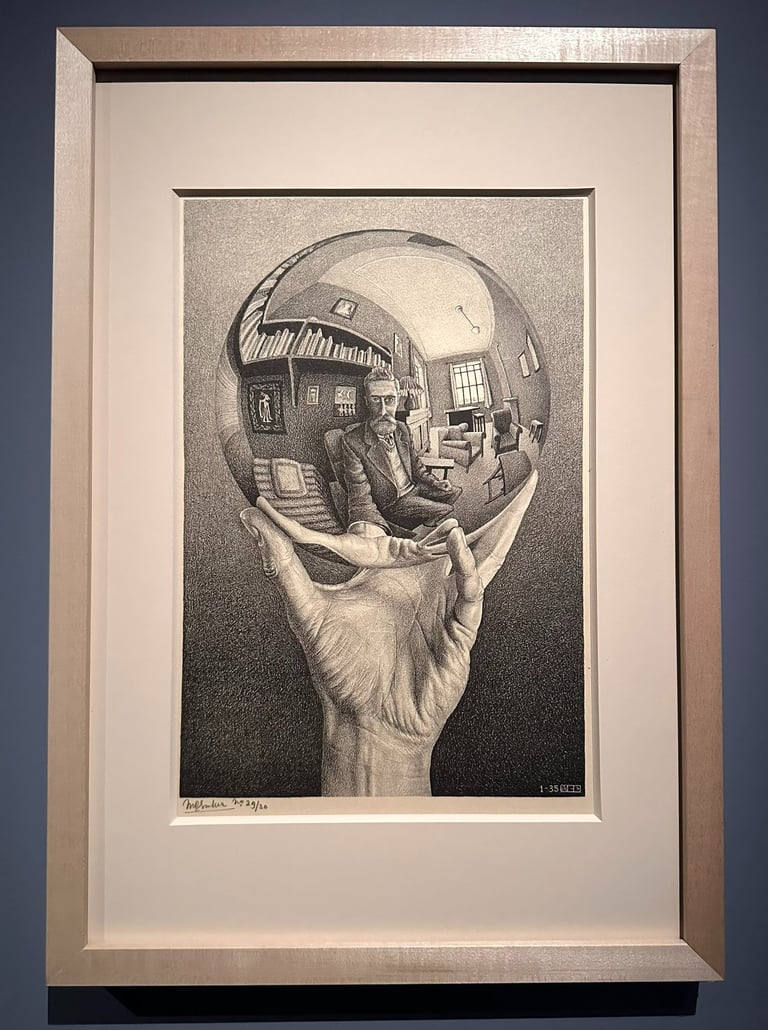
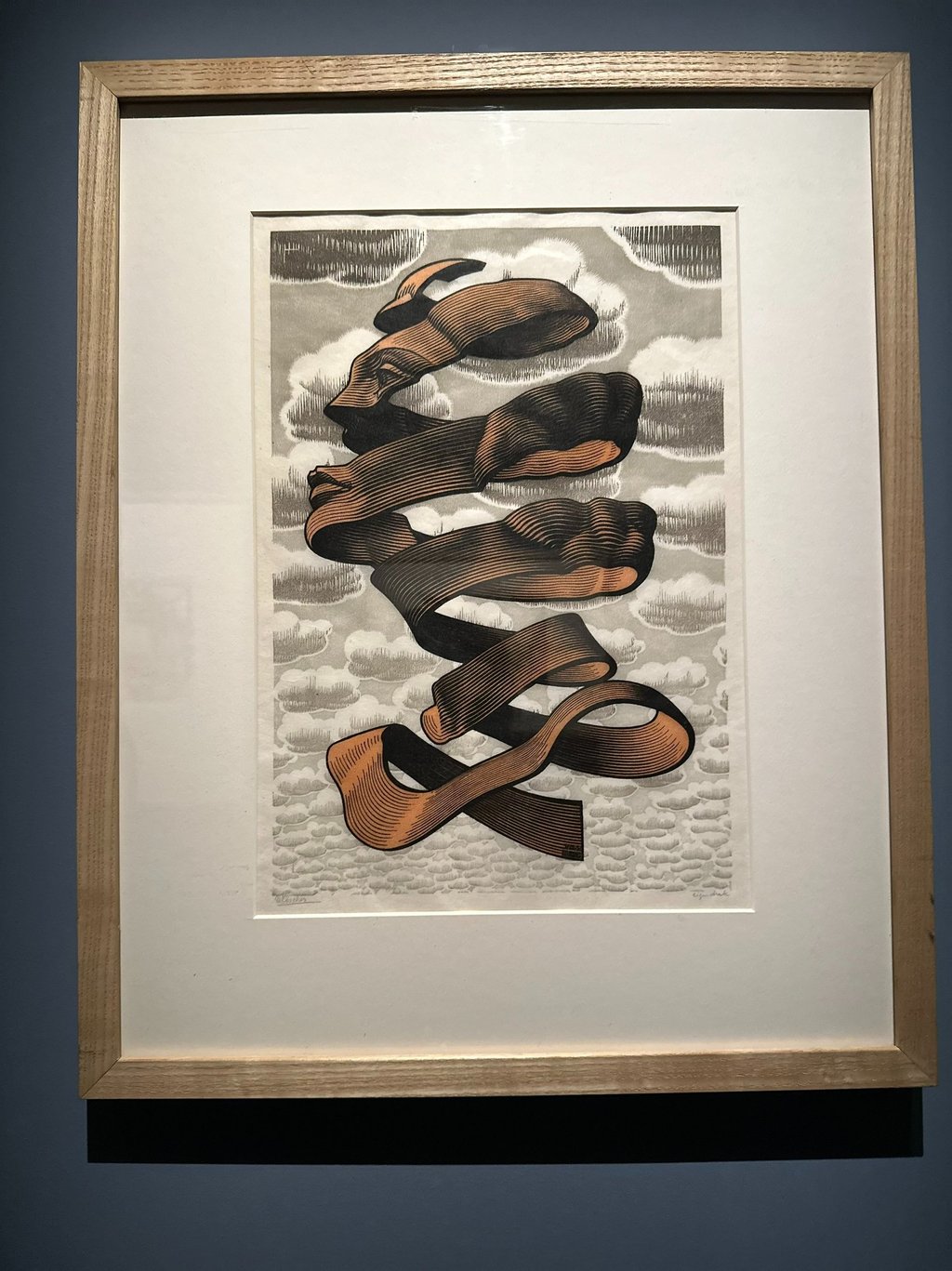
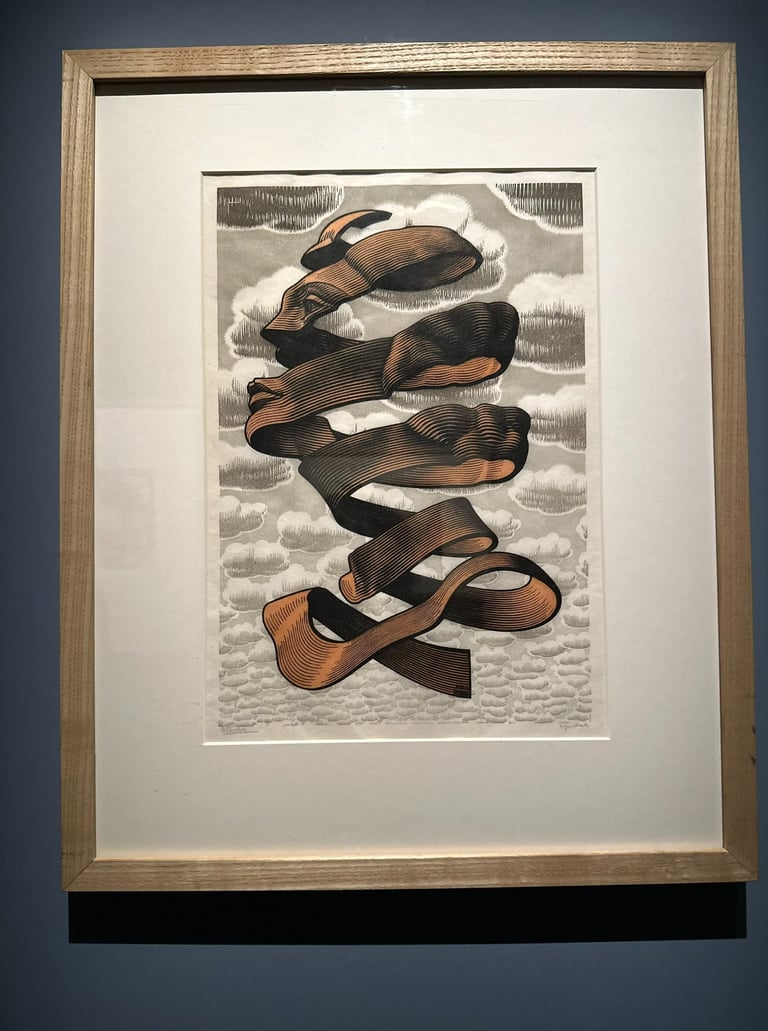
From his earliest works, M. C. Escher demonstrated a particular interest in the organisation of spatial compositions. His growing fascination with mathematics and geometry led him to study spheres, geometric solids, and reflective or topological surfaces, such as the Möbius strip—an object that appears to have two sides, but which actually has only one. This unique property of the Möbius strip has fascinated mathematicians and artists alike, igniting a deeper exploration into the realms of non-Euclidean geometry and the art of illusion. Escher's ability to blend mathematical concepts with artistic expression has inspired countless individuals to reflect on the nature of reality and perception through intricate designs and mesmerizing patterns.
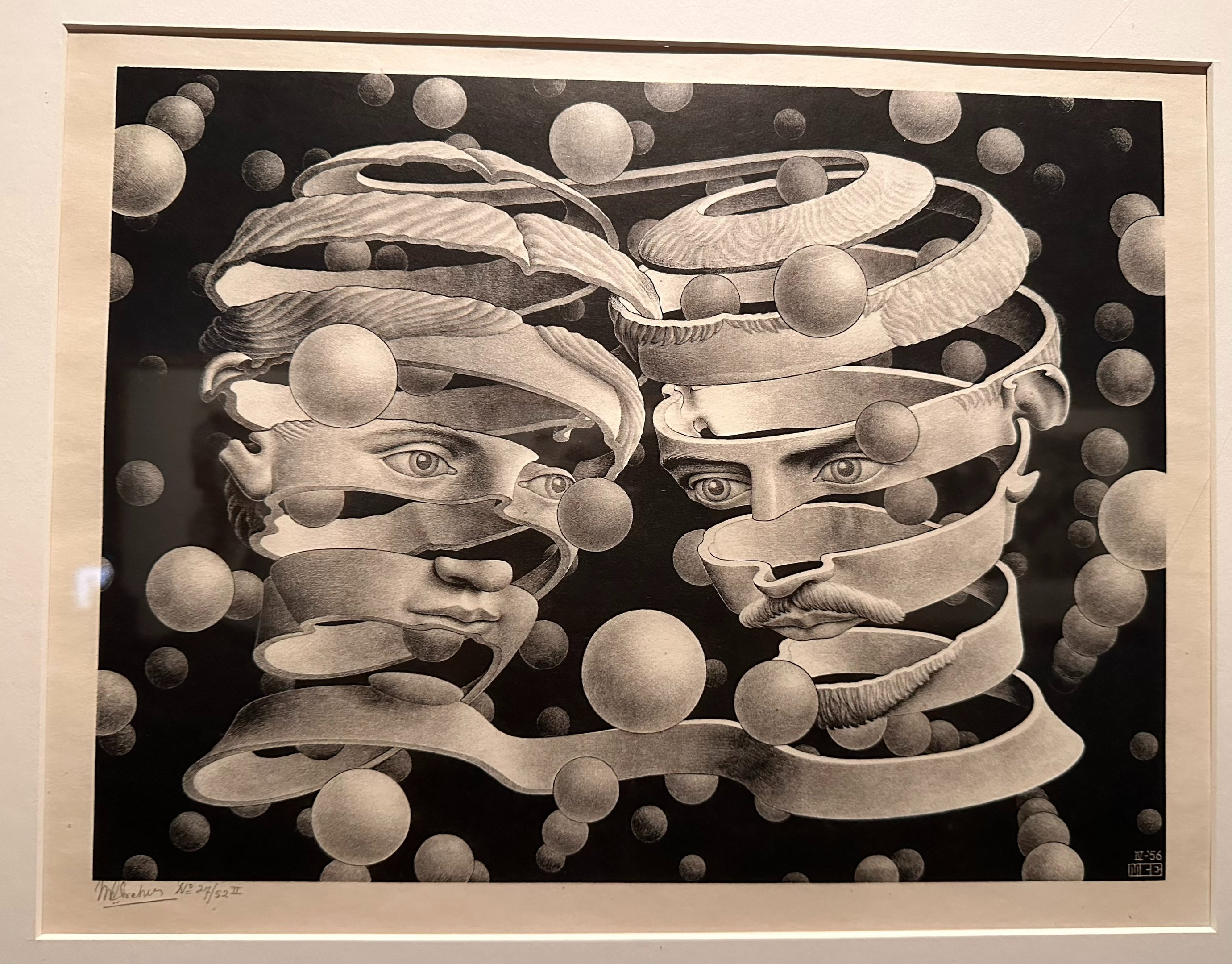
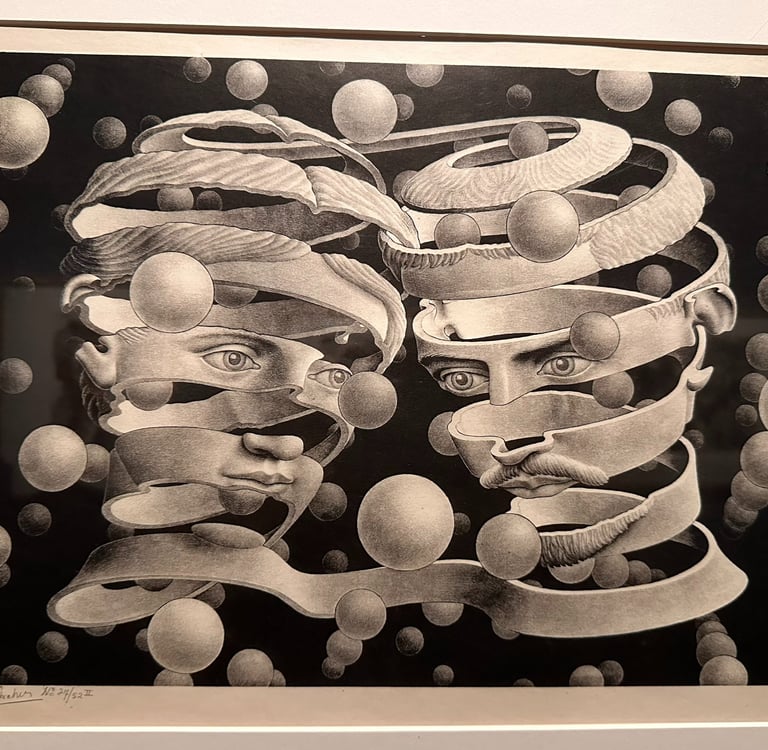
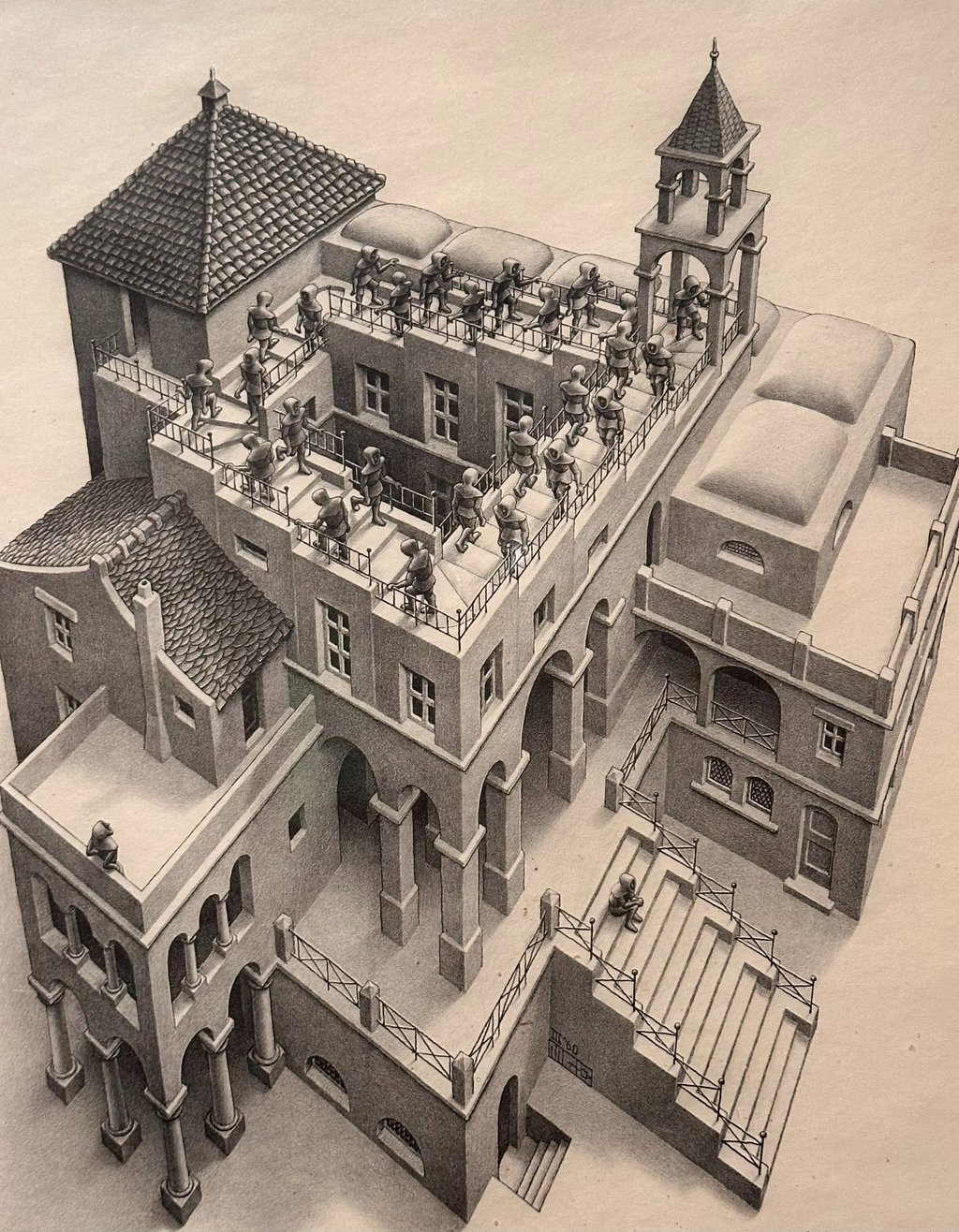
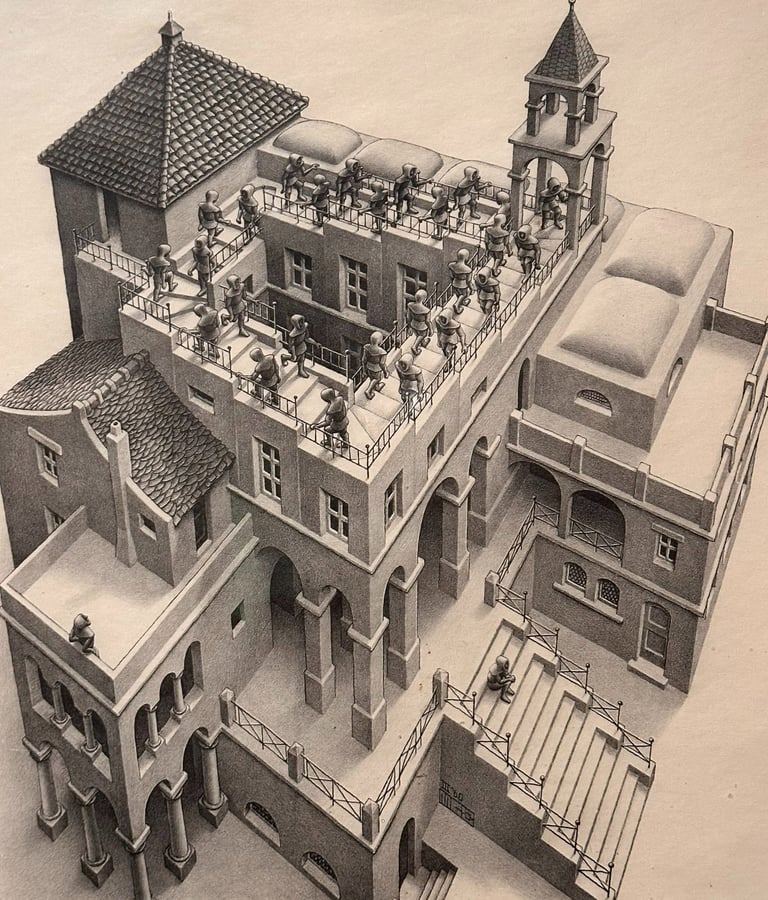
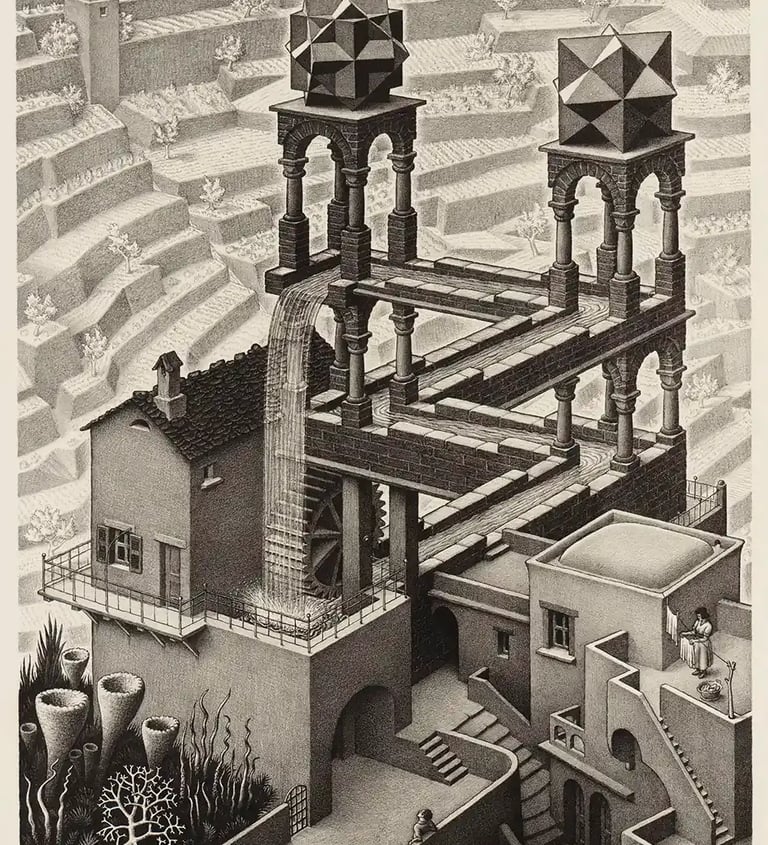
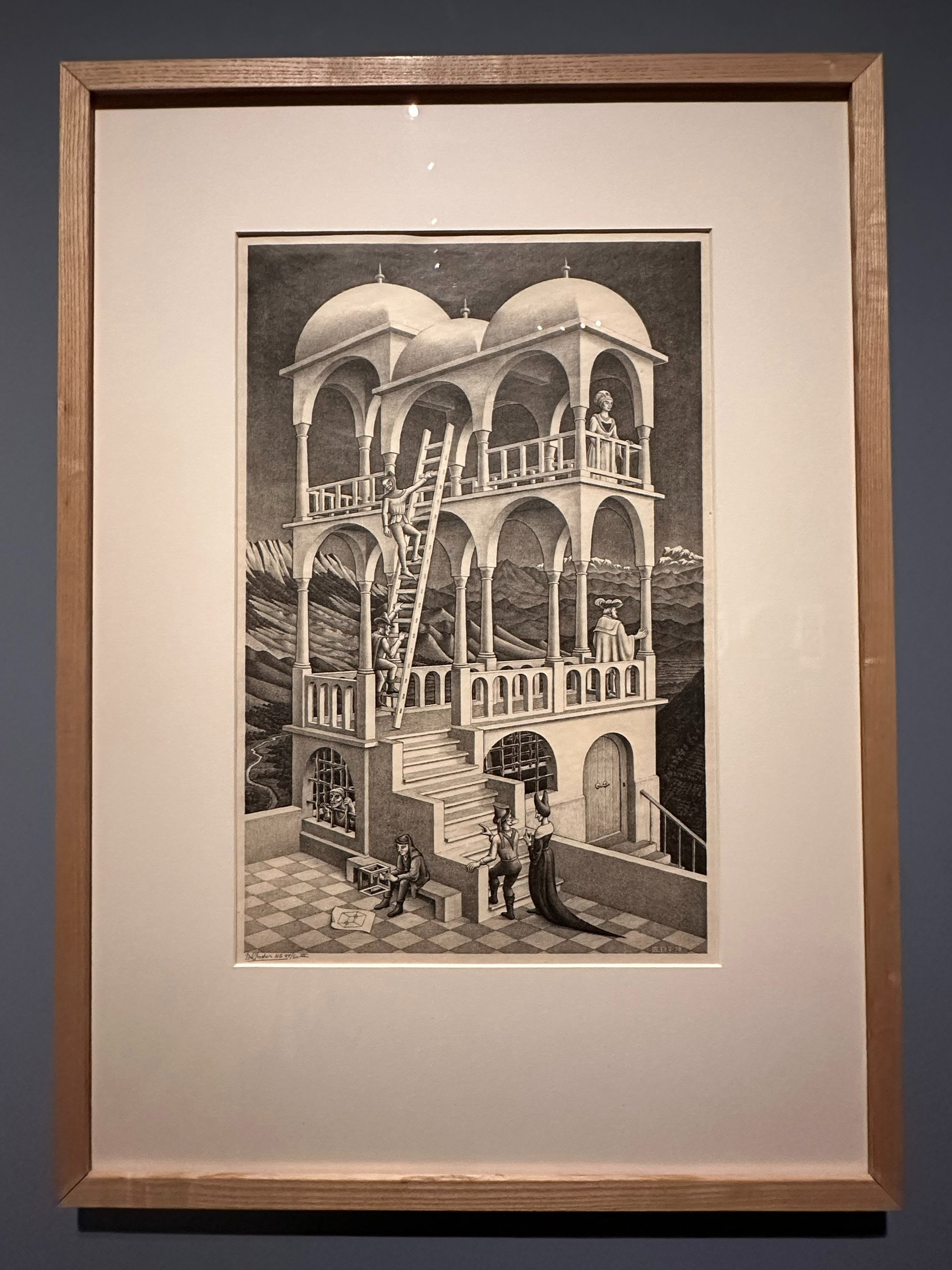
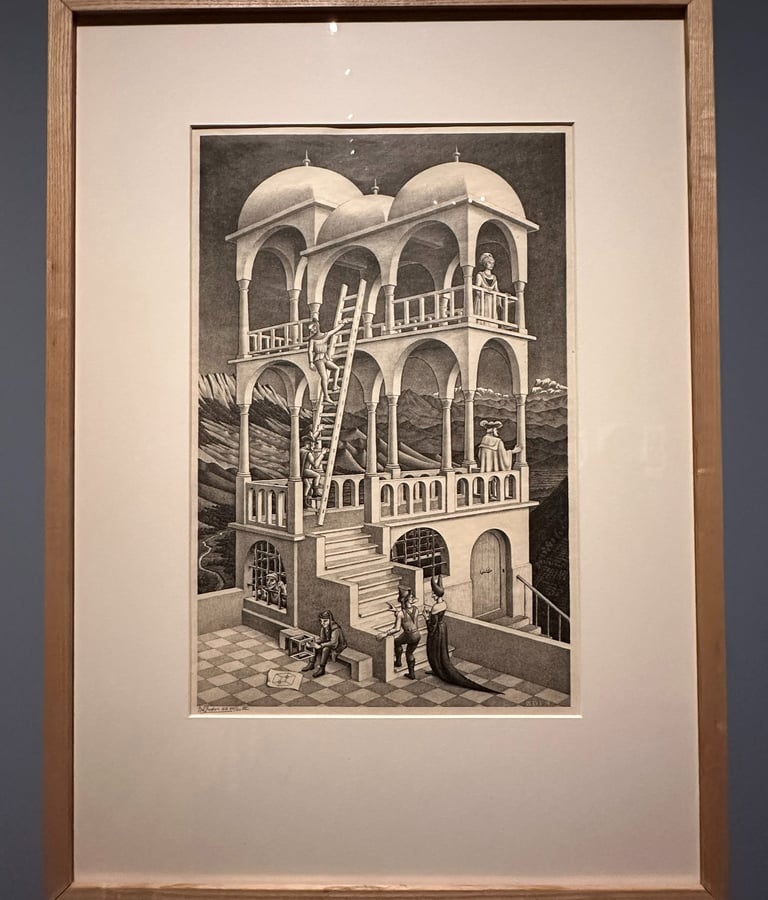
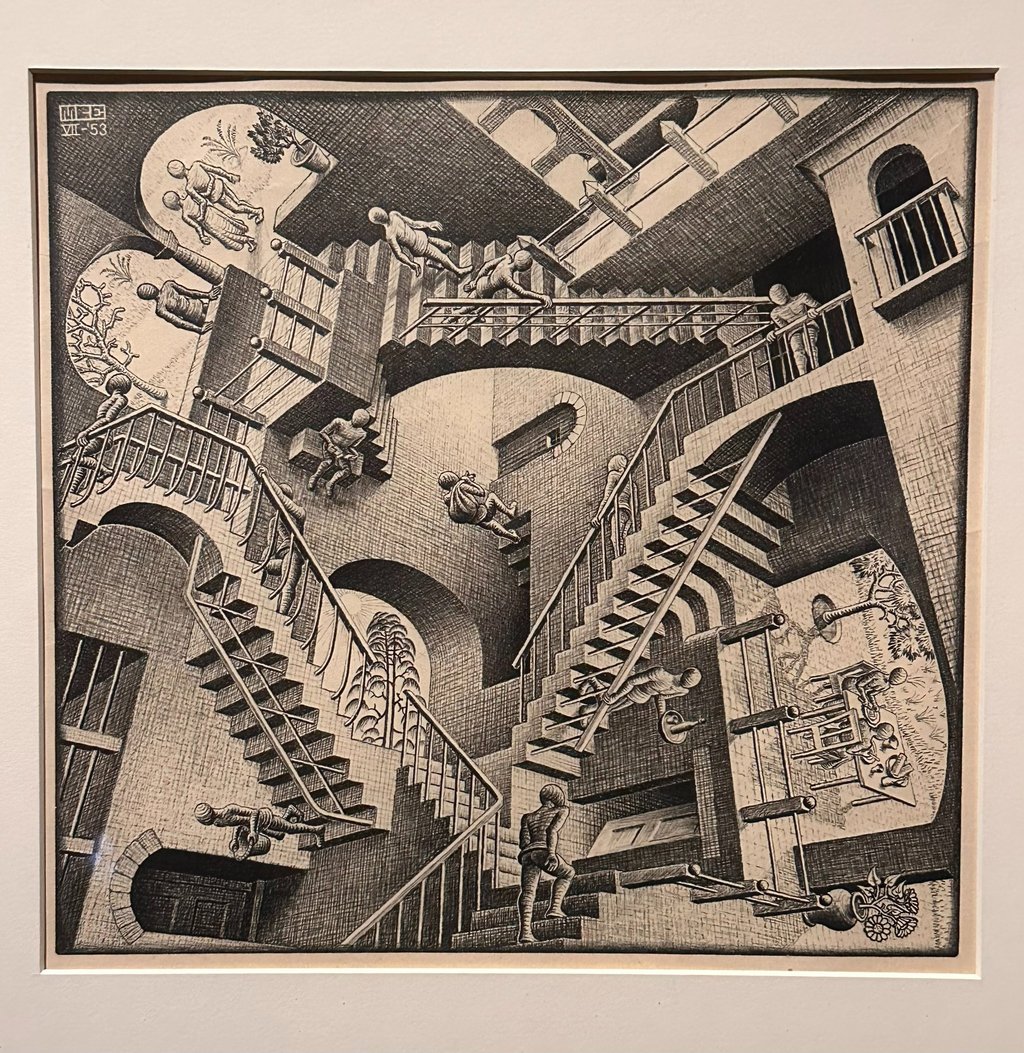
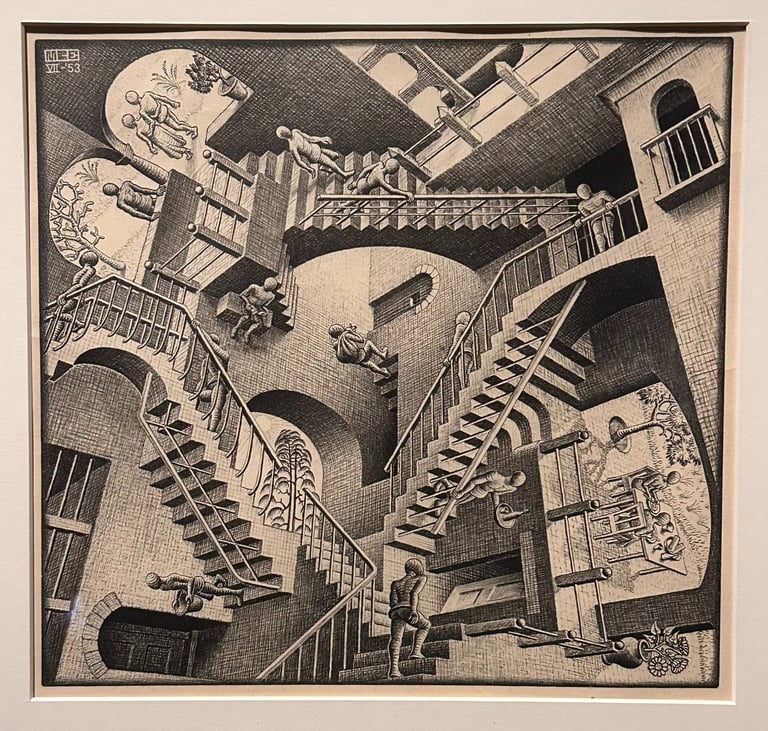
In 1954, the International Congress of Mathematicians held in Amsterdam showcased an exhibition of Escher's prints, which have since gained significant appreciation within the scientific community. This initiated a dialogue between Escher and mathematicians, as well as crystallographers; his interactions with scientists became a key source of inspiration for his investigations, optical illusions, and portrayals of infinity. His attempts to illustrate the boundless are highlighted in a selection of his most renowned works: Ascending and Descending, Belvedere, Waterfall, and Relativity. These masterpieces embody a fundamental characteristic of his art: its complex connection with mathematics, geometry, and the visual expression of infinity.
"It is human nature to want to exchange ideas, and I believe that, at bottom, every artist wants no more than to tell the world what he has to say. I have sometimes heard painters say that they paint 'for themselves': but I think they would soon have painted their fill if they lived on a desert island."
M.C. Escher