A Baroque cabinet of curiosity in the style of AI art
Contributor ☞ Viola Rühse
ARTICLES
By 16mag
6/16/2026

Cabinets of curiosities are widely recognised as the precursors of today's museums. They played a pivotal role in shaping our approach to collections and objects of interest. Emerging during the Renaissance, a period of renewed interest in art, science and the natural world, they brought together a remarkable variety of objects from diverse fields such as natural history, art, technology and religion. These innovative places of wonder and learning make the complexity of the world tangible within a confined space, inviting curiosity and exploration from all who gaze upon their contents. Not only were cabinets of curiosities established by powerful rulers, influential princes and princesses, the upper middle classes and intellectuals who desired to showcase their wealth and knowledge, but also by the clergy in monasteries and abbeys, who recognised the importance of preserving these fascinating relics. Following a devastating fire, Göttweig Abbey, situated 80 km from Vienna in Austria, was reconstructed in the Baroque style, and a noteworthy 'Cabinet of Natural History and Art' was also established in two of the newly refurbished rooms (Fig. 1). This collection was assembled between 1723 and 1733 by the eminent scientist and diplomat Gottfried Johann Georg Bessel (1672–1749).
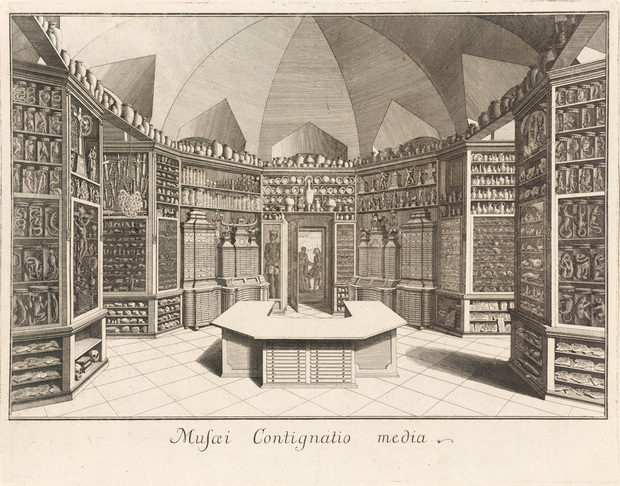
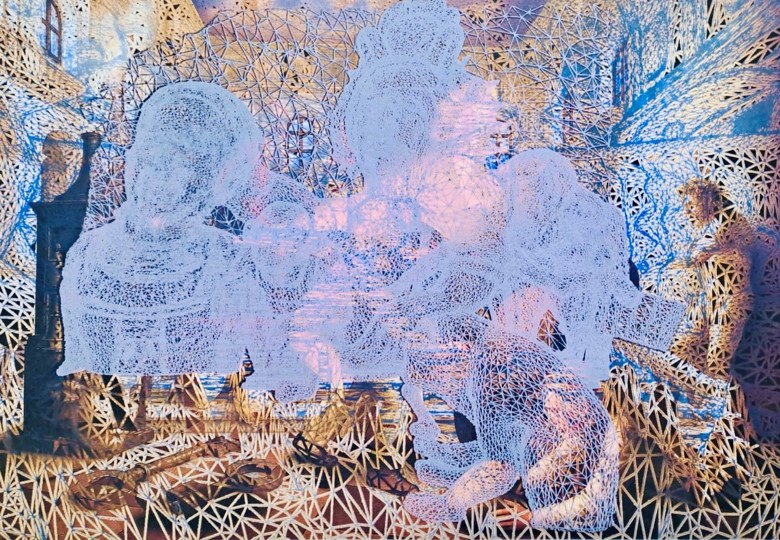
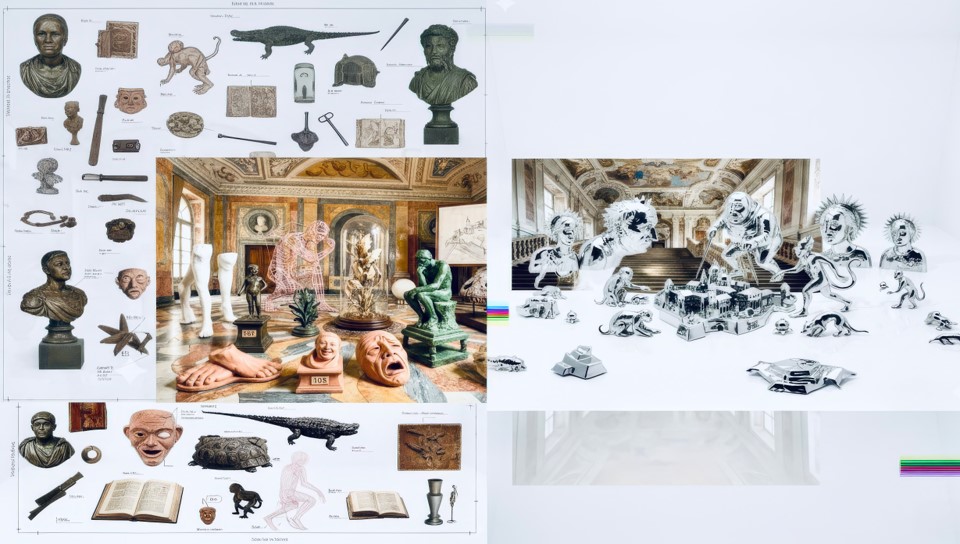
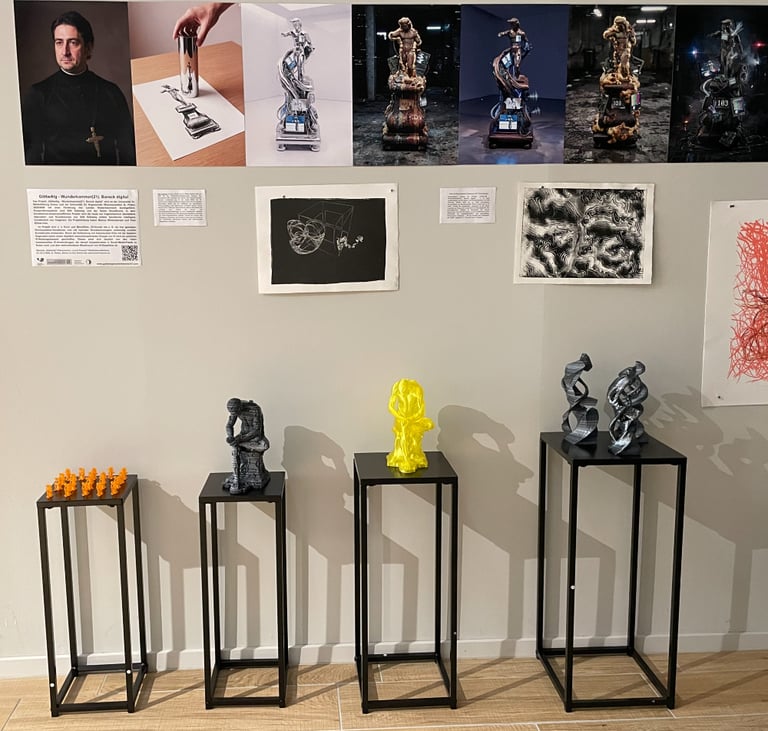
The Göttweig Cabinet of Curiosities housed a fascinating numismatic artefacts and the abbey’s significant print collection, much of which has survived to this day. The cabinet also housed ancient artefacts and exceptional works of art, of which only a few precious items remain in the abbey today, nestled among the remnants of a storied past. Tragically, many other natural objects, trophies, scientific instruments, handicrafts and ethnological artefacts have been lost, apart from a small part of the mineral collection, which still exists. Consequently, many of the objects collected in the abbey’s distinguished cabinet of curiosities can now only be identified on the basis of old illustrations and written sources, which makes their historical context all the more intriguing. The Baroque chamber of wonders, of which only fragmentary remains survive today, was artistically reinterpreted in 2025/26 as part of the Austrian art and science project, ‘GöttwAIg Wunderkammer(21)’. Barock Digital, thanks to generous funding from the State of Lower Austria. Following three exciting pop-up presentations at various events in 2026 (see figures 2–4), the project will culminate in a grand exhibition at Göttweig Abbey from March to December 2027. This multifaceted exhibition aims to explore the rich history and significance of cabinets of curiosities in a modern context, inviting us to reflect on the importance of preserving history and fostering curiosity in our ever-evolving world.
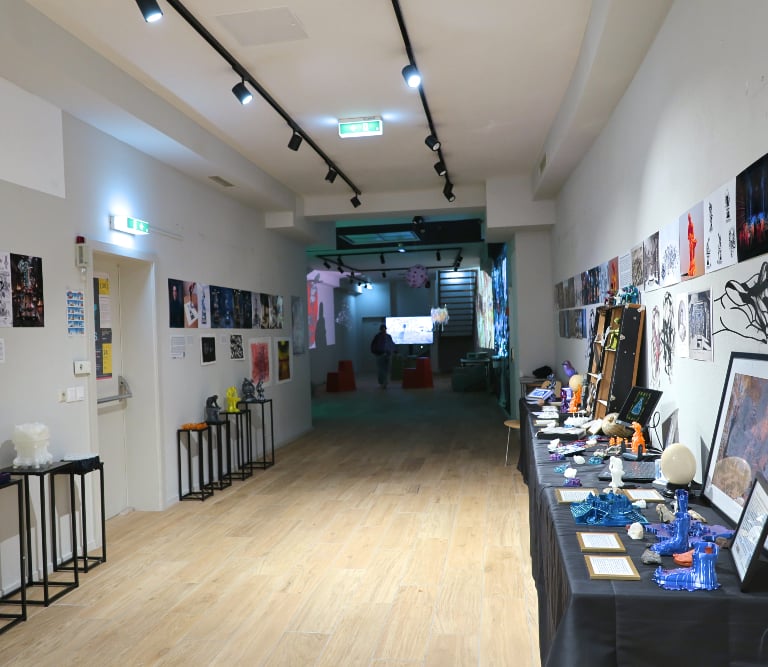
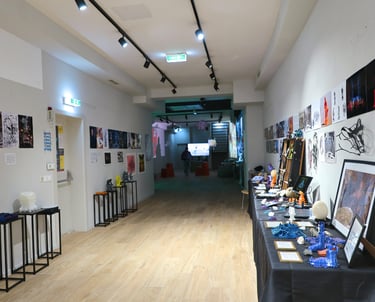
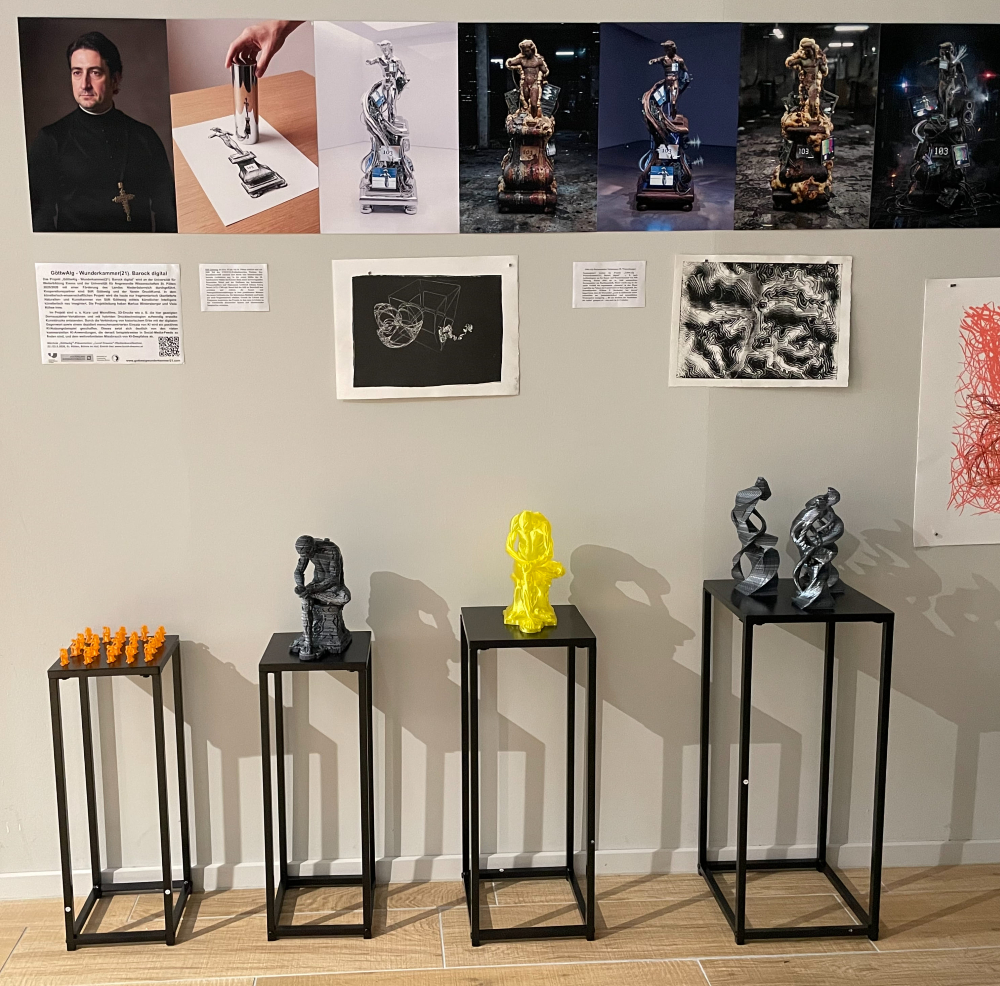
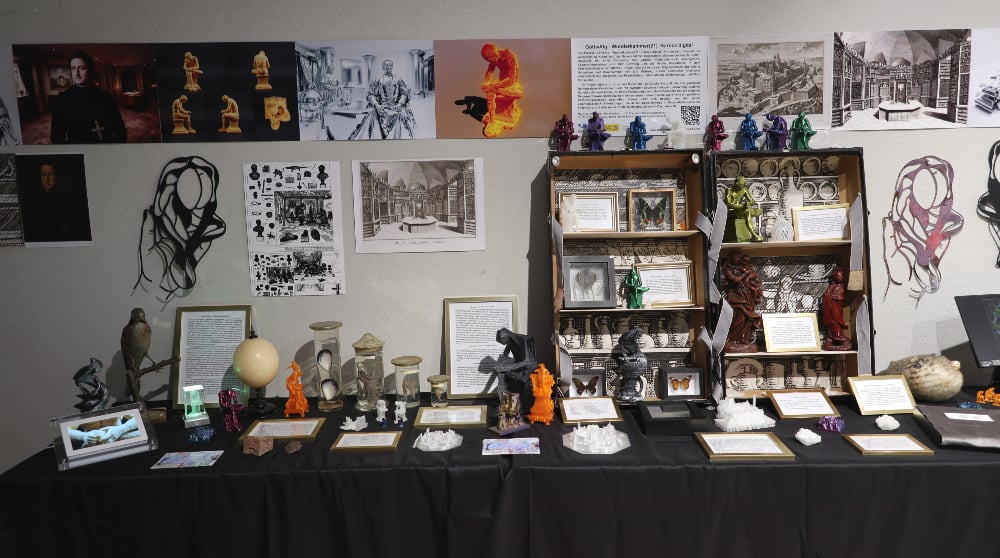
For this project, media artist Markus Wintersberger and his colleague Christian Munk are collaborating with enthusiastic students from the University of Applied Sciences St. Pölten, Austria to utilise the latest AI applications and explore uncharted territories in contemporary art. Alongside films and other visuals displayed on state-of-the-art digital screens, many of the innovative pieces are being created using 3D printing techniques to capture the tactile essence of traditional cabinets of curiosities. Some motifs inspired by history and natural wonders are also being designed as complex, intricate art prints in collaboration with the Neuhauser Kunstmühle printing studio. The artistic reinterpretations of the cabinet of curiosities as a whole (Fig. 6), as well as various historical objects, have been created, including a thorn-removal figure, an exquisite antique oil lamp, several paintings by Abbot Bessel, an enchanting magic lantern, diverse corals and an elaborate anamorphic representation. These new works, which are rich in context and creativity, are presented alongside historical objects to encourage deeper comparisons and inspire further artistic creations, discussions and reflections.
These artistic reinterpretations are intended to engage and appeal to new audiences, bridging the gap between traditional and modern art forms. They also aim to bring existing audiences closer to digital art and the AI. Viola Rühse, a visual studies scholar at the University for Continuing Education Krems, thoroughly examines the historical contexts and potential for adaptation within these works, as well as the inherent risks and opportunities associated with the cutting-edge AI technologies employed by Markus Wintersberger in the project. In addition to biases relating to gender, classism and race, copyright matters are also examined in detail, shedding light on the moral obligations and challenges faced by artists in this rapidly evolving landscape.